Analyzing Circuits: Fill in F Column Values in Truth Table

  • Context: MHB 
  • Thread starter Thread starter shamieh
  • Start date Start date
  • Tags Tags
    Circuits
Click For Summary
SUMMARY

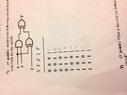
The discussion focuses on evaluating the truth table for the logical expression $F=(xy) \oplus (x \oplus z)$, where $\oplus$ denotes the exclusive OR operation. The initial submission of truth values for F was incorrect, as the user miscalculated the intermediate values. The corrected truth table shows that F outputs 1 only for specific combinations of inputs, specifically when (1, 1, 1) and (0, 0, 1). This highlights the importance of accurately following logical operations in circuit analysis.

PREREQUISITES
  • Understanding of Boolean algebra and logical operations
  • Familiarity with truth tables and their construction
  • Knowledge of exclusive OR (XOR) operation
  • Basic circuit analysis concepts
NEXT STEPS
  • Study Boolean algebra simplification techniques
  • Learn how to construct and analyze truth tables for complex expressions
  • Explore the implications of XOR in digital circuit design
  • Investigate common pitfalls in circuit analysis and how to avoid them
USEFUL FOR

Students and professionals in electrical engineering, computer science, and anyone involved in digital logic design and analysis.

shamieh
Messages
538
Reaction score
0
Analyze the following circuit then fill in the F column values in the truth table for the circuit.

View attachment 1418

Just need someone to check my work.

My Answer:
  • X Y Z | F
  • 0 0 0 | 0
  • 0 0 1 | 0
  • 0 1 0 | 0
  • 0 1 1 | 0
  • 1 0 0 | 0
  • 1 0 1 | 0
  • 1 1 0 | 0
  • 1 1 1 | 1

(By the way not sure why my phone is rotating all my pictures, apologies in advance).
 

Attachments

  • photo(2).JPG
    photo(2).JPG
    27 KB · Views: 116
Technology news on Phys.org
Assuming you meant that $F=(xy) \oplus (x \oplus z),$ where the $\oplus$ symbol stands for "exclusive OR", then I get the following (building up the truth table from the beginning):
$$
\begin{array}{c|c|c|c|c|c}
x &y &z &xy &x \oplus z &(xy) \oplus(x \oplus z)\\ \hline
0 &0 &0 &0 &0 &0 \\
0 &0 &1 &0 &1 &1 \\
0 &1 &0 &0 &0 &0 \\
0 &1 &1 &0 &1 &1 \\
1 &0 &0 &0 &1 &1 \\
1 &0 &1 &0 &0 &0 \\
1 &1 &0 &1 &1 &0 \\
1 &1 &1 &1 &0 &1
\end{array}
$$
 
I'm a moron. I was evaluating xy then evaluating y ⊕ z. I see the problem now. Thanks for the help Ach!
 

Similar threads

Replies
4
Views
2K
  • · Replies 5 ·
Replies
5
Views
3K
  • · Replies 45 ·
2
Replies
45
Views
4K
  • · Replies 1 ·
Replies
1
Views
4K
  • · Replies 6 ·
Replies
6
Views
4K
  • · Replies 15 ·
Replies
15
Views
3K
  • · Replies 10 ·
Replies
10
Views
4K
  • · Replies 4 ·
Replies
4
Views
2K
  • · Replies 9 ·
Replies
9
Views
4K
Replies
3
Views
3K