SidMe1984
- 1
- 0
1. The problem statement
Consider the case of 10 oscillators and eight quanta of energy. Determine the dominant configuration of energy for this system by identifying energy configurations and calculating the corresponding weights. What is the probability of observing the dominant configuration?
Attempt at the solution:
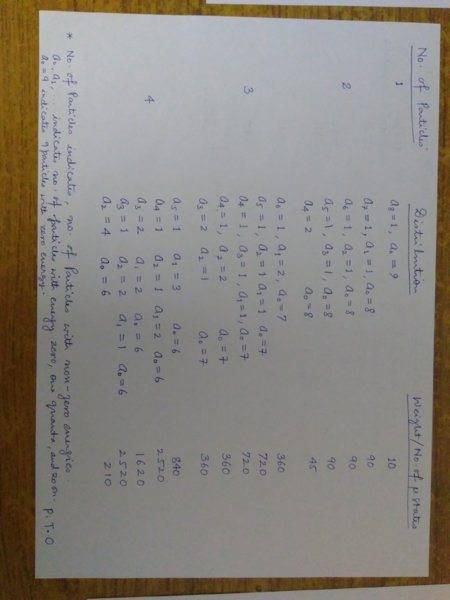
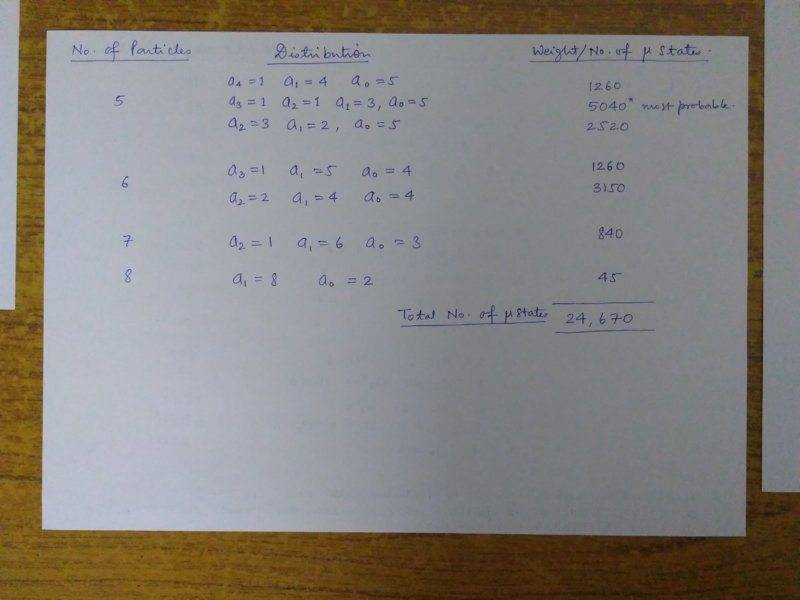 To add to the information on the problem, I picked it from Engel and Reed (Thermodynamics, Statistical thermodynamics,...) Chapter 13.
I checked the answer to the problem in the book, it says that the probability for the most probable state is 0.25 but the book gives no details of the working.
What I found was that the desired probability is less than 0.25. Clearly then there is some limitation imposed on the energy levels available to the oscillators. I simply cannot guess this particular limitation.
If I should be getting a probability of 0.25 for the most probable configuration, I must have the sum total of all the weights equal to about 20,170 ... I am unable to come to this count and I need help with this part of the problem.Can you please guide me with it. Thanks
Consider the case of 10 oscillators and eight quanta of energy. Determine the dominant configuration of energy for this system by identifying energy configurations and calculating the corresponding weights. What is the probability of observing the dominant configuration?
Attempt at the solution:
I checked the answer to the problem in the book, it says that the probability for the most probable state is 0.25 but the book gives no details of the working.
What I found was that the desired probability is less than 0.25. Clearly then there is some limitation imposed on the energy levels available to the oscillators. I simply cannot guess this particular limitation.
If I should be getting a probability of 0.25 for the most probable configuration, I must have the sum total of all the weights equal to about 20,170 ... I am unable to come to this count and I need help with this part of the problem.Can you please guide me with it. Thanks
Attachments


Last edited by a moderator:
