Can a 1/60th Scale Model Locomotive Truly Mimic the Original's Performance?

  • Context: High School 
  • Thread starter Thread starter 1MileCrash
  • Start date Start date
  • Tags Tags
    Scale
Click For Summary

Discussion Overview

The discussion revolves around the feasibility of a 1/60th scale model locomotive accurately mimicking the performance characteristics of the original locomotive. Participants explore various aspects such as weight, horsepower, torque, fuel consumption, noise levels, freight capacity, and friction, considering both theoretical and practical implications of scaling down a complex mechanical system.

Discussion Character

  • Exploratory
  • Technical explanation
  • Debate/contested

Main Points Raised

  • Some participants propose that a 1/60th scale model would weigh 1/60th of the original train, while others clarify that it would actually weigh 1/216,000th of the original due to the cubic relationship of volume to linear dimensions.
  • There is a discussion about whether the model would have 1/60th of the horsepower and torque, with some suggesting that operating pressure of a boiler is not solely dependent on size but also on wall thickness.
  • One participant argues that larger boilers can hold less pressure for a given wall thickness, while another counters that a perfectly scaled-down model could theoretically maintain the same pressure if constructed with the same materials.
  • Concerns are raised about the implications of scaling on the performance of the model, particularly regarding the relationship between pressure, volume, and wall thickness in pressurized systems.
  • A participant introduces the concept of dimensionless variables, suggesting that a scaled model must maintain certain constants to operate similarly to the original, although the practicality of this approach is debated.

Areas of Agreement / Disagreement

Participants express differing views on the relationship between size, pressure, and performance in scaled models. There is no consensus on whether a 1/60th scale model can accurately replicate the performance of the original locomotive, as multiple competing perspectives remain unresolved.

Contextual Notes

Limitations include assumptions about material properties, the complexity of scaling laws, and the dependence on specific design parameters that may not translate directly from full-scale to model-scale systems.

1MileCrash
Messages
1,338
Reaction score
41
Just a fun question..

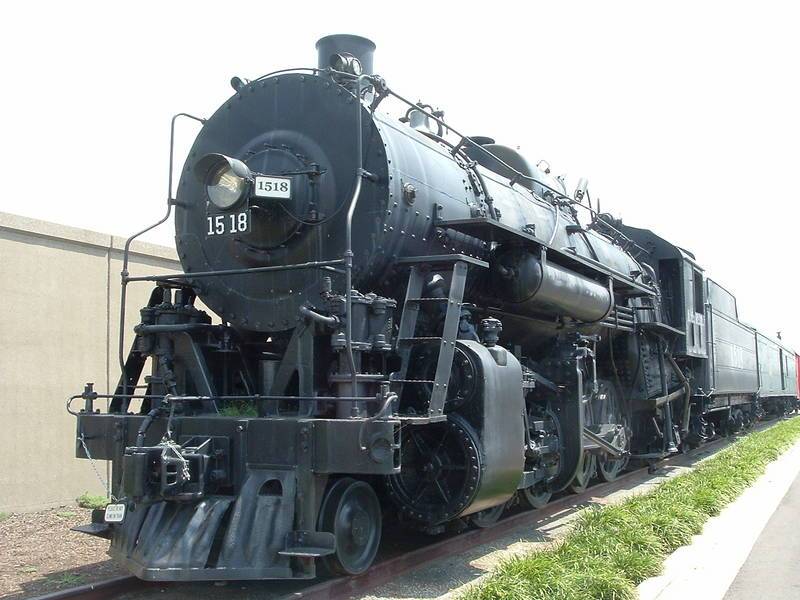
If one were to build a 1/60th scale model (example) of a locomotive, say of this one:

IC_1518_Portrait.jpg


exactly, meaning the same materials in the same manner, exactly the same in 1/60th scale, I would presume it weighs 1/60th of the original train.

But would it..

Have 1/60th of the horsepower and/or torque?
Burn 1/60th the amount of coal per scale work done?
Make noise at 1/60th loudness?
Pull 1/60th of the freight?
Cause 1/60th of the friction to the tracks?

Etc. Etc.?
 
Physics news on Phys.org
1MileCrash said:
If one were to build a 1/60th scale model (example) of a locomotive, say of this one:

exactly, meaning the same materials in the same manner, exactly the same in 1/60th scale, I would presume it weighs 1/60th of the original train.
No, it wouldn't. 1/60th refers to the dimensions: it is 1/60th the length, 1/60th the width and 1/60th the height. As a result, it is 1/216,000th the volume and therefore 1/216,000th the mass/weght.
But would it..

Have 1/60th of the horsepower and/or torque?
Burn 1/60th the amount of coal per scale work done?
Make noise at 1/60th loudness?
Pull 1/60th of the freight?
Cause 1/60th of the friction to the tracks?

Etc. Etc.?
Replacing those with the proper proportions, friction yes, horsepower and torque would depend. Operating pressure of a boiler doesn't depend on its physical size, but it does depend on the thickness of the skin of the boiler. So not only would your steam cylinders be smaller, but your boiler would probably not be able to run at the same pressure and your horsepower (if the engine would work at all) would therefore be much, much less.
 
russ_watters said:
No, it wouldn't. 1/60th refers to the dimensions: it is 1/60th the length, 1/60th the width and 1/60th the height. As a result, it is 1/216,000th the volume[...]

Stupid, stupid me. It was late, sorry.

Thanks for the answer.
 
russ_watters said:
Operating pressure of a boiler doesn't depend on its physical size, but it does depend on the thickness of the skin of the boiler.

Not really true...

Operating pressure absolutely depends on physical size. For a given wall thickness, the larger a boiler becomes, the less pressure it can hold.

If you make the assumption that the boiler is a cylinder and that its walls are thin as compared to its diameter, then it turns out that a perfectly downscaled model can hold exactly the same pressure as the original, assuming the same materials are used.
 
cjl said:
Operating pressure absolutely depends on physical size. For a given wall thickness, the larger a boiler becomes, the less pressure it can hold.

You can build a boiler any size you like, but what determines it's operating pressure is how thick its skin is. The only time the size is the relevant factor is if you maintain a constant skin thickness. Russ is correct in what he said.
 
I don't know...but cjl's explanation makes sense to me, especially when applied in reverse.

For example, if we have a 50 liter tank that holds 4500 psi with a wall thickness of x, i wouldn't think that a 5000 liter tank with a wall thickness of x could still hold 4500 psi.
 
EDIT: Sorry, read it as "would think a 5000 liter tank" not "wouldnt".
1MileCrash said:
Yes it is.

Of course, misread as above.
 
Last edited:
jarednjames said:
What? That is neither what Russ or cjl said.

Yes it is.

Cjl said that the wall thickness in proportion to the volume of the tank os what matters, essentially. A perfectly scaled down tank would hold the exact same pressure, is what he said. I simply applied the concept in reverse.

Cjl's post says that if the overall volume of the tank is lesser, then the required wall thickness is also lesser. Which also requires that as the volume of a tank increases that its required wall thickness must also increased, which goes with my common intuition.
 
In other words, if wall thickness is all that matters, then that means that a 5000 liter tank and a 5 liter tank with the same wall thickness could hold the same pressure. Is that correct?
 
  • #10
jarednjames said:
You can build a boiler any size you like, but what determines it's operating pressure is how thick its skin is. The only time the size is the relevant factor is if you maintain a constant skin thickness. Russ is correct in what he said.
Ehh no I wasn't. I didn't check the hoop stress equation and it turns out stress is related to r/t so a proportional decrease in both yields the same pressure or stress.
 
  • #11
russ_watters said:
Ehh no I wasn't. I didn't check the hoop stress equation and it turns out stress is related to r/t so a proportional decrease in both yields the same pressure or stress.

For some reason, even though I can picture it in my head as "the smaller it gets the thinner the walls can get" I can't work it out. My head's fried.

I've made one post per hour for the last 26 hours on PF. Some serious sleep deprivation. Concentration has gone and it's starting to show.

Apologies for the mistake.

I'm also concerned that I haven't come across the hoop stress equation on my uni course. Given the subject, I'd have thought it would be something of a requirement. Note to self, avoid anything to do with pressurisation systems.
 
  • #12
jarednjames said:
For some reason, even though I can picture it in my head as "the smaller it gets the thinner the walls can get" I can't work it out. My head's fried.

I've made one post per hour for the last 26 hours on PF. Some serious sleep deprivation. Concentration has gone and it's starting to show.

Apologies for the mistake.

I'm also concerned that I haven't come across the hoop stress equation on my uni course. Given the subject, I'd have thought it would be something of a requirement. Note to self, avoid anything to do with pressurisation systems.

It's a fairly simple derivation. For a thin walled pressure vessel, you basically cut it in half and do a force balance between the pressure forces on the half-tank and the wall stresses on the cut edge. The end result is that the stress is proportional to Pr/t. Thus, if r and t both decrease in the same proportion, the stress is the same for the same pressure (and therefore the maximum operating pressure remains the same for a tank made out of the same material).
 
  • #13
The basic approach in building a scale model of a physical system is to first express the operation of the system in terms of dimensionless variables. This can always be done. Then any scaled system which has the same values of these constants will operate in the same way. This cannot always be done. I know, this is esoteric and not much immediate help, but its true.

Regarding the pressurized vessel, why would one want the pressure to be the same?. Suppose it were a cylinder with a piston. If the pressure is operating on the cross sectional area of the piston, it produces a force, which will operate on the piston volume which has a particular density. If lengths are divided by 60, areas will be divided by 60^2, so at constant pressure, the force will be too. The volume being subjected to the force will be reduced by 60^3. For a constant density, the mass will be reduced by 60^3. From F=ma, the acceleration will be multiplied by 60. Since acceleration is length/time^2, this means the machine, using the same pressure and density of the piston, will operate sqrt(60) times faster than the original.

Using the dimensionless variables approach, there are five variables. m is your mass unit (e.g. kg), L is your length unit (e.g. meter), and t is your time unit (e.g. seconds)

p is the pressure in cylinder with dimensions ~ m/Lt^2
w is the length of the piston ~ L
r is the radius of the cylinder and piston ~ L
a is the acceleration of the piston ~ L/t^2
d is the mass density of the piston ~ m/L^3

Since there are 3 fundamental variables, (m,L,t) and 5 derived, there will be 5-3=2 dimensionless constants needed to describe the physics: f1=w/r and f2=p/daw.
If we want a scale model, these two dimensionless constants must stay the same. If we divide all lengths by 60, the f1 will stay the same, but f2 may not. If p and d stay the same and w is divided by 60, then a must be multiplied by 60, as found above. But we could change the pressure and piston density too, anything that left f2 the same would be acceptable. If you want the above scale model to operate at the same time scale as the original, you will have to change the p/d ratio.

For the locomotive, you would have to express its operations using equations involving only dimensionless variables, and then divide all lengths by 60, and hope you could finagle some way to adjust everything else so that all the dimensionless constants stay the same.
 
Last edited:

Similar threads

  • · Replies 75 ·
3
Replies
75
Views
13K
  • · Replies 2 ·
Replies
2
Views
8K