Can you identify these minerals?
- Thread starter z.js
- Start date
-
- Tags
- Minerals
Click For Summary
SUMMARY
The discussion centers on identifying a mineral and rock specimen, with participants suggesting it may be quartz or agate embedded in an igneous matrix. The original poster attempted to use UV light for identification but reported no results, leading to inquiries about their methodology. Key observations include the specimen's density of approximately 2.8 g/cm³, its non-magnetic properties, and the potential presence of tar and gravel. Participants emphasize the need for more data and suggest practical tests, such as hardness testing and heating, to further analyze the specimen.
PREREQUISITES- Understanding of mineral identification techniques
- Familiarity with UV light testing for fluorescence
- Knowledge of Mohs scale of mineral hardness
- Basic principles of geology and rock types
- Research methods for testing mineral hardness using the Mohs scale
- Learn about fluorescence and phosphorescence in minerals
- Explore qualitative inorganic analysis techniques
- Investigate the properties of common igneous rocks and their identification
Geology enthusiasts, mineral collectors, and anyone interested in rock identification and analysis techniques.

Earth sciences news on Phys.org
Simon Bridge
Science Advisor
Homework Helper
- 17,871
- 1,653
I doubt we can tell exactly from the picture.
What do you mean by "UV light ... didn't work"?
How did you employ the UV light?
What were you expecting?
What happened?
It looks like quartz or agate embedded in something igneous... but really just some white stuff in some grey stuff.
Have you shown it to a geologist? A local rockhound?
What do you mean by "UV light ... didn't work"?
How did you employ the UV light?
What were you expecting?
What happened?
It looks like quartz or agate embedded in something igneous... but really just some white stuff in some grey stuff.
Have you shown it to a geologist? A local rockhound?
daqddyo1
- 36
- 0
I need more information.
At first glance, this slightly blurry photo suggests your rock is a piece of tar filled with fine gravel.
How hard is this sample? (Can you scratch it with a knife?, with your finger nail?, etc.)
How dense is it? Does it feel like it might be metal?
Does it respond to a magnet?
At first glance, this slightly blurry photo suggests your rock is a piece of tar filled with fine gravel.
How hard is this sample? (Can you scratch it with a knife?, with your finger nail?, etc.)
How dense is it? Does it feel like it might be metal?
Does it respond to a magnet?
Philippe Bzh
- 4
- 0
black rock
Hi, I think at first sight the black rock can to be magmatic rock, very hard (isn't?). Quartz, right! And perahps a metal meet. At see later and good chance!
z.js said:Can you help me identify this mineral and rock? I can't.
I think the mineral is quartz.
I tried the UV light, but it didn't work.
(Mebbe it's something precious!)
Hi, I think at first sight the black rock can to be magmatic rock, very hard (isn't?). Quartz, right! And perahps a metal meet. At see later and good chance!
Evo
Staff Emeritus
- 24,032
- 3,276
It looks like tar and gravel to me.
256bits
Gold Member
- 4,197
- 2,201
Simon Bridge said:I doubt we can tell exactly from the picture.
What do you mean by "UV light ... didn't work"?
How did you employ the UV light?
What were you expecting?
What happened?
It looks like quartz or agate embedded in something igneous... but really just some white stuff in some grey stuff.
Have you shown it to a geologist? A local rockhound?
I expect the OP was checking for fluorescence and phosphorescence of certain minerals.
http://www.galleries.com/Fluorescent_Minerals
The picture looks like some nest cleaning aggomeration from some burrowing animal of years gone past. Difficult to tell from the fuzzy picture.
Simon Bridge
Science Advisor
Homework Helper
- 17,871
- 1,653
Probably - still, nice not to have to guess and I like to encourage more scientific reporting in scientific sites ;)I expect the OP was checking for fluorescence and phosphorescence of certain minerals.
That hadn't occurred to me...he picture looks like some nest cleaning aggomeration from some burrowing animal of years gone past.
I think the bottom line is that there is not enough data.
Short answer: "no".
PhysicoRaj
Gold Member
- 538
- 49
I have a lot of information about rocks  (whether they're minerals or not) because I have played with them
  and even swallowed a lot of them when I was small.
At what place did you find it? A hillock? Roadside? Riverside?
(whether they're minerals or not) because I have played with them and even swallowed a lot of them when I was small.At what place did you find it? A hillock? Roadside? Riverside?
z.js
- 57
- 0
It was found at a rocky beach which was also a fossil site. (Flat Rocks, Inverloch, Australia)
PhysicoRaj
Gold Member
- 538
- 49
Did you check for the three things prescribed by daqddyo1?
PhysicoRaj
Gold Member
- 538
- 49
After that heat a 'piece' of the 'bottom' part of the stone (bottom in the picture, a thick black layer) on your stove without allowing the flames to lick it. Does it melt?
z.js
- 57
- 0
The black stuff at the bottom scratched metal. It has a density of about 2.8 g/cm3, and it is not attracted by a magnet. I will see if it melts when I heat it. How hot is a normal alcohol burner?
PhysicoRaj
Gold Member
- 538
- 49
Hot enough to know if it makes a good rock or not!z.js said:How hot is a normal alcohol burner?
Anyway let's see if it melts.
256bits
Gold Member
- 4,197
- 2,201
z.js said:The black stuff at the bottom scratched metal. It has a density of about 2.8 g/cm3, and it is not attracted by a magnet. I will see if it melts when I heat it. How hot is a normal alcohol burner?
There are many metals - lead, tin, copper, iron, steel.
You need the hardness of the rock based on a scale to properly identify.
http://en.wikipedia.org/wiki/Mohs_scale_of_mineral_hardness
seany
- 9
- 0
please make a sharper shot? It can also be some other sedimentary matirx than tar and gravel
z.js
- 57
- 0
256bits said:There are many metals - lead, tin, copper, iron, steel.
You need the hardness of the rock based on a scale to properly identify.
The black stuff scratched a steel knife.
PhysicoRaj
Gold Member
- 538
- 49
z.js said:The black stuff scratched a steel knife.
Then don't go to heat it.
Enigman
- 647
- 311
Go raid a chem lab:
http://en.wikipedia.org/wiki/Qualitative_inorganic_analysis
(I miss flame tests )
)
http://en.wikipedia.org/wiki/Qualitative_inorganic_analysis
(I miss flame tests
)
z.js
- 57
- 0
PhysicoRaj said:Then don't go to heat it.
I did...
The black stuff that the mineral was stuck in seems to be tar. The black rock at the bottom didn't.
z.js
- 57
- 0
Enigman said:Go raid a chem lab:
http://en.wikipedia.org/wiki/Qualitative_inorganic_analysis
(I miss flame tests
You know I can't do that!

I miss flame tests too!
PhysicoRaj
Gold Member
- 538
- 49
z.js said:The black rock at the bottom didn't.
You mean it didn't melt? If it were really a mineral, but I don't think it is a mineral very precious. You can do the flame test in your alcohol burner. But that would not give interesting results.
You have a wide (very much) range to match with what you have got. But I don't go for metals.
z.js
- 57
- 0
I was asking about the little things that looked like quartz, not the black stuff.
- 19,865
- 10,851
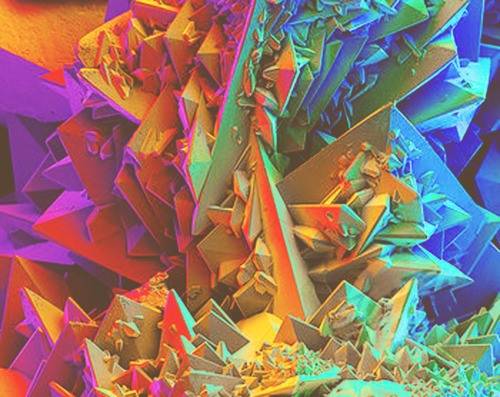
The minerals of a kidney stone can be quite beautiful!
PhysicoRaj
Gold Member
- 538
- 49
One must be proud to have them inside!


Similar threads
- Replies
- 0
- Views
- 2K
- · Replies 14 ·
- Replies
- 14
- Views
- 4K
- · Replies 1 ·
- Replies
- 1
- Views
- 5K
- · Replies 12 ·
- Replies
- 12
- Views
- 2K
- · Replies 3 ·
- Replies
- 3
- Views
- 1K
- · Replies 14 ·
- Replies
- 14
- Views
- 5K
- · Replies 3 ·
- Replies
- 3
- Views
- 2K
- Replies
- 36
- Views
- 6K
- · Replies 1 ·
- Replies
- 1
- Views
- 1K
- · Replies 13 ·
- Replies
- 13
- Views
- 902