Can Zeta ζ(½+it) be interpreted as a Wave function?

Click For Summary
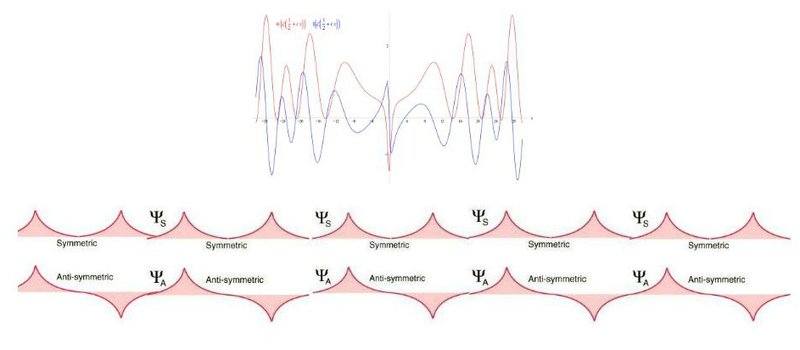
The discussion explores the potential connection between quantum mechanics (QM) and the Riemann Zeta function, specifically the interpretation of ζ(½+it) as a wave function. A new approach suggests that the wave graph of ζ(½+it) could describe atomic nuclei, with its eigenvalues reflecting the nontrivial zeros of the Zeta function. However, it is emphasized that while physics may provide tools like Hermitian operators, the proof of the Riemann Hypothesis (RH) must ultimately rely on mathematical methods. The forum also reminds participants to adhere to rules against discussing personal work. The thread concludes with a closure on the topic.
Jason C
Messages
1
Reaction score
0
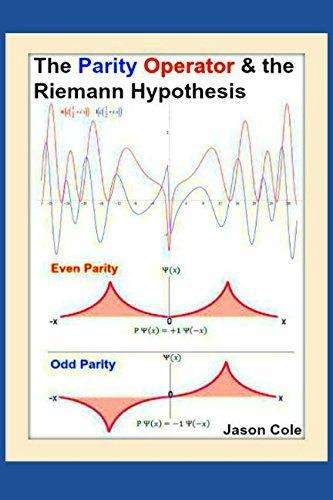
In a recent article by BBM in Physical Review Letters highlights another approach to link QM to Zeta to Prove R.H. There approach proved unsuccessful. I want to ask professional Physicists if the following new approach have merit in connecting the Zeta function to QM? This new line of attack is interpreting the wave graph of ζ(½+it) of Zeta as a wave function. Those wave curves in the graph of ζ(½+it) could be describing the atomic nuclei the Eigenvalue(nontrivial zeros) are related to. It is a new Complex version of the Parity Operator and it is Hermitian. It's eigenvalues can mirror the nontrivial zeros of Zeta. Could this wave function interpretation of ζ(½+it) be the new approach in proving Riemann Hypothesis using Physics? The jpeg attachments are visual representations of this new line of attack for proving RH.
51R5i5BrGQL.jpg

zzzzzxxxx3.jpg
 
Physics news on Phys.org
RH is a mathematical statement, so it can be proved (or disproved) only by mathematics. Physics cannot prove RH. Perhaps a proof may be based on some mathematical tool, such as a Hermitian operator, which has applications in physics, but still the proof of RH cannot depend on physics.
 
In any case, PhysicsForums is not the place to discuss personal work. Please read the forum rules.

Thread closed.
 
Time reversal invariant Hamiltonians must satisfy ##[H,\Theta]=0## where ##\Theta## is time reversal operator. However, in some texts (for example see Many-body Quantum Theory in Condensed Matter Physics an introduction, HENRIK BRUUS and KARSTEN FLENSBERG, Corrected version: 14 January 2016, section 7.1.4) the time reversal invariant condition is introduced as ##H=H^*##. How these two conditions are identical?

Similar threads

  • · Replies 5 ·
Replies
5
Views
2K
  • · Replies 3 ·
Replies
3
Views
2K
  • · Replies 2 ·
Replies
2
Views
2K
  • · Replies 0 ·
Replies
0
Views
3K
  • · Replies 10 ·
Replies
10
Views
2K
Replies
1
Views
2K
Replies
1
Views
2K
  • · Replies 5 ·
Replies
5
Views
2K
  • · Replies 2 ·
Replies
2
Views
4K
Replies
8
Views
11K