SUMMARY
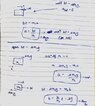
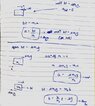
The discussion centers on the accuracy of graphs depicting the motion of two masses, ##m_1## and ##m_2##, under the influence of an applied force ##F##. Participants confirm that ##m_2## is indeed positioned atop ##m_1## and explore the implications of static versus kinetic friction on acceleration. Key points include the expectation of a drop in acceleration for ##m_2## once the force exceeds static friction, and the parallel slopes of acceleration versus time graphs before and after the discontinuity. The analysis concludes that both masses experience the same initial acceleration of bt/m1, but discrepancies arise in subsequent behavior.
PREREQUISITES
- Understanding of Newton's laws of motion
- Familiarity with static and kinetic friction concepts
- Knowledge of graph interpretation in physics
- Basic calculus for analyzing acceleration functions
NEXT STEPS
- Study the effects of static and kinetic friction on motion
- Learn about graphing acceleration vs. time in physics
- Investigate the implications of discontinuities in motion graphs
- Explore advanced topics in dynamics involving multiple masses
USEFUL FOR
Physics students, educators, and anyone involved in mechanics or dynamics analysis, particularly those focusing on friction and motion graphs.