Circuit Analysis: Voltage Direction & Power Questions

Click For Summary
SUMMARY

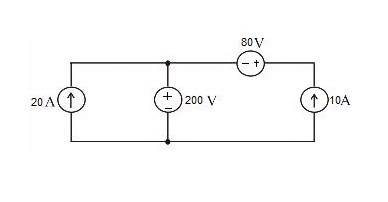
The discussion focuses on voltage direction and power calculations in a circuit with a center component exhibiting a voltage of 200V directed upwards. The user inquires whether the voltage direction applies to other components, specifically a 20A and a 10A current. Additionally, the user seeks clarification on the relationship between voltage direction and power, questioning whether power is calculated as +Vi or -Vi when voltage aligns with current direction. The conversation highlights the importance of understanding voltage polarity and current direction in circuit analysis.

PREREQUISITES
  • Basic understanding of circuit components such as resistors, batteries, and current sources.
  • Knowledge of Ohm's Law and its application in circuit analysis.
  • Familiarity with voltage polarity and current direction conventions.
  • Experience with power calculations in electrical circuits.
NEXT STEPS
  • Study the principles of Kirchhoff's Voltage Law (KVL) for circuit analysis.
  • Learn about power calculations in electrical circuits, focusing on the formula P = VI.
  • Explore the significance of voltage polarity in circuit design and analysis.
  • Investigate the differences between ideal and real circuit components, including meters and their limitations.
USEFUL FOR

Electrical engineering students, circuit designers, and anyone involved in analyzing or troubleshooting electrical circuits will benefit from this discussion.

Air
Messages
202
Reaction score
0
I have the following circuit:
CircuitAnalysis.jpg


My question is, what do I take the voltage direction to be? For the center component, it is 200V in a positive direction being upwards so does that mean that for the other components (20A and 10A), it is also in that direction?

Thanks in advance. :smile:


EDIT: I have one more question - When voltage is in the direction of current, is the power equal to +Vi or -Vi? :confused:
 
Last edited:
Physics news on Phys.org
I don't understand the components - are they batteries, meters or what? Hmm, can't be meters because you can't run 80 A through a Voltmeter or put 200 Volts across an Ammeter!

It appears that the + and - markings indicate the voltage polarity and the arrows indicate the direction of standard (positive) current.
 

Similar threads

  • · Replies 12 ·
Replies
12
Views
2K
Replies
13
Views
3K
Replies
15
Views
2K
  • · Replies 10 ·
Replies
10
Views
1K
  • · Replies 5 ·
Replies
5
Views
2K
  • · Replies 5 ·
Replies
5
Views
2K
Replies
3
Views
2K
  • · Replies 2 ·
Replies
2
Views
2K
  • · Replies 8 ·
Replies
8
Views
3K
  • · Replies 21 ·
Replies
21
Views
2K