docnet
- 796
- 486
- Homework Statement
- Compute the second fundamental form of the surface.
- Relevant Equations
- Standard differential geometry formulas for the second fundamental form with Christoffel symbols.
Hi all. We are computing the second fundamental form corresponding to a surface.
The correct answer should give the coefficients 2, 0, and -2 for IIuu, IIuv, IIvv
We have only been able to compute IIz, and not IIx, IIy where we have functions instead of 2, 0 and -2.
We are 99% certain that everything up to the da component in part (e.) is correct. It is just in the last computations where an apparent errors are. Can you see where the error is in part g?
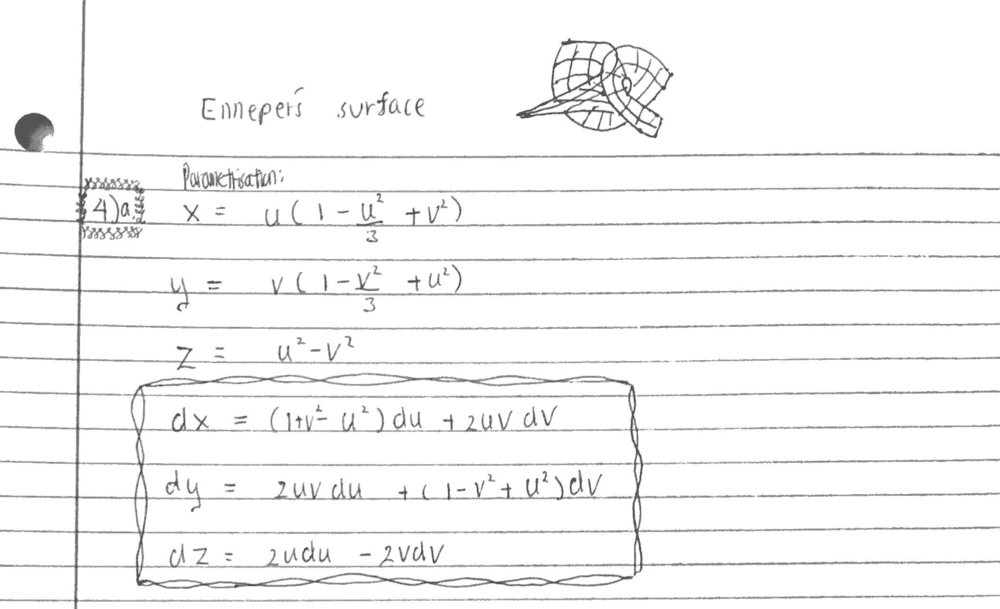
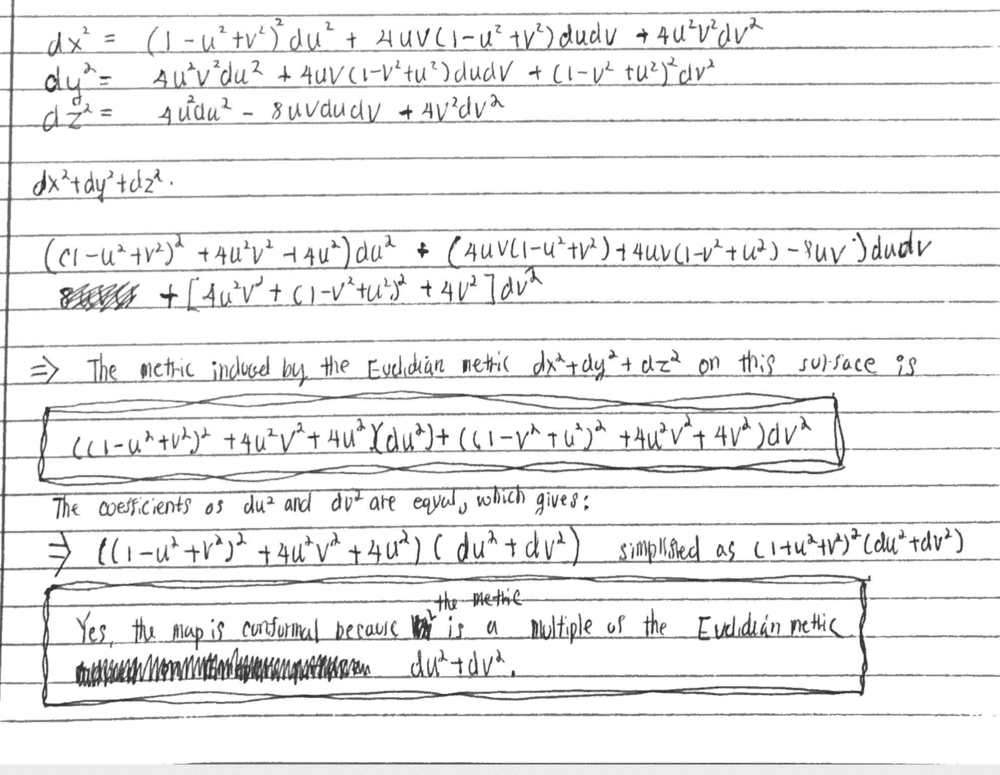
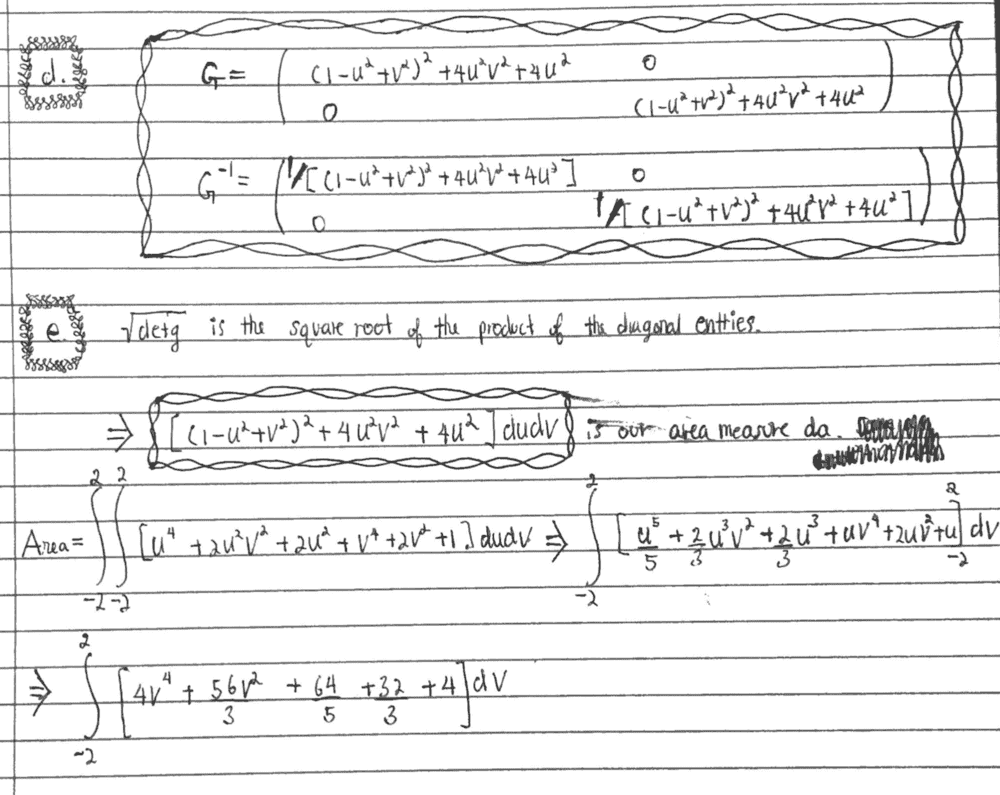
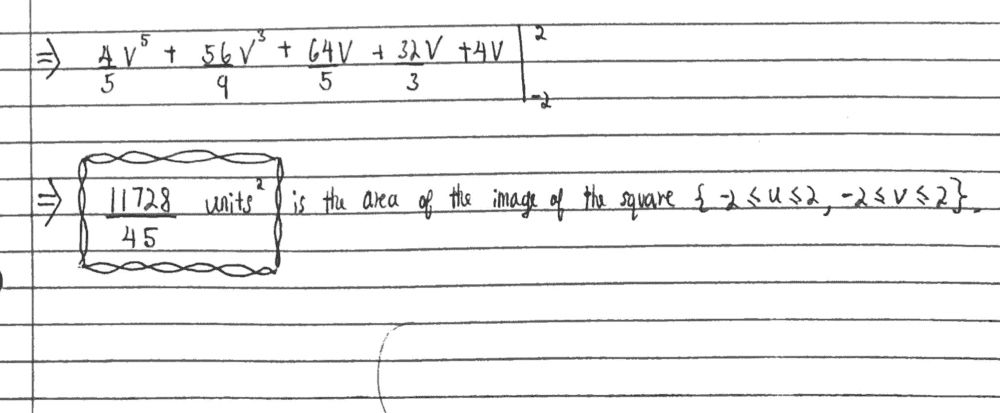
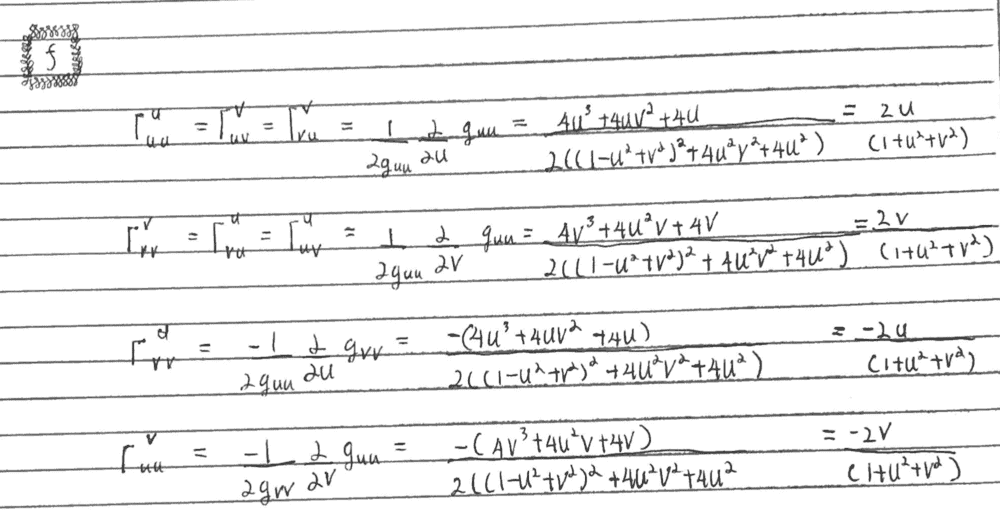
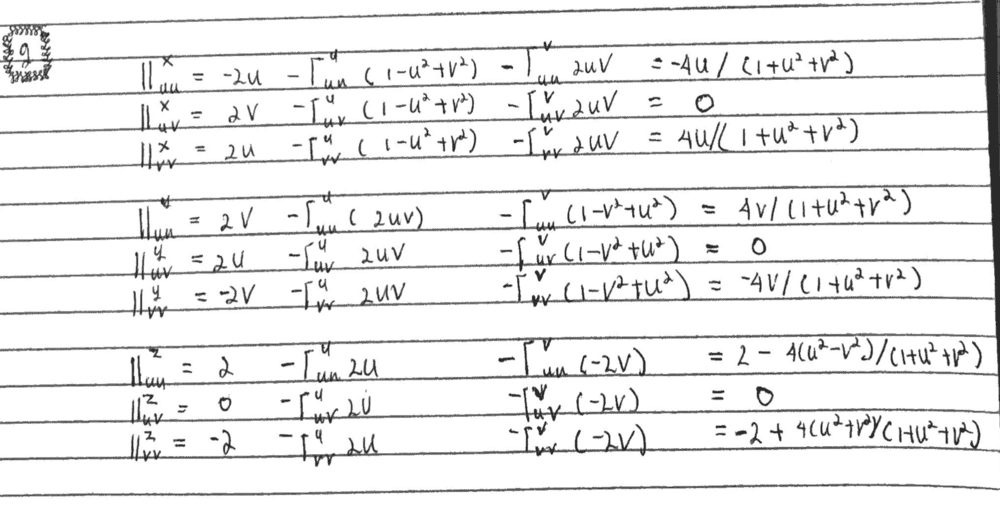
In part g, the II's corresponding to x and y should be the same as z. It seems like something is missing, perhaps. The second fundamental form were calculated using the following formula.

Thank you!
The correct answer should give the coefficients 2, 0, and -2 for IIuu, IIuv, IIvv
We have only been able to compute IIz, and not IIx, IIy where we have functions instead of 2, 0 and -2.
We are 99% certain that everything up to the da component in part (e.) is correct. It is just in the last computations where an apparent errors are. Can you see where the error is in part g?
In part g, the II's corresponding to x and y should be the same as z. It seems like something is missing, perhaps. The second fundamental form were calculated using the following formula.
Thank you!
Last edited: