Discussion Overview
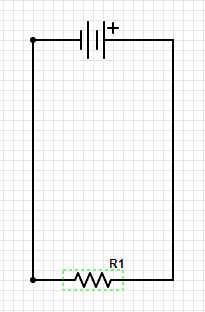
The discussion revolves around the effects of DC current on the corrosion of a metal pipe carrying heavy oil with H2S and CO2. Participants explore whether the introduction of DC current will decrease, maintain, or increase the corrosion rate of the pipe, and whether the system can be classified under "Cathodic Protection." The conversation includes technical explanations, conceptual clarifications, and debates regarding the principles of galvanic corrosion and cathodic protection.
Discussion Character
- Exploratory
- Technical explanation
- Conceptual clarification
- Debate/contested
Main Points Raised
- Some participants suggest that the introduction of DC current may decrease the corrosion rate if applied correctly, while others challenge this assumption, stating that it may not provide significant protection.
- There is a discussion about galvanic corrosion occurring when different metals are in contact, with some participants clarifying that this can also happen within alloys.
- Some participants propose that knowing the concentrations of H2S and CO2 could allow for calculations to determine the necessary voltage to counteract corrosion, while others express uncertainty about the implications of applying excessive voltage.
- One participant argues that the system described does not meet the criteria for cathodic protection, as it lacks a sacrificial electrode, while another suggests it resembles impressed current cathodic protection (ICCP).
- Concerns are raised about the effectiveness of using a zinc anode to protect the internal surfaces of the pipe from corrosion caused by H2S.
- Participants discuss the need for insulation where different metals meet to prevent corrosion due to voltage differentials.
Areas of Agreement / Disagreement
Participants express differing views on whether the introduction of DC current will effectively reduce corrosion and whether the system qualifies as cathodic protection. There is no consensus on the effectiveness of proposed solutions or the underlying principles of galvanic corrosion and cathodic protection.
Contextual Notes
Some participants note the lack of specific values and assumptions in the original question, which complicates the analysis. The discussion also highlights the dependence on the orientation of the current and the specific conditions of the system.