Creating a stable 5V DC supply out of 6 V (RMS) AC

Click For Summary

Discussion Overview

The discussion revolves around creating a stable 5V DC power supply from a 6V RMS AC source using a transformer. Participants explore circuit design considerations, component selection, and potential issues related to voltage regulation, ripple, and current requirements for powering ATmega 8A microcontrollers.

Discussion Character

  • Technical explanation
  • Debate/contested
  • Mathematical reasoning

Main Points Raised

  • One participant proposes using a full-wave bridge rectifier and an LM7805 voltage regulator to achieve a stable 5V output from the 6V AC input.
  • Another participant questions whether 6V is sufficient for the LM7805, citing its minimum input voltage requirement of 7V and the need to consider RMS versus peak voltage.
  • Some participants suggest using a higher voltage transformer, such as a 9V transformer, to ensure adequate input voltage for the regulator.
  • Concerns are raised about the current requirements, with one participant noting that the capacitor must be large enough to maintain voltage above the regulator's minimum input voltage under load.
  • Discussion includes the need for a switch and fuse in the circuit for safety, emphasizing the importance of showing these components in schematics.
  • One participant suggests running the microcontrollers at 3.3V instead of 5V, proposing the use of a buck DC-DC converter for this purpose.
  • Technical details are provided regarding capacitor sizing and the effects of load on voltage droop, with calculations presented for ripple voltage and capacitance requirements.

Areas of Agreement / Disagreement

Participants express differing views on the adequacy of the 6V AC input for the LM7805 regulator, with some advocating for a higher voltage transformer. There is no consensus on the optimal design approach, and multiple competing views remain regarding voltage regulation and component selection.

Contextual Notes

Participants highlight the importance of considering transformer droop under load and the non-linear behavior of power supply designs. There are references to specific calculations regarding ripple voltage and capacitor sizing that depend on various assumptions about load current and transformer characteristics.

  • #61
First of all, I would like to thank @Borek who, in post #2, mentioned the DSO138 oscilloscope. The device has really been very helpful.

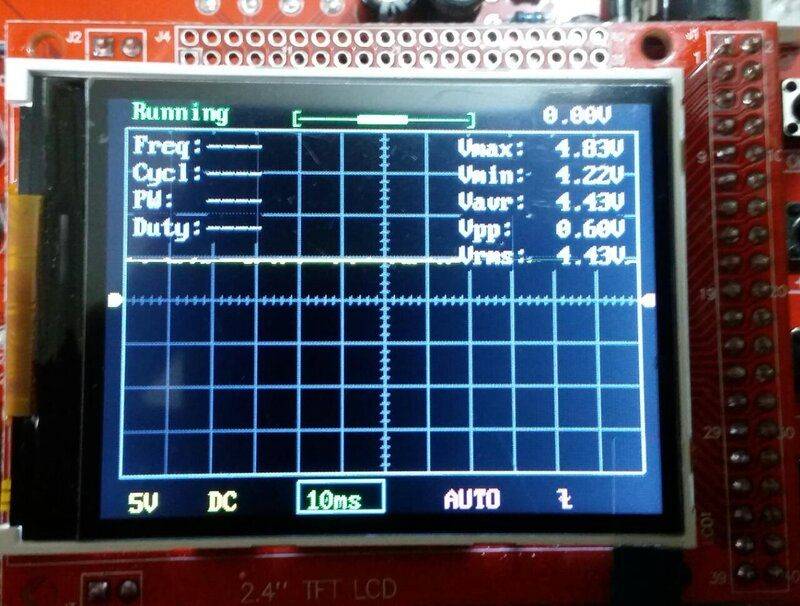
Next, I have performed the experiment, based on the circuit I had posted here. These are the results from the oscilloscope:
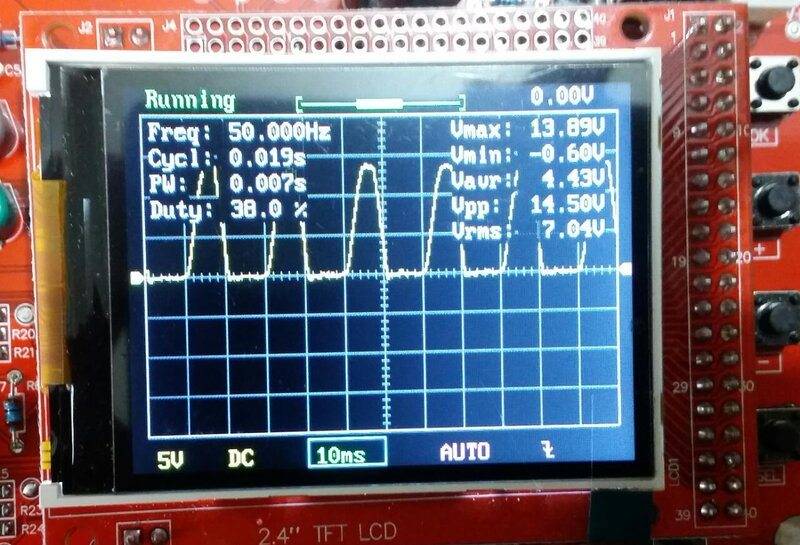
WhatsApp Image 2021-05-17 at 2.22.03 PM.jpeg

Output of full wave rectifier bridge
WhatsApp Image 2021-05-17 at 2.22.03 PM (1).jpeg

After passing the output through the voltage regulator
with necessary filter capacitors

I can see that the average voltage is 4.43 V, the maximum being 4.83 V. 5 V is not reached. Is this an accuracy error of the oscilloscope?
 
Engineering news on Phys.org
  • #62
Does the first picture look like full wave rectification? Check your diode orientation.
 
  • #63
pbuk said:
Does the first picture look like full wave rectification?
Yeah, I have seen that. Trying to figure out the issue.
 
  • #64
Update: Fixed it.
WhatsApp Image 2021-05-17 at 4.44.28 PM.jpeg
WhatsApp Image 2021-05-17 at 4.44.28 PM (1).jpeg
 
  • Like
Likes   Reactions: pbuk

Similar threads

  • · Replies 8 ·
Replies
8
Views
3K
  • · Replies 10 ·
Replies
10
Views
4K
  • · Replies 11 ·
Replies
11
Views
3K
  • · Replies 7 ·
Replies
7
Views
4K
Replies
2
Views
2K
Replies
6
Views
4K
Replies
1
Views
2K
  • · Replies 7 ·
Replies
7
Views
4K
  • · Replies 28 ·
Replies
28
Views
15K
  • · Replies 14 ·
Replies
14
Views
5K