Detecting BPA in Bottled Water and Bath Filters

  • Thread starter Thread starter Secan
  • Start date Start date
Click For Summary

Discussion Overview

The discussion revolves around the detection of bisphenol A (BPA) in bottled water and the potential implications of BPA exposure from both bottled water left in a hot car and from bath filters. Participants explore various testing methods, the effects of heat on plastic, and the absorption of chemicals through the skin.

Discussion Character

  • Exploratory
  • Technical explanation
  • Debate/contested
  • Conceptual clarification

Main Points Raised

  • Some participants inquire about easy tests to check for BPA in bottled water, suggesting that sensitive tests may indicate BPA presence in all water.
  • There is a proposal that using an activated charcoal filter may be more effective than analyzing for BPA directly.
  • Concerns are raised about the potential for BPA to leach into water from plastic bottles exposed to heat, particularly when the water is intended for infant consumption.
  • Participants discuss the implications of using a sediment filter after a water heater, noting that it may not remove BPA and could release small amounts after installation.
  • Some participants suggest that absorption of BPA through the skin during bathing is unlikely, especially if salt is added to the water to alter osmotic pressure.
  • Questions are posed regarding the type of plastic used in bottled water and its potential to leach harmful substances when exposed to sunlight.
  • There is a discussion about the environmental contamination of water sources with plastic and the implications for water quality.
  • Some participants express skepticism about the health risks associated with low levels of BPA and antimony, questioning the validity of fears surrounding these substances.
  • The concept of skin absorption is debated, with some asserting that while skin acts as a barrier, it can still absorb water under certain conditions.
  • Historical references to homeopathy and its principles are mentioned in the context of dilution and exposure to toxins.

Areas of Agreement / Disagreement

Participants express a range of views on the risks associated with BPA and the effectiveness of various testing methods. There is no consensus on the health implications of BPA exposure or the best approach to testing and mitigating risks.

Contextual Notes

Limitations include uncertainties about the specific types of plastics used in bottled water, the conditions under which BPA leaches, and the effectiveness of different filtration methods. The discussion also highlights the complexity of chemical absorption through the skin and the varying interpretations of health risks associated with low-level exposure to contaminants.

Secan
Messages
141
Reaction score
11
I bought 15 pcs of expensive triple filtered bottled water in a box and forgot to bring it out of the car storage at the back and the car exposed to sunlight for a day. What easy tests can you check for presence of BPA in the bottle water? I'm contemplating what to do with the 15 bottles.

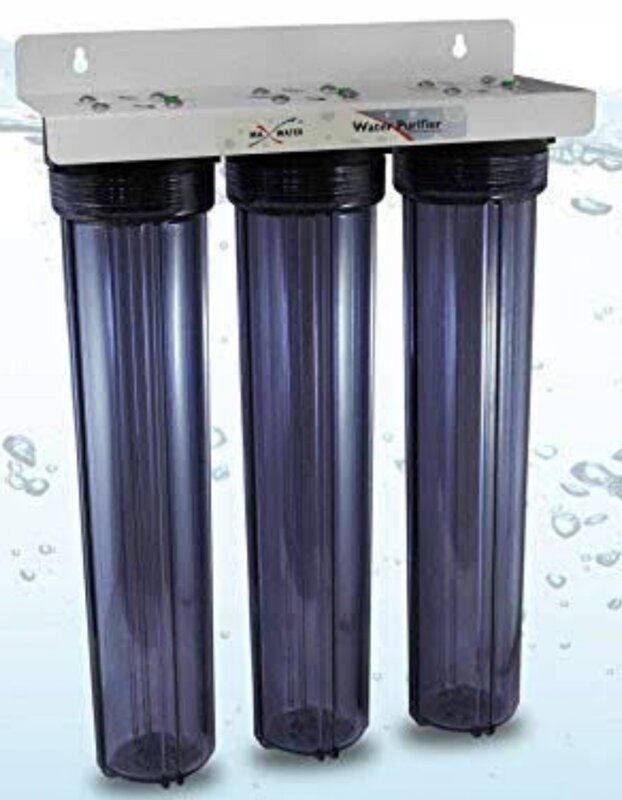
Second. I have a sediment filter in my bathroom and it's after the water heater, meaning it's constantly exposed to the heat. What would happen if it releases BPA during bath and your skin exposed to it? Would it seep inside the skin or make you age faster, etc.?
20200926_054249.jpg
 
Engineering news on Phys.org
Secan said:
What easy tests can you check for presence of BPA in the bottle water? I'm contemplating what to do with the 15 bottles.
If you have a sufficiently sensitive test, all water will be shown to contain BPA. It is probably easier to put the water through an activated charcoal filter than to analyse for BPA. What you do will depend on what you intend to do with the water, and your fears.

Secan said:
I have a sediment filter in my bathroom and it's after the water heater, meaning it's constantly exposed to the heat.
BPA will enter the water before the heater. A sediment filter will not remove BPA.
The filter will release very little BPA after it has been installed and flushed.

Absorption through your skin should not be a problem. If you can increase the salt content in the bath water, the osmotic pressure will not push so much water (with BPA) into your body through your skin.
 
I'd start by seeing if you can determine the type of plastic used, and if it even contains BPA.
 
Baluncore said:
If you have a sufficiently sensitive test, all water will be shown to contain BPA. It is probably easier to put the water through an activated charcoal filter than to analyse for BPA. What you do will depend on what you intend to do with the water, and your fears.

The bottle water is for a baby milk.
So what would it take to analyze for BPA or other substances that can leach from the bottle when it is inside car trunk for an entire day? An electron microscope or a PCR substrate, etc? And what other substances are usually leeched? This is the bottle. It's just a normal disposable bottle water.

20201009_090854.jpg


BPA will enter the water before the heater. A sediment filter will not remove BPA.
The filter will release very little BPA after it has been installed and flushed.

What do you mean the BPA will enter the water before the heater? The water is stored in DAMs in the city, then it passed through concrete pipes under the street. Then it pass by GI pipes in the house. So how could BPA get into the water before the heater?

Absorption through your skin should not be a problem. If you can increase the salt content in the bath water, the osmotic pressure will not push so much water (with BPA) into your body through your skin.
 
You should move your filter to the cold side of your water heaters.
 
Secan said:
So how could BPA get into the water before the heater?
Plastic floats at the surface of the water in the dam. Sunlight on the plastic breaks down the structure. The water contains those products, unless they are bound by biology or clay.
You can never completely escape your environment to an absolutely pure system.

What is it that concerns you about the very small amount of BPA that might be present ?
Do you believe that progressive homeopathic dilution increases the effects of BPA ?
 
  • Like
Likes   Reactions: russ_watters
Baluncore said:
Plastic floats at the surface of the water in the dam. Sunlight on the plastic breaks down the structure. The water contains those products, unless they are bound by biology or clay.
You can never completely escape your environment to an absolutely pure system.

There are 2 separate issues here. One is bottled water put in car trunk exposed to hot sun for a day and a separate concern is the water filter after the heater. In the latter. Why is there plastic floating in the water in the dam?

Let's focus to the main concern from now on. You always hear the advice never to put bottled water in car trunk exposed to the sun for a day. Is this an urban legend? Using "bottled water exposed sun" search strings at googles. I got hundreds of hits. The following is one example:

"A study done by the University of Florida found that if a plastic water bottle is exposed to long periods of heat, it can release bisphenol A (commonly abbreviated as BPA) and the chemical element antimony into the water. Researchers have suggested that BPA has been found to change hormone levels, lead to cardiovascular issues, and even increase the risk of some cancers. Introducing antimony into your system can lead to a range of gastrointestinal issues including diarrhea, vomiting, and stomach ulcers."

What is it that concerns you about the very small amount of BPA that might be present ?
Do you believe that progressive homeopathic dilution increases the effects of BPA ?

Let's not limit it to BPA or antimony. Is it not most bottled water use Polyethylene terephthalate (PET) plastic. What really happens if PET is exposed to the sun with water inside. What would actually leech to the water after a day of exposure (i left the 15 pcs for a day only). And it is for consumption by a 4 month old infant (mixing with milk powder).
 
Secan said:
Why is there plastic floating in the water in the dam?
Because the wind blows plastic litter across the ground until it gets into the water, where it remains.

Antimony is only dangerous in massive quantities where it is processed. It is used in some medications. It is certainly not dangerous in the water from plastic water bottles. There is probably more antimony in green vegetables, along with the magnesium, lead, cadmium and mercury.

I believe you are allowing your fears to invert your reason. Do you really believe that progressive homeopathic dilution increases the effects on the body?
 
  • Like
Likes   Reactions: jim mcnamara
Baluncore said:
If you have a sufficiently sensitive test, all water will be shown to contain BPA. It is probably easier to put the water through an activated charcoal filter than to analyse for BPA. What you do will depend on what you intend to do with the water, and your fears.BPA will enter the water before the heater. A sediment filter will not remove BPA.
The filter will release very little BPA after it has been installed and flushed.

Absorption through your skin should not be a problem. If you can increase the salt content in the bath water, the osmotic pressure will not push so much water (with BPA) into your body through your skin.

Hmm.. in a normal bath without any salt addition, I wonder how much of the water get inside the skin? can this happen? I thought the skin is a barrier.
 
  • #10
Secan said:
Hmm.. in a normal bath without any salt addition, I wonder how much of the water get inside the skin? can this happen? I thought the skin is a barrier.
Yes it does happen.
The concept of the skin as a barrier is valid for teaching purposes, but not perfect. Because the body contains salts, some pure water will move in through the skin due to osmotic pressure. A diffusion gradient is formed. Through that and other means, a human body develops about 1 psi of positive internal pressure, that opposes the osmotic flow. When you are cut, there is an outward flow of blood that prevents entry of infectious agents.
If you take a bath in pure water, your skin will absorb some water and swell. You will not absorb water if you swim in sea water, or water containing other dissolved salts. It all depends on your degree of hydration and the purity of the external water.

Patches are used to deliver some slow release medication through the skin. There are also electrical ways of biasing the osmotic pressure, to push a specific medication through the skin into the body.

Thousands of years ago, homeopathy meant taking small doses of poisons so the body would develop a resistance to those compounds. It did not work with large doses, or with cumulative poisons. Obviously dilution was essential, and more dilution of the poison was better.

New-age homeopathy twists that about to wrongly claim that as concentration is reduced towards infinite dilution, the effects of the compound being diluted become greater. If that claim was true, then increasing the levels of contamination would reduce the effects of that contamination, which is clearly irrational. The only things increased by infinite dilution are the dollar profits and the placebo effect.

You are concerned with the expense of buying bottled “pure water”.
Is there a “packed on” or “use by” date on the bottles you buy?
Absolute purity is expensive, unnecessary and unobtainable.
Your issue is not water contamination, but the psychology of heightened fear, uncertainty and doubt, caused by marketing misinformation, designed specifically to relieve you of more of your money.
 
  • Love
Likes   Reactions: Tom.G
  • #11
Nice reply by @Baluncore :smile:

Thread is locked temporarily for Moderation...

UPDATE -- Thread will remain closed. Thank you everyone for trying to help the OP.
 
Last edited:

Similar threads

  • · Replies 39 ·
2
Replies
39
Views
16K
  • · Replies 19 ·
Replies
19
Views
10K
  • · Replies 21 ·
Replies
21
Views
6K
  • · Replies 1 ·
Replies
1
Views
3K