differential line insertion loss behaves very problematic in the oven

  • Thread starter Thread starter yefj
  • Start date Start date
Join the discussion
Registration is free. Ask a follow-up in this thread, or start your own.
4 replies · 586 views
yefj
Messages
135
Reaction score
2
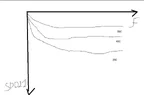
Hello,I have a differential line connected by 4 ports using 1.85 sma connectors. one differential port on one side and another differential port on the other side.the PCB is placed in an oven ,I expect the temprature cause S21 to be more lossy but instead its getting less lossy. As shown in the photo.Why is it happening? What could be done to make the insertion loss getting bigger with temprature? Thanks.
 

Attachments
  • ff.webp
    ff.webp
    14.3 KB · Views: 2
Engineering news on Phys.org
yefj said:
As shown in the photo.Why is it happening?
The thing that will change most with temperature is the thickness of the PCB. What material is the PCB?

My guess is that your input lines are not accurately matched to the tracks on the PCB. You are operating on the slope of the match. As you change the temperature, the track impedance on the PCB changes, so the impedance mismatch changes, along with the insertion loss.

If you can detect a mismatch between the instrument cable and the PCB track, then the lines on either side of the coaxial connector are not correctly matched. If the connector is visible on TDR, it should look like a very small lump of L or C on the line. If the lump is big, then you have the wrong connector or a bad PCB footprint.

yefj said:
What could be done to make the insertion loss getting bigger with temprature?
Cross the Smith chart, change the PCB track width to match on the other side of a perfect match. That should invert the temperature relationship.

You could match the coaxial line from the test instrument, to the track on the PCB, so you have almost no insertion loss.
 
Hello Baluncore, I think it moisture in the connector or the substrate.
Could you please help me with materials on the subject?
I put my PCB in the oven for 60C and it fixed the issue likea charm.
So something happen to the system that 60C fixed it.
Can a sma connetor dielectic have moisture that increase tan delta?
can the PCB substrate absorb moisture?
if you have exprience or some document on the subject it would be great.
 
yefj said:
Can a sma connetor dielectic have moisture that increase tan delta?
can the PCB substrate absorb moisture?
Yes, all polymers absorb some water from the environment, even the PTFE insulation used in hardline and connectors can absorb about 1% by weight, and swell if kept submerged.

If the water is bound into the polymer structure, then what water there is will have a low dielectric constant of about 20, like living tissue, while liquid water in crevices or on the surface will be closer to 80.

1. Has the assembly been washed or soaked in water ?
2. What is the PCB material ?
3. Is the polymer glass reinforced ?
4. What is the connector insulation ?

There is a table of data here:
https://www.specialchem.com/plastics/guide/water-absorption-24-hours
 
Hello Baluncore,I dont know how its been treated in production but its very intresting.
Thank you very much.