Distribution of protons in momentum space in an ion source?

Click For Summary
SUMMARY

The distribution of protons in momentum space within an ion source, particularly one fed with H2 at low pressure, forms a dynamic "shell" structure influenced by an extraction voltage of approximately 10 kV. As protons are accelerated, this shell moves along the y-axis, while new shells continuously emerge from the ionization of H2. Collisions contribute to the formation of larger shells in momentum space, leading to a smearing effect over time. The specific characteristics of the ion source and field geometry play critical roles in determining the overall distribution of protons.

PREREQUISITES
  • Understanding of ion source operation and dynamics
  • Familiarity with momentum space concepts in particle physics
  • Knowledge of ionization processes in hydrogen (H2)
  • Basic principles of electric field effects on charged particles
NEXT STEPS
  • Research the effects of extraction voltage on proton acceleration in ion sources
  • Study the ionization mechanisms of hydrogen and their impact on proton distribution
  • Examine the role of field geometry in particle dynamics within ion sources
  • Explore advanced modeling techniques for momentum space distributions in particle physics
USEFUL FOR

Physicists, engineers, and researchers involved in ion source design, particle acceleration, and momentum space analysis will benefit from this discussion.

Sven Andersson
Messages
38
Reaction score
0
How are protons in an ion source distributed in momentum space? Consider an ion source fed with H2 at low pressure. As soon as the protons are free protons they are accelerated by the extraction voltage of perhaps 10 kV. In momentum space the protons are initially a "shell" with a certain diameter and thickness, like in the picture below. Let's say that the extraction is along the y-axis, so to speak. Then that "shell" moves to the right in the picture as the protons are accelerated. But continously new shells should emerge at the origin as H2 is ionized. And collisions will also create new populations (larger shells?) in momentum space. How can a complete description be formed of this?
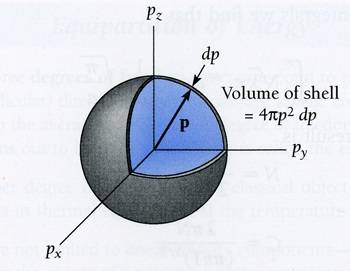
MomentumSpace.jpg
 
Physics news on Phys.org
Sven Andersson said:
In momentum space the protons are initially a "shell" with a certain diameter and thickness
That will depend on details of your source, but I would not expect an empty shell for any source.
Sven Andersson said:
Then that "shell" moves to the right in the picture as the protons are accelerated. But continously new shells should emerge at the origin as H2 is ionized.
Sure, but those are also displaced in position.
Sven Andersson said:
And collisions will also create new populations (larger shells?) in momentum space.
Whatever structure you start with will get smeared out a bit over time. Other effects are relevant as well, like your field geometry.
 

Similar threads

  • · Replies 1 ·
Replies
1
Views
2K
  • · Replies 69 ·
3
Replies
69
Views
15K
  • · Replies 1 ·
Replies
1
Views
2K
  • · Replies 9 ·
Replies
9
Views
2K
Replies
6
Views
2K
  • · Replies 19 ·
Replies
19
Views
6K
  • · Replies 13 ·
Replies
13
Views
7K
  • · Replies 4 ·
Replies
4
Views
5K
  • · Replies 31 ·
2
Replies
31
Views
8K
  • · Replies 8 ·
Replies
8
Views
6K