Electric/Gravitational Forces

  • Thread starter Thread starter thst1003
  • Start date Start date
  • Tags Tags
    Forces
Join the discussion
Registration is free. Ask a follow-up in this thread, or start your own.
5 replies · 5K views
thst1003
Messages
15
Reaction score
0
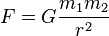
Find the ratio of the magnitudes of the electrical and the gravitational forces acting between a proton and an electron separated by an arbitrary distance d.


F= k(q)(q')/r^2 and
0f36df929ac9d711a8ba8c5658c3bfee.png


The q's are in an absolute value sign. How do I find the ratio? Is it as simply as dividing it out?
 
Last edited:
Physics news on Phys.org
thst1003 said:
The q's are in an absolute value sign. I believe there is an additional equation similar to this one that deals with gravity that I need to use as well but I can't find it.

Although I have a lot of trouble believing that you have not encountered this already, I will just take your post at face value. Here is the equation you seek:

http://en.wikipedia.org/wiki/Newton's_law_of_universal_gravitation
 
I changed the question. I have encountered it.
 
that's a trivial problem asked on electrostatics. Yep, you divide it for a ratio.
 
What exactly do you divide? Is it Electrical force/Gravitational force using 1.6e-19 C for the electron and the electron? So it would be k(q)(q) / G(m1)(m2) ?
 
thst1003 said:
What exactly do you divide? Is it Electrical force/Gravitational force using 1.6e-19 C for the electron and the electron? So it would be k(q)(q) / G(m1)(m2) ?

In short: yes. You divide exactly what you were ASKED to divide (emphasis mine below):

thst1003 said:
Find the ratio of the magnitudes of the electrical and the gravitational forces acting between a proton and an electron separated by an arbitrary distance d.