LonelyElectron
- 18
- 1
Problem:
Look at the following diagram:
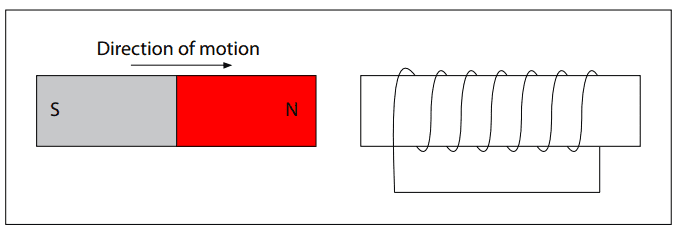
· Copy the diagram and then label the poles for the induced magnetic field and the direction of the induced current
· Explain what would happen to the magnetic field and the current if the direction of motion of the magnet is reversed
· Explain what would happen to the magnetic field and the current if the magnet was moved more quickly in the same direction
· Explain what would happen to the magnetic field and the current if the magnet is moved rapidly back and forth
Equations:
None.
Attempt at answer:
1.
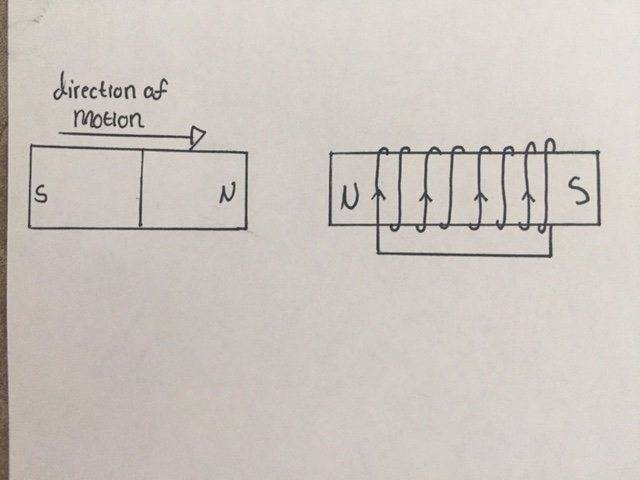
2. If the direction of the motion of the magnet were to be reversed, then the magnet would be pulling away from the coil. As the coil will resist the change, the coil’s magnetic field would be changed so that its south pole is closest to the magnet. This will work against the magnet’s efforts to move away from the coil as opposites attract, and as the poles were reversed, the direction of direction of the induced current would also be reversed.
3. I'm not sure to which direction this implies... I know that if the magnet is moved forwards more quickly the induced charge will be greater. I am not sure if its the same moving backwards, as induced charges become weaker the further away the magnet is. Help!
4.If the magnet were to be moved rapidly back and forth, then an alternating current is produced. Moving the magnet in will induce a current moving one way, but moving it out will induce a current moving in the opposite direction. As this is repeated, current direction is constantly alternating, and an alternating current is then created.
Look at the following diagram:
· Copy the diagram and then label the poles for the induced magnetic field and the direction of the induced current
· Explain what would happen to the magnetic field and the current if the direction of motion of the magnet is reversed
· Explain what would happen to the magnetic field and the current if the magnet was moved more quickly in the same direction
· Explain what would happen to the magnetic field and the current if the magnet is moved rapidly back and forth
Equations:
None.
Attempt at answer:
1.
2. If the direction of the motion of the magnet were to be reversed, then the magnet would be pulling away from the coil. As the coil will resist the change, the coil’s magnetic field would be changed so that its south pole is closest to the magnet. This will work against the magnet’s efforts to move away from the coil as opposites attract, and as the poles were reversed, the direction of direction of the induced current would also be reversed.
3. I'm not sure to which direction this implies... I know that if the magnet is moved forwards more quickly the induced charge will be greater. I am not sure if its the same moving backwards, as induced charges become weaker the further away the magnet is. Help!
4.If the magnet were to be moved rapidly back and forth, then an alternating current is produced. Moving the magnet in will induce a current moving one way, but moving it out will induce a current moving in the opposite direction. As this is repeated, current direction is constantly alternating, and an alternating current is then created.
Attachments

