Fans with 3 blades vs. 6 blades (noise, efficiency)?

  • Context: Undergrad 
  • Thread starter Thread starter Nantes
  • Start date Start date
  • Tags Tags
    Efficiency Fan Noise
Click For Summary
SUMMARY

The discussion centers on the comparison between 3-bladed and 6-bladed electric fans regarding noise, efficiency, and wind output. Users confirm that while 6-bladed fans produce more wind, they also generate a higher-pitched and potentially more annoying sound. The efficiency of the fans is debated, with some suggesting that fewer blades may lead to lower power consumption. The conversation highlights the importance of understanding motor ratings and actual power draw, emphasizing that the same wattage rating does not guarantee identical performance.

PREREQUISITES
  • Understanding of electric motor ratings and power consumption
  • Knowledge of fan blade design and aerodynamics
  • Familiarity with noise reduction techniques in mechanical systems
  • Basic electrical measurement tools, such as volt/amp meters
NEXT STEPS
  • Research "fan blade aerodynamics and efficiency" to understand airflow dynamics
  • Explore "noise reduction techniques in electric fans" for insights on sound management
  • Learn about "DC motors vs. AC motors" and their applications in fan design
  • Investigate "measuring airflow and power consumption" using digital tachometers and volt/amp meters
USEFUL FOR

Engineers, product designers, and consumers interested in optimizing electric fan performance and understanding the implications of blade design on noise and efficiency.

Nantes
Messages
54
Reaction score
5
I'm Brazilian, and until a few years ago most commercial electric fans sold in the country looked like this:

ventilador-de-mesa-mondial-v-4540cm-3-velocidades-020415500.jpg
But then one company started making them with 6 blades, claiming it had better wind output and made less noise than the 3-bladed fans (they didn't directly made this claim; it was implied by the choice of words). Apparently this marketing worked, because the company above followed suit and now sells their fans like this:
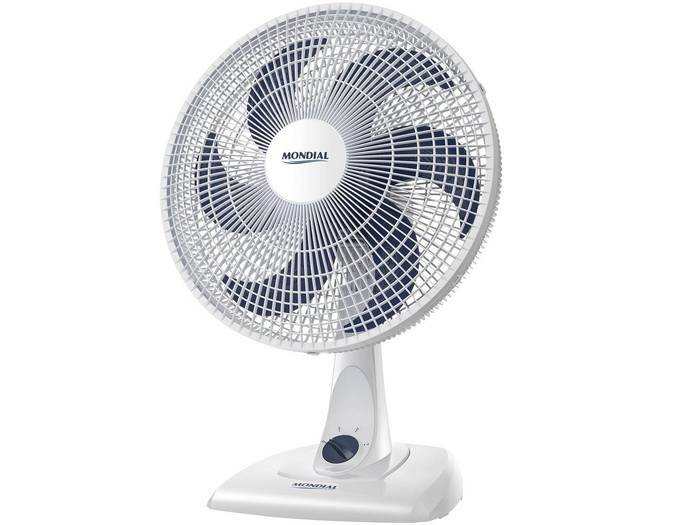
ventilador-de-mesa-mondial-classic-nv-45-6p-40cm3-velocidades-202923500.jpg
Is there any validity to their claim that 6-bladed fans are more silent, efficient or effective? I would assume not, because engineers are not dumb and such a simple idea would have been implemented decades ago already if it had any scientific ground. But I hope to be surprised!

Any articles I can read on the topic?
 
Physics news on Phys.org
More blades makes sense if you want to use more power, but are constrained in rotor radius. Noise reduction is complex, see here for starters:

https://en.wikipedia.org/wiki/Helicopter_noise_reduction#Methods_of_noise_reduction

"One possible technique for reducing helicopter rotor noise is "modulated blade spacing".[1] Standard rotor blades are evenly spaced, and produce greater noise at a particular frequency and its harmonics. Using varying degrees of spacing between the blades spreads the noise or acoustic signature of the rotor over a greater range of frequencies."
 
The gliding club I once belonged to only allowed aircraft with 3 or 4 blade props (not 2 blades) to land for noise reasons. My understanding is that for a given power props with 3 or 4 blades can either be smaller diameter (lower tip speed) or lower rpm (again lower tip speed). Presumably lower tip speeds mean less noise.
 
A.T. said:
One possible technique for reducing helicopter rotor noise is "modulated blade spacing".[1] Standard rotor blades are evenly spaced, and produce greater noise at a particular frequency and its harmonics. Using varying degrees of spacing between the blades spreads the noise or acoustic signature of the rotor over a greater range of frequencies."

That's talking about varying the spacing between blades rather than changing the number of blades.
 
CWatters said:
That's talking about varying the spacing between blades rather than changing the number of blades.
Correct, though with more blades, more different spacings are possible.
 
Last edited:
If the diameter is fixed then a fan with more blades can absorb more power (generate more wind) but it will need a bigger motor to drive it and the electricity bill will be higher.

If you aren't worried about the diameter or noise then a larger diameter two bladed fan should use less electricity as 2 bladed props are usually more efficient than 3/4.
 
A turbine with fewer blades has to turn faster to sweep as much area as a turbine with more blades. A six bladed fan doesn't have to turn as fast as a three bladed fan to push as much air. That might make it quieter, though it's not obvious to me.
 
I happen to have both models of fans depicted in the first post. I checked the manufacturer's website and found out both models draw the same amount of power, so they probably have the same engine; the only difference between them seems to be the number of blades. So I just did a little test: I put them both at the same distance and one at I time I turned them on at maximum power against my face. The noise of the wind passing by my ears with the 6-bladed one is considerably more intense, so it definitely produces more wind. I confirmed this by putting a sheet of paper, horizontally, against the tip of both, and while the 3-bladed moves both sheet tips to form an "U", with the 6-bladed one the tips almost touch forming an "O", confirming the higher wind. As a downside, the 6-bladed one produces a considerably higher-pitched sound (and thus more annoying). So the claim that it's more silent seems false, unless the actual dB value of the sound is indeed lower (it just SOUNDS louder because higher-pitched sounds are more noticeable than lower-pitched ones).
When turning off both at the same time, the 3-bladed one takes a couple more seconds to fully stop. What this signifies is unclear to me.
 
The fans may have the same motor rating (on the label) but did they actually draw the same power from the supply?
 
  • #10
CWatters said:
The fans may have the same motor rating (on the label) but did they actually draw the same power from the supply?

Why would they not? If both motors are rated at 80W, then both should draw the same power, no? Otherwise there is no point in these ratings if apples are not equal to apples.
 
  • #11
Nantes said:
I put them both at the same distance and one at I time I turned them on at maximum power against my face.
Let them fight against each other!
 
  • Like
Likes   Reactions: Nidum
  • #12
A.T. said:
Let them fight against each other!

Is that supposed to be a joke or are you really proposing a new experiment? :P
 
  • #13
You could put them both on a skateboard, pointed in opposite directions, and see which way it moves.
 
  • Like
Likes   Reactions: billy_joule
  • #14
mrspeedybob said:
You could put them both on a skateboard, pointed in opposite directions, and see which way it moves.

That would reveal nothing new. I already verified by two different qualitative experiments that the 6-blade has more wind output. Plus it would be affected by differences in mass between both skateboards.
 
  • #15
Nantes said:
Why would they not? If both motors are rated at 80W, then both should draw the same power, no? Otherwise there is no point in these ratings if apples are not equal to apples.
I think you can find that the 80 watt rating will apply to the motor and fan as a design unit, the tools you need to determine anything you want to know,
1. A voltage/amp meter 2. A digital tachometer.
These two items can be the less expensive type sold at many electrical supply stores/ departments.
You need to know the voltage and current being used and at what speed the motor and fan is turning.
You might want to look at some of the many online model aircraft sites, where you can find some very simple plans for a sliding thrust scale to help with air volume being moved by the fan blades.

Electric motors can be used (with care and knowledge) in many ways beyond their plate ratings. :smile:
 
  • #16
Nantes said:
Why would they not? If both motors are rated at 80W, then both should draw the same power, no? Otherwise there is no point in these ratings if apples are not equal to apples.
If the motors are identical and run at the same speed, input voltage (to the motor). To check RPM you can use the slowmo functinon in many phones and cameras.
 
  • #17
Nantes said:
Why would they not? If both motors are rated at 80W, then both should draw the same power, no? Otherwise there is no point in these ratings if apples are not equal to apples.

The rating label might say 80W but that's a maximum. I've seen power ratings on other appliances that are quite a bit higher than the actual power drawn. The two different fans might draw very different amounts of power.
 
  • #18
I'm just a regular jo following a curiosity path re fans and blade numbers
But if the ratting is 80 w does that mean it can draw a maximum of 80 W ?
Well the less blade motor may not need the full 80 even on top setting where as the more bladed may need all 80 w at top speed hence more to run ?

Just a thought ;)
 
  • #19
In almost all cases a typical fan will have a DC motor, some will have a universal motor (AC/ or DC voltage)
The voltage will determine motor speed.
The fan will move a quantity of air based on...diameter, pitch, and speed, this determines how many amps the motor will draw or try to draw.

If you increase the voltage beyond design for the unit, it will run faster and the fan blades will move more air at an increase in amperage, if as an example you increase the voltage a little, to the unit mentioned in the OP, you will raise the wattage to say... (100 watts) and it will run hotter. If the temperature is too much, the insulating varnish on the winding most likely will melt or char and the motor will fail (or it might run hotter and be fine).

Volts X Amps = Watts. The use of gears will let the same motor do many different types of work, all kinds of experimental possibilities.
 

Similar threads

  • · Replies 30 ·
2
Replies
30
Views
4K
  • · Replies 2 ·
Replies
2
Views
3K
  • · Replies 6 ·
Replies
6
Views
42K
  • · Replies 5 ·
Replies
5
Views
3K
  • · Replies 5 ·
Replies
5
Views
4K
  • · Replies 37 ·
2
Replies
37
Views
14K
  • · Replies 25 ·
Replies
25
Views
8K
  • · Replies 21 ·
Replies
21
Views
4K
  • · Replies 133 ·
5
Replies
133
Views
28K