SUMMARY
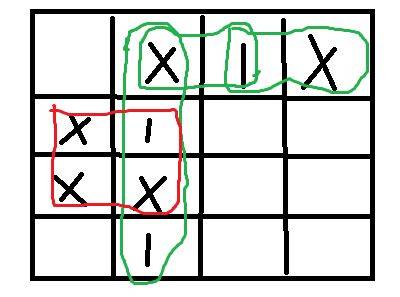
The discussion centers on identifying the total number of Prime Implicants in a Karnaugh map (Kmap). Prime implicants are defined as the largest quadratic groups formed from adjacent 1-cells. In this case, the group consisting of cells [4, 5, 6, 7] is confirmed as a prime implicant due to its size and adjacency. The clarity on the definition and identification process of prime implicants is crucial for simplifying Boolean expressions.
PREREQUISITES
- Understanding of Karnaugh maps (Kmaps)
- Knowledge of Boolean algebra
- Familiarity with grouping techniques in Kmaps
- Basic concepts of digital logic design
NEXT STEPS
- Study the process of grouping cells in Kmaps for simplification
- Learn about the Quine-McCluskey algorithm for finding prime implicants
- Explore advanced techniques for minimizing Boolean functions
- Review examples of Kmap simplifications in digital circuit design
USEFUL FOR
Students and professionals in electrical engineering, digital logic designers, and anyone involved in optimizing Boolean expressions using Karnaugh maps.