Finite Well Problem: Can Energy Be Equal to V0?

  • Context: Undergrad 
  • Thread starter Thread starter Coelum
  • Start date Start date
  • Tags Tags
    Finite
Click For Summary

Discussion Overview

The discussion revolves around the finite potential well problem, specifically addressing whether the energy of a particle in a bound state can equal the potential outside the well, denoted as V0. Participants explore theoretical implications, mathematical formulations, and boundary conditions related to this scenario.

Discussion Character

  • Exploratory
  • Technical explanation
  • Debate/contested
  • Mathematical reasoning

Main Points Raised

  • Some participants propose that for a bound state, the energy must be less than V0, while an energy equal to V0 may represent an unstable state.
  • It is suggested that if E=V0, the wave function outside the well would be zero, leading to a normalization issue.
  • Others argue that setting E=V0 results in a linear solution for the wave function outside the well, which cannot be normalized over an unbounded domain.
  • Some participants express uncertainty about whether solutions exist for E=V0, with claims that it leads to no solutions based on mathematical reasoning.
  • There is a discussion about scattering states, where E=V0 could correspond to a state that is not square integrable but useful for calculations.
  • A later reply introduces the idea of a non-normalizable solution for a free state, questioning the interpretation of such solutions and their classical equivalents.

Areas of Agreement / Disagreement

Participants do not reach a consensus on whether bound states can exist at E=V0. Multiple competing views are presented regarding the implications of this energy level, leading to an unresolved discussion.

Contextual Notes

The discussion highlights limitations in the assumptions made about wave functions and normalization conditions, particularly in the context of scattering states versus bound states.

Coelum
Messages
97
Reaction score
32
TL;DR
Do bound solutions exist for E=V0 where V0 is the depth of the well?
Dear PFers,
I have a question about the finite potential well problem. Let's assume the well is centered in 0 and the potential is V0 outside the well and 0 inside. For more details see Wikipedia: https://en.wikipedia.org/wiki/Finite_potential_well.

Now, the question is: can the energy of the particle in a bound state be equal to V0?
I expect it cannot, as:
  1. the wave-function outside the box should satisfy the free particle Schrödinger equation with null energy (essentially, the second derivative should be 0)
  2. the solution of the equation described above is a linear function
  3. a linear function cannot be normalized if the domain is unbound
  4. the domain outside the well is unbound (in fact, we have two, separate, unbound regions on both sides).
Is my reasoning correct?
 
Physics news on Phys.org
Coelum said:
TL;DR Summary: Do bound solutions exist for E=V0 where V0 is the depth of the well?

Dear PFers,
I have a question about the finite potential well problem. Let's assume the well is centered in 0 and the potential is V0 outside the well and 0 inside. For more details see Wikipedia: https://en.wikipedia.org/wiki/Finite_potential_well.

Now, the question is: can the energy of the particle in a bound state be equal to V0?
An energy of ##E < V_0## represents a bound state; and ##E > V_0## represents a scattering state. Is your question what happens if we look for ##E = V_0##.

The short answer is that it must be something of an unstable state, where technically it cannot escape to infinity, but not is it in a stable bound state.

There is a finite set of bound states (with ##E < V_0##), but the highest bound energy is always less than ##V_0##. I guess you could play about with the solution to see what parameters allow you to get closest to ##E = V_0##.
Coelum said:
I expect it cannot, as:
  1. the wave-function outside the box should satisfy the free particle Schrödinger equation with null energy (essentially, the second derivative should be 0)
  2. the solution of the equation described above is a linear function
I think you are confusing the energy level (which is just a single eigenvalue) with a constant wavefunction. For ##E = V_0##, the wavefunction would be zero outside the well.
Coelum said:
  1. a linear function cannot be normalized if the domain is unbound
  2. the domain outside the well is unbound (in fact, we have two, separate, unbound regions on both sides).
Is my reasoning correct?
I don't think so.
 
Thanks PeroK for your prompt reply.
PeroK said:
I think you are confusing the energy level (which is just a single eigenvalue) with a constant wavefunction. For E=V0, the wavefunction would be zero outside the well.
From your answer, I guess I was not clear. Let me add a few details.

If ## E=V_0 ## the Schrödinger equation outside the well becomes
$$ -\frac{\hbar^2}{2m}\frac{d^2\Psi}{dx^2} = 0 $$
with solution a linear function (## A,B\in \mathcal R ##)
$$ \Psi(x)=Ax+B. $$
Inside the well the S.E. is
$$ -\frac{\hbar^2}{2m}\frac{d^2\Psi}{dx^2} = E\Psi $$
$$ \frac{d^2\Psi}{dx^2} = -\frac{2mE}{\hbar^2}\Psi = -K^2\Psi $$
with solution (## C,D\in \mathcal R ##)
$$ \Psi(x)=C\sin(Kx)+D\cos(Kx). $$
The normalization condition for a single particle imposes ## A=B=0 ## on both sides of the well. The boundary conditions for the continuity of ## \Psi ## and its first derivative at the borders of the well lead to the null solution as the only solution. That's what I meant in my previous statements.

If you still believe my reasoning is wrong, please help me by pointing out the error in the derivation above (including computing the boundary conditions, whose boring details I shamelessly skipped).
 
Coelum said:
If ## E=V_0 ## the Schrödinger equation outside the well becomes
I'm not sure about setting ##E = V_0## at this stage. It should result in no solutions,
Coelum said:
$$ -\frac{\hbar^2}{2m}\frac{d^2\Psi}{dx^2} = 0 $$
with solution a linear function (## A,B\in \mathcal R ##)
$$ \Psi(x)=Ax+B. $$
Inside the well the S.E. is
$$ -\frac{\hbar^2}{2m}\frac{d^2\Psi}{dx^2} = E\Psi $$
$$ \frac{d^2\Psi}{dx^2} = -\frac{2mE}{\hbar^2}\Psi = -K^2\Psi $$
with solution (## C,D\in \mathcal R ##)
$$ \Psi(x)=C\sin(Kx)+D\cos(Kx). $$
The normalization condition for a single particle imposes ## A=B=0 ## on both sides of the well. The boundary conditions for the continuity of ## \Psi ## and its first derivative at the borders of the well lead to the null solution as the only solution. That's what I meant in my previous statements.
That's not the approach I understood in your OP. If you follow through with the mathematics here, then you end up with no solutions (for numerical reasons) with ##E = V_0##.
Coelum said:
If you still believe my reasoning is wrong, please help me by pointing out the error in the derivation above (including computing the boundary conditions, whose boring details I shamelessly skipped).
There's nothing wrong if you try to solve the equation fully where ##E = V_0## and show there are no solutions.
 
PeroK said:
I'm not sure about setting ##E = V_0## at this stage. It should result in no solutions,

That's not the approach I understood in your OP. If you follow through with the mathematics here, then you end up with no solutions (for numerical reasons) with ##E = V_0##.

There's nothing wrong if you try to solve the equation fully where ##E = V_0## and show there are no solutions.
Great, I think we agree now. Thanks again.
 
From what I know for scattering, where the problem is slightly different as the spatial coordinate is then radial, ##r \in [0,\infty)##, I expect the following.

The case ##E=V_0## would correspond to a scattering (unbounded) state, increasing linearly outside the well, corresponding to an infinite wavelength. That seems to be what you found. Inside the well, the wave function will be oscillating (the amount of oscillation increasing with the number of bound states).
Coelum said:
The normalization condition for a single particle imposes A=B=0 on both sides of the well.
I think this is where it goes wrong. Scattering (continuum) wave functions are not square integrable, but there are normalization convention one can use. Of course, these states cannot correspond to actual physical states, but are useful for calculating things (just like plane waves).
 
DrClaude said:
From what I know for scattering, where the problem is slightly different as the spatial coordinate is then radial, ##r \in [0,\infty)##, I expect the following.

The case ##E=V_0## would correspond to a scattering (unbounded) state, increasing linearly outside the well, corresponding to an infinite wavelength. That seems to be what you found. Inside the well, the wave function will be oscillating (the amount of oscillation increasing with the number of bound states).

I think this is where it goes wrong. Scattering (continuum) wave functions are not square integrable, but there are normalization convention one can use. Of course, these states cannot correspond to actual physical states, but are useful for calculating things (just like plane waves).
I agree. In fact, I just worked out a non-normalizable solution. I started asking myself: can the energy of a particle in a free state be equal to V0?

In order to simplify the treatment, I assume we have a stationary flow of particles. Then, since we do not require normalization, a solution to the stationary Schrödinger equation exists. It is a real constant outside the well and a sum of sine and cosine inside (details depend on the selection of the origin). More interestingly, we get the following condition: L*sqrt(2mV_0)/h must be an integer number. Otherwise, the wave-function is zero.

My question is about the interpretation of the solution. For E>V_0, the solution of the problem is a sum of two complex exponentials representing flows in opposite direction of the x axis. Can the same interpretation be applied to our case? Furthermore, it looks like this solution has no classical equivalent. Is that correct?
 
  • Like
Likes   Reactions: PeroK
DrClaude said:
The case ##E=V_0## would correspond to a scattering (unbounded) state, increasing linearly outside the well, corresponding to an infinite wavelength.
Are you sure this isn't a degenerate solution? Usually the non-normalisable wave-functions are combined in a wave-packet, with (I assume) the ##E## as the most probable energy. Here, ##E = V_0## is on the lower limit of possible scattering energies, so it ought to have a probability density of zero in any wave-packet.
 
Coelum said:
More interestingly, we get the following condition: L*sqrt(2mV_0)/h must be an integer number. Otherwise, the wave-function is zero.
I think you are requiring the potential wave to a have quasi-bound state at ##E = V_0##, which is not necessary. Solutions exist for any value of ##L## and ##V_0##.
Coelum said:
My question is about the interpretation of the solution. For E>V_0, the solution of the problem is a sum of two complex exponentials representing flows in opposite direction of the x axis. Can the same interpretation be applied to our case? Furthermore, it looks like this solution has no classical equivalent. Is that correct?
It a scattering state corresponding to zero momentum, so particles not moving/scattering. What this means exactly I can't say.
 
  • #10
PeroK said:
Are you sure this isn't a degenerate solution? Usually the non-normalisable wave-functions are combined in a wave-packet, with (I assume) the ##E## as the most probable energy. Here, ##E = V_0## is on the lower limit of possible scattering energies, so it ought to have a probability density of zero in any wave-packet.
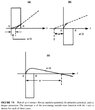
As I said above, I don't know how to physically interpret zero-energy scattering. It won't appear in any realistic condition, but it is still part of the set of solutions to the problem, and it used for instance to calculate scattering lengths, as shown in this figure from the Sakurai textbook:
 

Attachments

  • scattering.jpg
    scattering.jpg
    16.5 KB · Views: 139
  • Informative
Likes   Reactions: PeroK
  • #11
Thanks to both PeroK and DrClaude for the very interesting discussion. Now I understand much better what I found.
 
  • Like
Likes   Reactions: PeroK
  • #12
DrClaude said:
As I said above, I don't know how to physically interpret zero-energy scattering
I don't think anybody does.

Note that Δp = 0 so Δx must be infinite. I don't know how one would prepare such a state, but it would be hard to describe it as "bound".
 
  • #13
Vanadium 50 said:
I don't think anybody does.

Note that Δp = 0 so Δx must be infinite. I don't know how one would prepare such a state, but it would be hard to describe it as "bound".
Yes, it looks to me like a mix of bound and unbound states. On one hand, the classical corresponding state is bound. On the other hand, it is not normalizable, so it should represent a stream of particles. Also, there is a well-defined condition for it to exist. Not all wells allow such a state. Overall, really strange.
 

Similar threads

  • · Replies 11 ·
Replies
11
Views
4K
  • · Replies 10 ·
Replies
10
Views
2K
  • · Replies 22 ·
Replies
22
Views
2K
  • · Replies 2 ·
Replies
2
Views
2K
  • · Replies 9 ·
Replies
9
Views
1K
  • · Replies 1 ·
Replies
1
Views
2K
  • · Replies 2 ·
Replies
2
Views
2K
  • · Replies 3 ·
Replies
3
Views
2K
  • · Replies 1 ·
Replies
1
Views
2K
  • · Replies 10 ·
Replies
10
Views
2K