Help Identifying rock or meteorites

  • Thread starter Thread starter leerace
  • Start date Start date
Click For Summary

Discussion Overview

The discussion revolves around the identification of a collection of rocks and their potential classification as meteorites. Participants analyze the characteristics of the rocks based on photographs and descriptions provided, exploring various geological features and properties.

Discussion Character

  • Exploratory
  • Technical explanation
  • Debate/contested

Main Points Raised

  • The original poster presents several rocks, noting their magnetic properties and unique features, and seeks assistance in identifying them as meteorites.
  • Some participants suggest that the rocks may not be meteorites, with one stating that they likely come from different geological environments, such as river beds or shorelines.
  • One participant describes general characteristics of various rock types, indicating that black, slightly-magnetic rocks are often basalts, while non-magnetic black rocks may be mudstone or limestone.
  • Another participant questions the original poster about the reasons for suspecting the rocks are meteorites, seeking further clarification.
  • A participant expresses skepticism about the identification of the rocks as meteorites, noting the absence of features typically associated with meteorites, such as fusion crust or regmaglyphs.

Areas of Agreement / Disagreement

Participants do not reach a consensus on the identification of the rocks. There are competing views regarding their classification, with some arguing they are Earth rocks and others suggesting they may resemble meteorites.

Contextual Notes

Limitations include the inability to physically examine the rocks, reliance on photographs for identification, and the lack of specific contextual information such as the location of the finds.

leerace
Messages
1
Reaction score
0
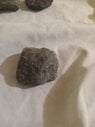
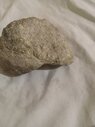
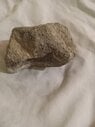
I have some rocks wondering if they were meteorites.
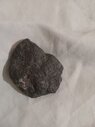
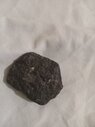
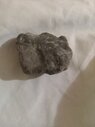
Hoping I could get some help Put 2 pictures of each. The first one is magnetic as well as the second one
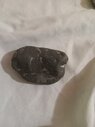
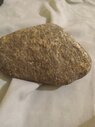
The second one you can see the lines fold over The third one.
Was not magnetic
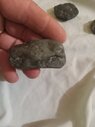
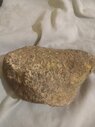
But has diamond Lake stones The fourth one looks like it has lines going in 1 direction from like an entry.
And is magnetic the 5 one is magnetic to just not as strong
 

Attachments

  • 1708216627883277332140819457272.jpg
    1708216627883277332140819457272.jpg
    34.7 KB · Views: 172
  • 17082166608526809241119292249710.jpg
    17082166608526809241119292249710.jpg
    33.4 KB · Views: 132
  • 17082167079519147866596078125226.jpg
    17082167079519147866596078125226.jpg
    27.7 KB · Views: 90
  • 17082167227936837955638363505691.jpg
    17082167227936837955638363505691.jpg
    23.9 KB · Views: 76
  • 17082167465888228531321512827190.jpg
    17082167465888228531321512827190.jpg
    28.4 KB · Views: 125
  • 17082167817405072024481977011985.jpg
    17082167817405072024481977011985.jpg
    25.2 KB · Views: 85
  • 1708216811343151831233286324099.jpg
    1708216811343151831233286324099.jpg
    39.6 KB · Views: 88
  • 17082168307715986370455262074561.jpg
    17082168307715986370455262074561.jpg
    38.4 KB · Views: 172
  • 1708216860639359721005485530942.jpg
    1708216860639359721005485530942.jpg
    35.9 KB · Views: 147
  • 17082168797565939049027630921162.jpg
    17082168797565939049027630921162.jpg
    36.8 KB · Views: 130
Astronomy news on Phys.org
  • Like
Likes   Reactions: davenn, Vanadium 50 and pinball1970
"Leverite," as in leave her/it right there; veerrryyyy ollddd joke.
 
  • Like
Likes   Reactions: davenn
Welcome to PF.
Unfortunately, I do not see any meteorites in the collection.

I guess these rocks came from at least two different places. Some are water worn, from a river or a sea shore. It is difficult to identify rocks without being able to get close enough to handle, lick or smell them. A photograph is often insufficient for identification.

The Earth is a big and varied rock collection. It would really help if the latitude and longitude of the finds were recorded, (use Google Earth). That can reduce the possibilities. Also, were they found in an excavation, in a river bed, or on a beach?

What follows is obviously a gross generalisation.

Black, slightly-magnetic rocks tend to be basalts. They may have white minerals deposited by groundwater at the time of the flow. They can also pick up and include local rocks from the river valleys they flow down. Basalts are chemically unstable, reactive, and tend to weather quickly, producing some magnetite, hence the magnetism and red-rust staining.

Black non-magnetic rocks tend to be mudstone, or limestone. They may contain white shell fossils.

Light coloured rocks tend to be sandstones or granites. If they contain vesicles, they may be a volcanic tuff or pumice, that contained gas bubbles when erupted.
Fragile fossils are not well-preserved in sandstones, as they get broken by the high energy environment, then dissolved by groundwater to cement the sand grains.
 
  • Informative
Likes   Reactions: berkeman
In addition to what Baluncore wrote, perhaps you can tell us what leads you to suspect these are meteorites anyway?
 
leerace said:
The first one is magnetic as well as the second one

The first pair of pic's is the only rock that remotely resembles a meteorite
The only killer is that white crystalline stuff I can see on it in the first pic.
ALL the rest are guaranteed Earth rocks .... sandstones and similar

There's no hint of any fusion crust on them
Meteorites of those general sizes would likely to have "flight" features on them
regmaglyphs etc. When I get home from work, I will post some examples from my collection

cheers
Dave
 
  • Informative
  • Like
Likes   Reactions: Vanadium 50 and berkeman

Similar threads

  • · Replies 1 ·
Replies
1
Views
3K
  • · Replies 17 ·
Replies
17
Views
4K
  • · Replies 10 ·
Replies
10
Views
2K
Replies
46
Views
16K
  • · Replies 15 ·
Replies
15
Views
6K
  • · Replies 1 ·
Replies
1
Views
3K
  • · Replies 31 ·
2
Replies
31
Views
2K
  • · Replies 6 ·
Replies
6
Views
1K
  • · Replies 1 ·
Replies
1
Views
2K
  • · Replies 4 ·
Replies
4
Views
3K