toungeinamo5492
- 1
- 0
Hello there! I have here a servo motor - Japan Servo AS27278 but don't have any idea about it. I make some researches on uncle Google about this model or kind of motor and fortunately I was redirected in here. Hoping somebody out here on this site knows and have knowledge about this kind and model of motor.
Ok , first of all, It shows on the attached PCB on the motor are terminals: 7 , 5 , H , V , W
My question is, how does this motor works? and how to make this motor run and is it possible to make this motor run with a supply of DC batteries and control it with 2.4 ghz transmitter?
This is how the terminals/pins on the pcb board connected:
Components on the pcb board as you can see on the photos attached here are: 3pcs transistors WI0 0NI , 4pcs ceramic capacitors and 1pc resistor
- the terminal nos. 1 2 3 4 6 8 have no connections/dead
- the terminal/pin no. 7 was connected to the board *** can't see any component on the pcb was connected to pin no.7 ***
- the terminal/pin no. 5 was connected directly to the one wire winding of the motor
- the terminal/pin no. 9 was connected to the 3rd leg/pin or the collector of the HU Transistor **facing the transistor**
- the terminal/pin no.10 was connected to the: C1 , C2 , C3 going to the Emitter leg/pin of HV Transistor
- the terminal/pin no.11 was connected to the: R1 , C1 , C2 , C3 going to the Emitter leg/pin of HV Transistor
- the base leg/pin of the HU Transistor was connected to the: C2 , C3 going to the Emitter leg/pin of HV Transistor
and so on and so on.
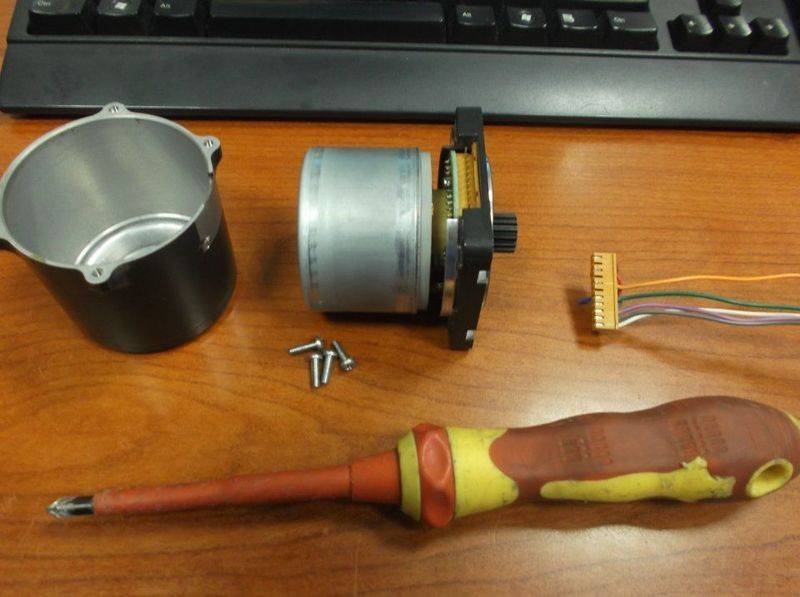
PS: Kindly refer to the attached photos thnx :)
Ok , first of all, It shows on the attached PCB on the motor are terminals: 7 , 5 , H , V , W
My question is, how does this motor works? and how to make this motor run and is it possible to make this motor run with a supply of DC batteries and control it with 2.4 ghz transmitter?
This is how the terminals/pins on the pcb board connected:
Components on the pcb board as you can see on the photos attached here are: 3pcs transistors WI0 0NI , 4pcs ceramic capacitors and 1pc resistor
- the terminal nos. 1 2 3 4 6 8 have no connections/dead
- the terminal/pin no. 7 was connected to the board *** can't see any component on the pcb was connected to pin no.7 ***
- the terminal/pin no. 5 was connected directly to the one wire winding of the motor
- the terminal/pin no. 9 was connected to the 3rd leg/pin or the collector of the HU Transistor **facing the transistor**
- the terminal/pin no.10 was connected to the: C1 , C2 , C3 going to the Emitter leg/pin of HV Transistor
- the terminal/pin no.11 was connected to the: R1 , C1 , C2 , C3 going to the Emitter leg/pin of HV Transistor
- the base leg/pin of the HU Transistor was connected to the: C2 , C3 going to the Emitter leg/pin of HV Transistor
and so on and so on.
PS: Kindly refer to the attached photos thnx :)


