Discussion Overview
The discussion centers around the operation of Tesla's induction motors in their electric vehicles, specifically focusing on the power supply from batteries, the conversion of DC to AC, and the behavior of torque in these motors. The scope includes technical explanations and conceptual clarifications related to electrical engineering principles.
Discussion Character
- Technical explanation
- Conceptual clarification
- Debate/contested
Main Points Raised
- One participant notes that Tesla's vehicles use induction motors powered by batteries but expresses confusion about the concept of DC induction motors.
- Another participant suggests that electronics are used to convert the battery's DC to AC, potentially producing three-phase AC to drive the motors.
- A participant reiterates the role of an inverter in converting DC to three-phase AC for the induction motors.
- Questions are raised about the concept of constant torque in relation to induction motors, with one participant indicating that torque characteristics depend on voltage and frequency adjustments.
- Discussion includes the idea that digital signal processors (DSPs) control the DC-AC conversion and can adjust parameters like phase and frequency to maintain desired torque.
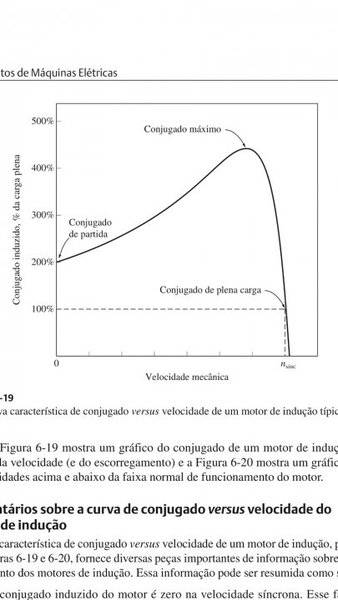
- Another participant mentions the torque-slip curve and its dependence on voltage and frequency, suggesting that different curves exist for varying voltages.
- A participant expresses gratitude for the insights shared and indicates that they feel satisfied with the information provided, suggesting a closure to the topic for themselves.
Areas of Agreement / Disagreement
Participants express varying levels of understanding regarding the operation of induction motors and the specifics of torque behavior. While some concepts are clarified, there remains uncertainty and lack of consensus on the details of constant torque and the implications of DC-AC conversion.
Contextual Notes
Participants discuss the complexities of torque behavior in induction motors, including the influence of voltage and frequency, but do not resolve the nuances of these relationships or the implications for Tesla's motor design.