How is fuel pumped in fighter aircrafts? (F-16 etc.)

  • Thread starter Thread starter mastermechanic
  • Start date Start date
  • Tags Tags
    Fuel
Click For Summary

Discussion Overview

The discussion centers on the methods used to pump fuel in fighter aircraft, particularly in the context of maneuverability and operational orientations. Participants explore various fuel systems, including comparisons to propeller planes, and consider the implications of external fuel tanks and their management during combat scenarios.

Discussion Character

  • Exploratory
  • Technical explanation
  • Debate/contested

Main Points Raised

  • Some participants describe the flop tube design used in aerobatic planes, which allows fuel to be drawn from different orientations by utilizing a weighted hose.
  • Others explain the header tank system, where fuel is gravity-fed from main tanks to a header tank that supplies fuel to the engine during inverted flight.
  • Several participants note that external fuel tanks are used to extend range and are dropped before combat, allowing the aircraft to rely on internal fuel tanks.
  • One participant shares a combat story illustrating the importance of switching fuel selectors when dropping external tanks.
  • There are discussions about the potential use of baffles and bladders in fuel tanks to prevent sloshing and maintain stability during maneuvers.
  • Some participants question whether a pressurized fuel system could be implemented in fighter aircraft, contrasting it with gravity-fed systems.
  • One participant raises the idea of altering fuel density or viscosity through temperature controls and additives, citing specific examples of jet fuel properties.
  • Concerns are expressed about the challenges of maintaining fuel flow without air intake, especially in partially filled tanks.

Areas of Agreement / Disagreement

Participants express a variety of views on fuel pumping systems, with no consensus on the best approach. There is acknowledgment of multiple methods and systems, but the discussion remains unresolved regarding the specifics of fuel management in fighter aircraft.

Contextual Notes

Participants mention limitations related to the operational envelope of aircraft with external tanks and the potential impact on performance during maneuvers. The discussion also touches on the complexity of fuel systems in high-performance aircraft.
mastermechanic
Messages
107
Reaction score
15
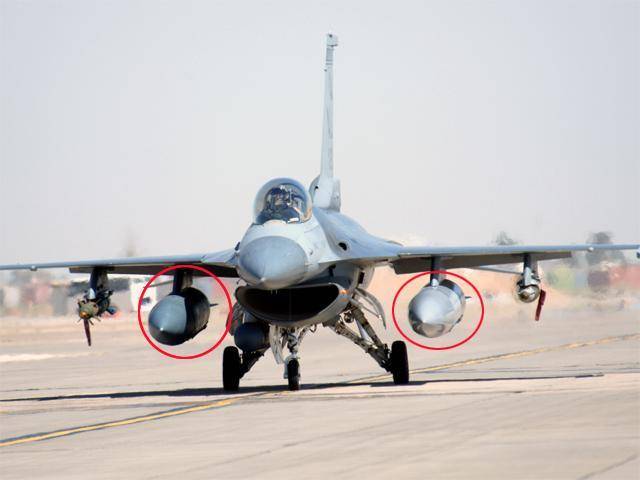
In fighter aircrafts manoeuvrability is at high levels therefore fuel tanks are exposed different operating orientations and positions so is the fuel inside. How do they ensure that the fuel is pumped properly? There is picture always comes to my mind when I hear fuel tank, a straw sinked in a fuel but it is definitely a bad design.

Thank you all.

F-16-Fuel-Tanks-24358663_110941_ver1.0_640_480.jpg
 

Attachments

  • F-16-Fuel-Tanks-24358663_110941_ver1.0_640_480.jpg
    F-16-Fuel-Tanks-24358663_110941_ver1.0_640_480.jpg
    25.2 KB · Views: 5,709
Physics news on Phys.org
That's an interesting question. Fighters may use other methods, but here are two clever ways for propeller planes.

https://science.howstuffworks.com/transport/flight/modern/question252.htm said:
"The first is the flop tube design used in my airplane, a Pitts S-1T. The fuel tank is located in the fuselage in front of the pilot's knees, and inside of the tank is a flexible hose with a weight attached to the free end. When the plane is right side up, this hose, or flop tube, 'flops' to the bottom of the tank because of the weight and draws fuel from the bottom of the tank. When the plane is rolled to inverted, the weight causes to hose to flop to the top of the tank (which is really the bottom now) and draw fuel from there. This is really a cool design because it uses only one tank, and you have access to all the fuel in the tank whether you are right side up or inverted. This design is used on all the high-performance aerobatic airplanes with which I am familiar -- these planes all have a fuel tank in the fuselage.

"The second solution to the problem is the header tank. This is used in airplanes such as the Super Decathlon, a high-wing monoplane. In this type of plane the main fuel tanks are located in the wings, which are higher than the engine. In upright flight, the fuel has a gravity head to the suction of the engine-driven fuel pump (in planes like the Cessna 150, which does not have an inverted fuel system, you don't need a fuel pump -- the fuel is gravity-fed to the carb). For inverted flight, there is a small header tank near the pilot's feet. The header tank is connected to the main tanks in the wings; during upright flight, fuel from the wing tanks flows by gravity into the header tank until it is full. The header tank is connected to the suction side of the fuel pump -- when the plane is rolled inverted, the header tank is above the engine, and the fuel gravity flows from the header tank to the fuel pump. There is a check valve in the line connecting the main tank to the header tank; this prevents fuel from the header tank from draining back into the main tank when the plane is inverted. In the Decathlon, the header tank holds enough fuel for about two minutes of inverted flight."My plane and all of the more modern aerobatic planes I have seen are fuel injected. However, some of the older Pitts I have seen have a pressure carb, and it works in inverted flight. "
 
Also, the tanks circled in the picture are external tanks, used to extend range. When the F-16 has arrived at its target location and is ready to go into combat action, those tanks are dropped, and the engine runs on internal fuel tanks.
 
  • Like
Likes   Reactions: davenn and Klystron
LURCH said:
Also, the tanks circled in the picture are external tanks, used to extend range. When the F-16 has arrived at its target location and is ready to go into combat action, those tanks are dropped, and the engine runs on internal fuel tanks.

Wow! I didn't know that, it is pretty smart.
 
Yeah, it's also the source of one of my favorite combat stories. American pilot sees an enemy fighter dead ahead, so he drops his external tanks and gets into position to fire. Just as he is about to pull the trigger, his engine dies. His concentration unfailing, he gets lined up and takes the shot, downing the enemy plane with the first burst.

Afterward, he looks down and realizes that, when he dropped his tanks, he forgot to switch his fuel selector switch to "internal". He likes to refer to this as the moment that he became the only fighter pilot in the war to have scored an aerial victory while in glider mode.
 
  • Like
Likes   Reactions: krater, mastermechanic, russ_watters and 2 others
LURCH said:
Also, the tanks circled in the picture are external tanks, used to extend range. When the F-16 has arrived at its target location and is ready to go into combat action, those tanks are dropped, and the engine runs on internal fuel tanks.

Removing external tanks also alters aircraft return. External pods provide aircraft stability during flight. Increases return depending on shape and other attributes. Releasing externals reduces return while improving flight envelope.

Overheard pilots say approximately "'eliminate' and 'Git'"! to describe the performance improvement. Also "drop and go!".
 
  • Like
Likes   Reactions: berkeman
anorlunda said:
That's an interesting question. Fighters may use other methods, but here are two clever ways for propeller planes.
Wouldn't the combat aircraft have some sort of system similar to the Super Decathlon, with a feeder tank to the engine being kept full, and the main tanks fuel pumped to the feeder. Though it is hard to imagine the system that allows a sustained vertical climb.
Baffles, and or honeycomb, would prevent sloshing, and instability, with the maneuvers that the fighters do.
 
  • Like
Likes   Reactions: berkeman
256bits said:
Wouldn't the combat aircraft have some sort of system similar to the Super Decathlon, with a feeder tank to the engine being kept full, and the main tanks fuel pumped to the feeder.

Isn't that the header tank system described in post #2?
 
anorlunda said:
Isn't that the header tank system described in post #2?
The quote in Post #2 is about a gravity fed system (including the header tank), but @256bits is referring to a pressurized version for the fighter aircraft, I think. The part about the baffles (and bladders) is also real important, IMO, since shifting weight is a bad thing during maneuvers... :smile:
 
  • #10
Can the density a/o viscosity of the fuel be altered? Using temperature controls, chemical additives, and flow controls such as different shaped 'pipes' depending on flight characteristics?

Example: Jet fuel JP-4, a mix of petroleum products, contains additives that reduce static electricity buildup while pumping.
https://en.wikipedia.org/wiki/JP-4.
 
  • #11
berkeman said:
The quote in Post #2 is about a gravity fed system (including the header tank), but @256bits is referring to a pressurized version for the fighter aircraft, I think.

Pressurized versus gravity shouldn't matter. The issue is when the feed tube from the tank sucks air instead of fuel. With a half full tank, baffles and honeycombs still don't prevent the fuel from settling to the bottom. Multiple feed tubes to the suction of the fuel pump drawing from top/bottom/sides of the tank don't help.

Bladders on the other hand would provide a solution because there should be zero air in the bladder. You could pressurize the volume outside the bladder.

More challenging and interesting are the steam generators on nuclear powered submarines. In theory the subs could go inverted and do a 360 degree roll. Alas, the operating limits of nuclear subs are classified so we can't know the real answer.
 
  • Like
Likes   Reactions: berkeman
  • #12
The OP's photo shows nacelles common to wing-mounted externals including electronics pods. Depending on mission requirements pilots and aviators likely restrict operating envelope to match aircraft geometry. I doubt pilots perform aerobatics with external tanks attached, as LURCH points out.

As an aside, I was amazed when F-16 squadrons began flying from my assigned base. Watching an F-16 take off under full military power rivals a rocket launch from Cape Kennedy. Truly magnificent application of physics.
 
  • Like
Likes   Reactions: davenn

Similar threads

  • · Replies 2 ·
Replies
2
Views
7K
  • · Replies 52 ·
2
Replies
52
Views
8K
  • · Replies 1 ·
Replies
1
Views
5K
  • · Replies 15 ·
Replies
15
Views
4K
  • · Replies 19 ·
Replies
19
Views
9K
  • · Replies 5 ·
Replies
5
Views
3K
Replies
14
Views
10K
  • · Replies 4 ·
Replies
4
Views
3K
  • · Replies 4 ·
Replies
4
Views
3K
  • · Replies 21 ·
Replies
21
Views
2K