Discussion Overview
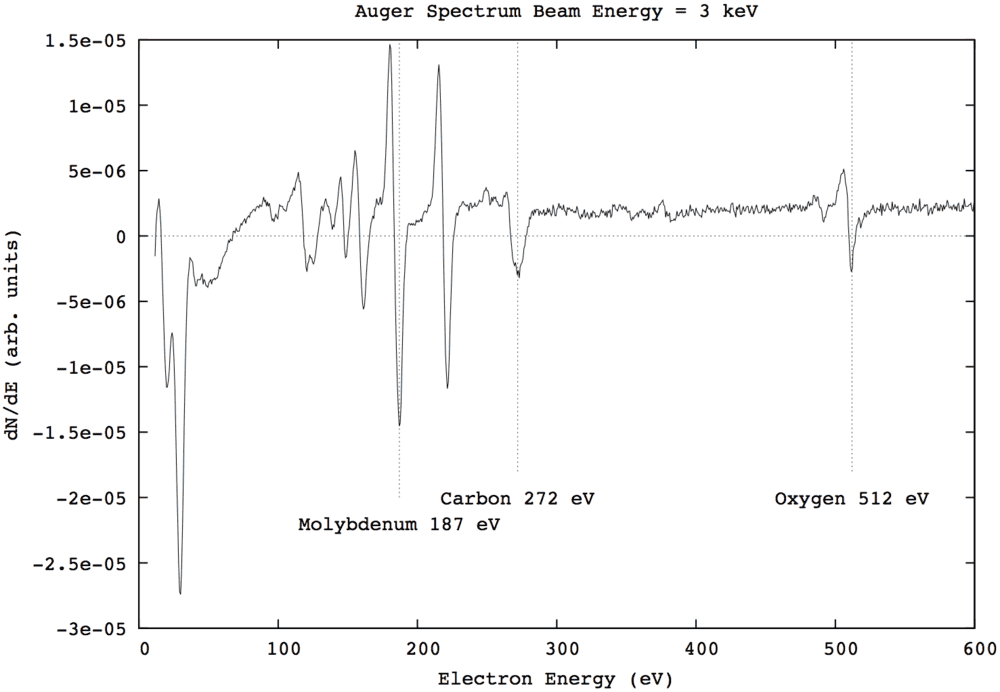
The discussion revolves around the interpretation of N(E) and N'(E) graphs in the context of Auger spectroscopy, focusing on their definitions and the implications for measuring electron yield and intensity. The conversation includes technical aspects of measurement conditions and the use of electron multipliers in experimental setups.
Discussion Character
- Technical explanation
- Exploratory
- Debate/contested
Main Points Raised
- Ethan expresses confusion about the definitions of N(E) and N'(E), noting that they are referred to variably as electron yield, intensity, and dI/dV in literature.
- Some participants suggest that N(E) may represent electron count or intensity plotted against kinetic energy, but clarity remains elusive.
- One participant mentions that the differential mode, dN(E)/dE, is preferred under high background conditions, indicating that measurement choice depends on specific experimental circumstances.
- Ethan posits that the relative change in electron count may be more significant than the absolute count itself, seeking validation for this assumption.
- A later reply clarifies that the output signal is proportional to the count rate of electrons, suggesting a relationship between N(E) and the rate of detected electrons over time.
Areas of Agreement / Disagreement
Participants do not reach a consensus on the precise definitions of N(E) and N'(E), and there are multiple interpretations of their significance in Auger spectroscopy. The discussion remains unresolved regarding the clarity of these terms.
Contextual Notes
Participants highlight the dependence on measurement conditions and the potential ambiguity in terminology related to electron count and intensity. There are unresolved questions about how current is measured and translated into voltage in the context of the experimental setup.