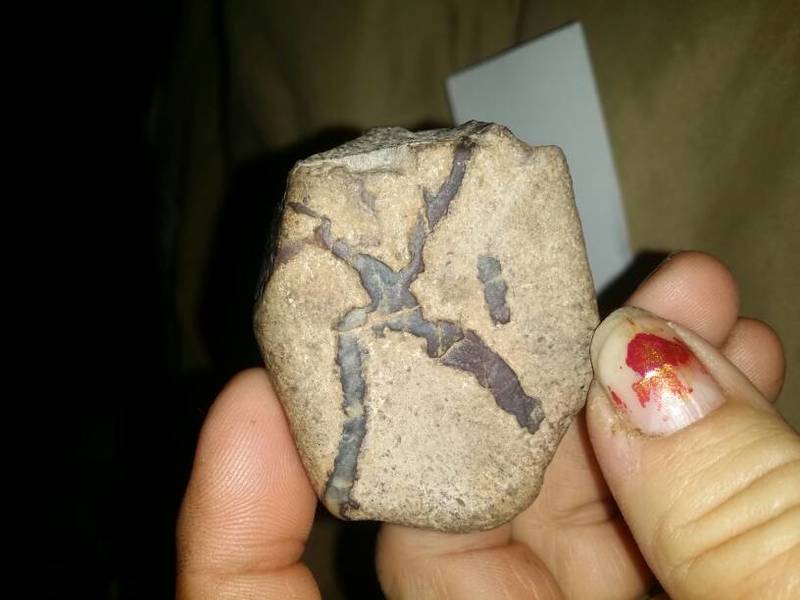
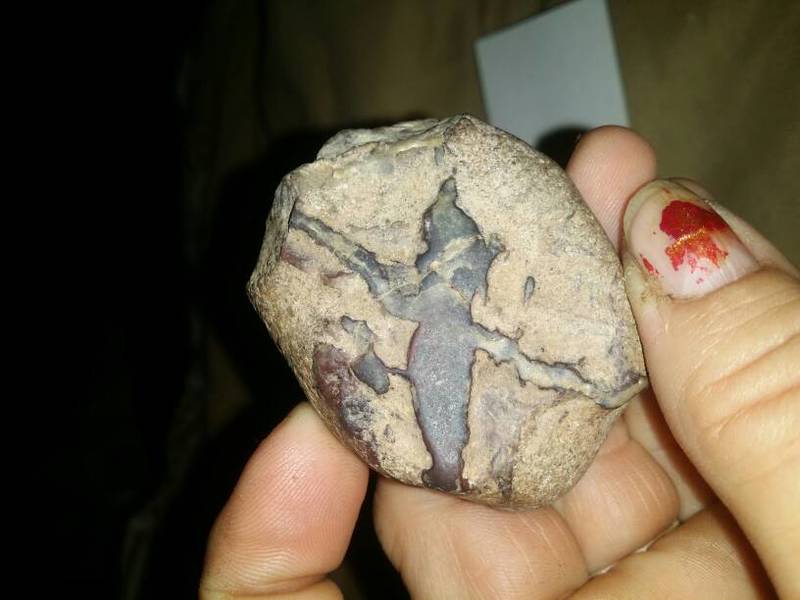
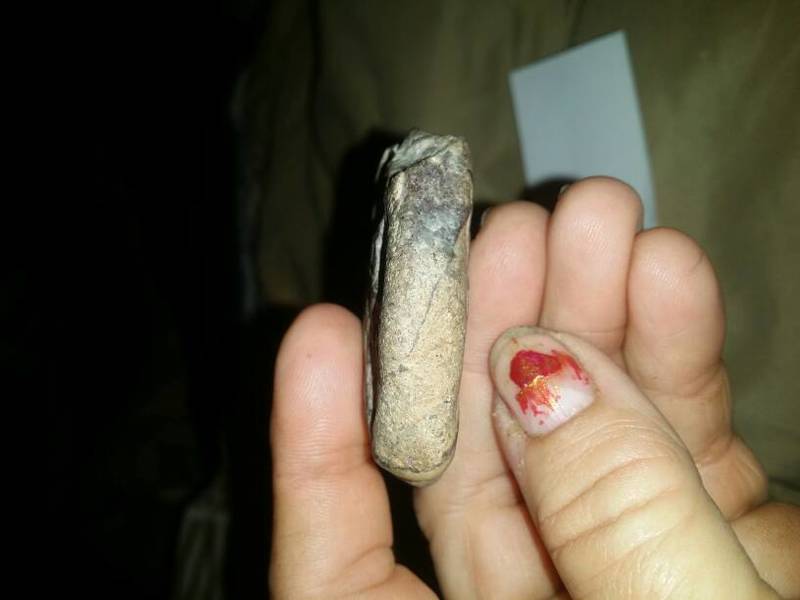
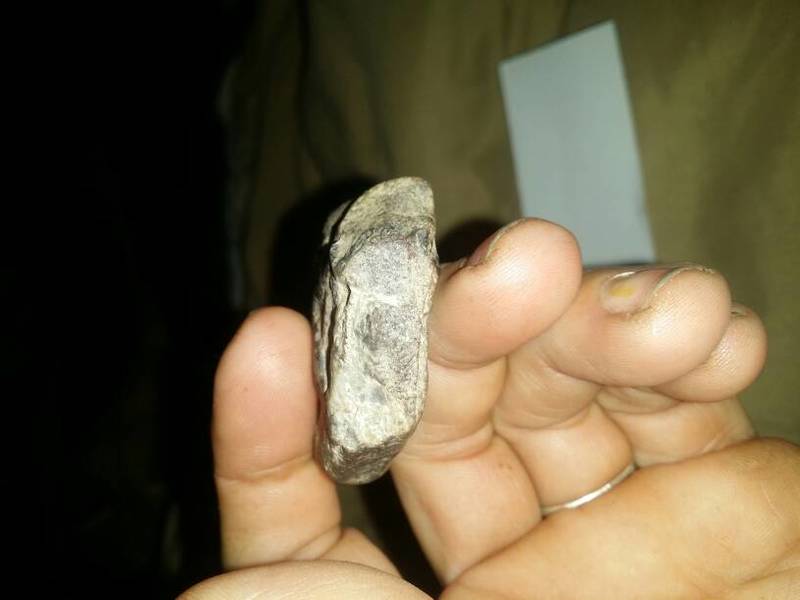
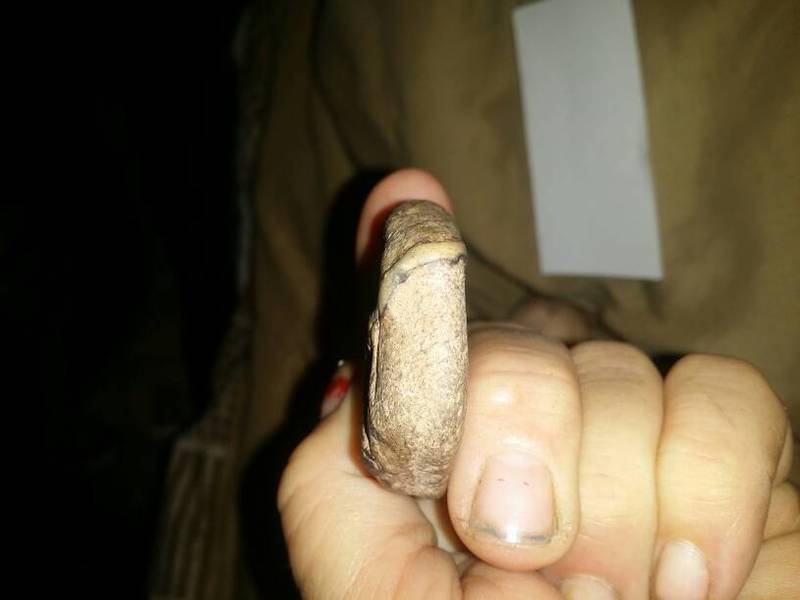
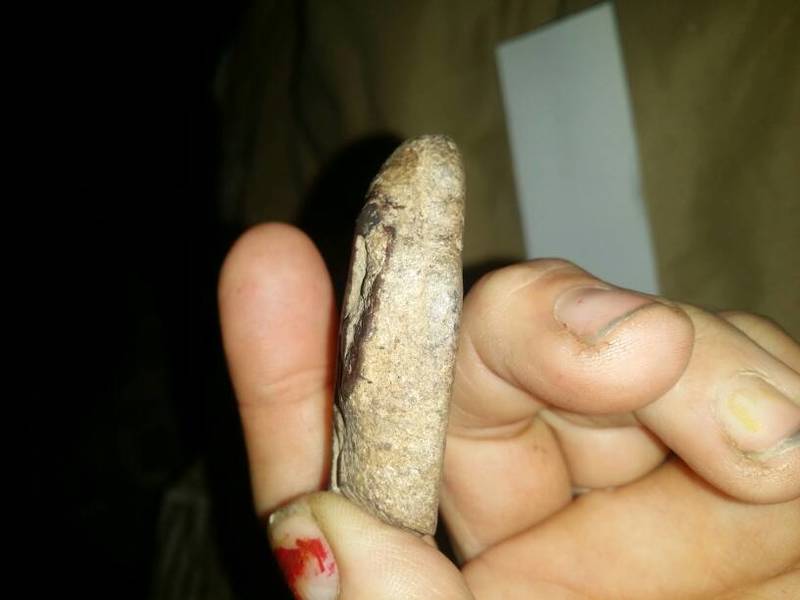
Found similar injected samples -
shores of Lake Michigan, with some sort or iron based (magnet sticks to it) metal embedded into it.
Is your rock magnetic?When an animal dies, the soft organic parts typically dissolve and decompose and are lost. There are exceptions to this under special conditions, but soft tissue fossils and things like skin imprints are very rare and typically are found only as trace fossils. Trace fossils are a shadow or a secondary discoloration of the surrounding matrix. Fossil bones occur most often in sedimentary systems. Bogs, the bottom of water channels, flowing water, etc. are the most common area; sand eventually becomes sandstone under proper conditions.
Bones are mostly calcium. The bones are enclosed in the ground and over a very long period even their “softer” parts decay and as the interior cells of the bone are replaced by waters, high in mineral content,that eventually replace the inner cellular tissue. The hard bone acts like a mold for these minerals; the hard calcium structure is like a sponge with all the voids slowly being filled with minerals and most of the time these new minerals are not the same as those of the surrounding matrix (i.e. ground) strata.
As time goes on, the bone becomes more and more rock-like and the types of tissue washing through it will differ because of differences in the environment around it; we are talking millions of years here. Eventually the entire “sponge” becomes one solid rock with all of the organic parts replaced by other minerals that stand out in color and composition from the grounds around it.
More:
Fossil museum and
How Stuff Works
Image of pollen organ preserved as authigenic mineralization, By
Verisimilus, at Wikimedia Commons