Identifying an unknown fossil specimen

  • Thread starter Thread starter Lori Fenton
  • Start date Start date
Join the discussion
Registration is free. Start your own thread to ask a follow-up.
7 replies · 7K views · last reply
Lori Fenton
Messages
11
Reaction score
1
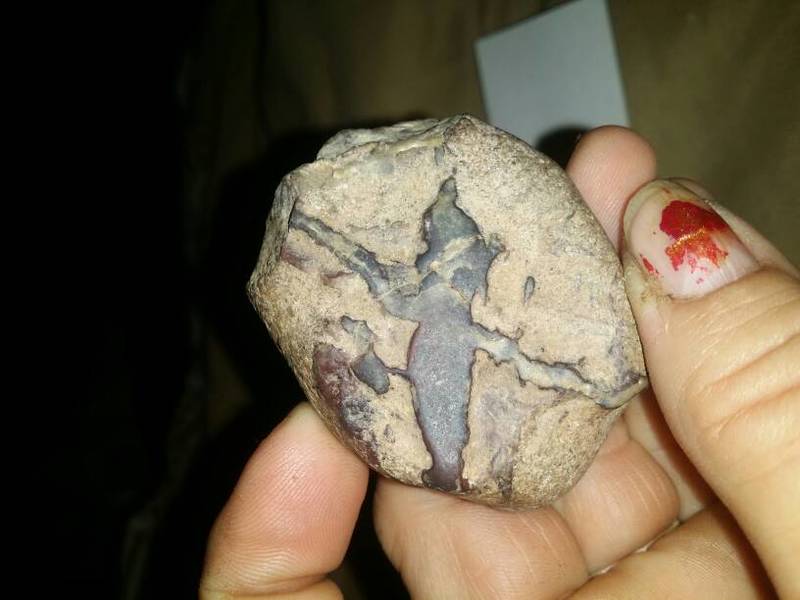
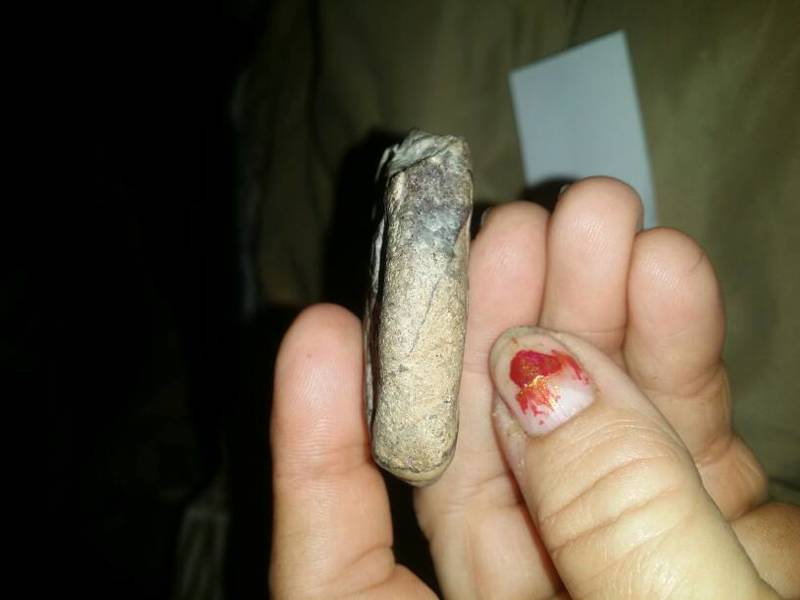
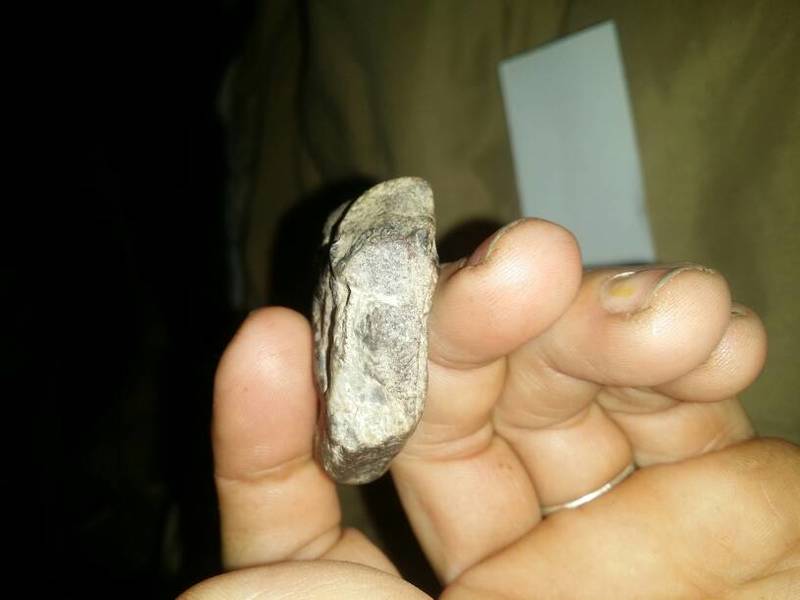
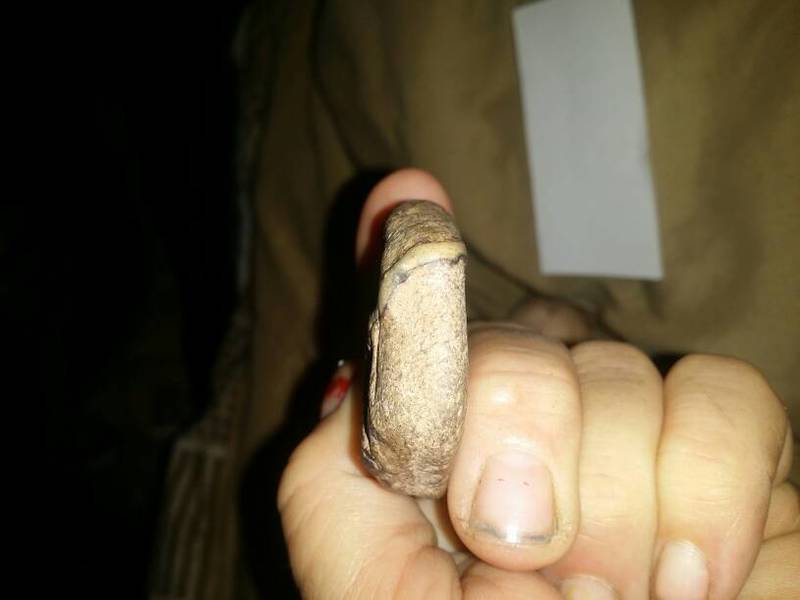
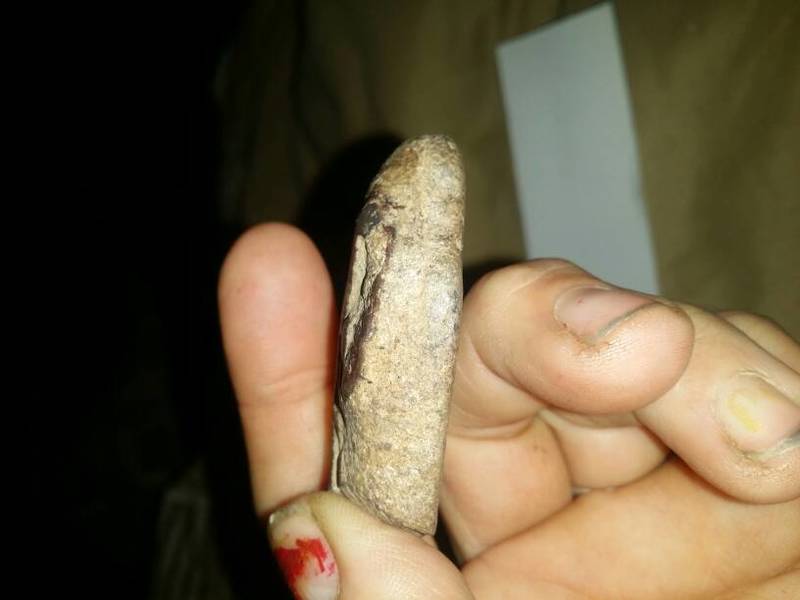
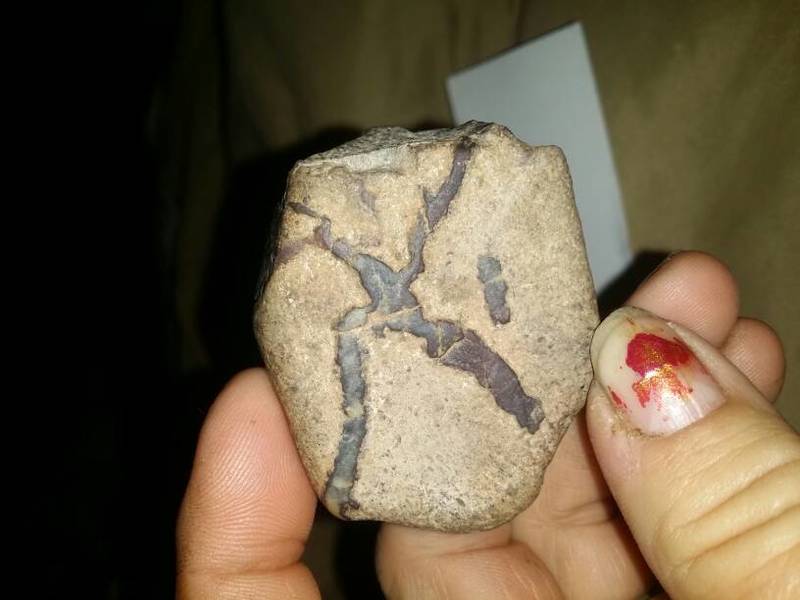
I've been carrying this around for years I thought it was pretty cool I can't even remember where I found it but I'm curious to know exactly what I have
Hand holding a tan rock with dark purple-grey veins branching across its surface, forming an irregular cross-like pattern.
Hand holding a rounded tan rock with dark purple-grey veins forming a branching, irregular pattern across its surface.
Hand holding a small, elongated, weathered grey-brown stone with a rough, pitted surface, with a red-painted fingernail visible beside it.
Close-up photo of a small grey, weathered rock held between two fingers in a dim setting, with a pale ridge along one side and a light band across its surface.
Close-up photo of a hand holding a small brown-grey rounded stone with a smooth ridge along one side, against a dark background with a white card behind.
Close-up photo of a hand holding an elongated, weathered greyish-brown stone object with a smooth rounded end and a dark streak along one side.
 
Earth sciences news on Phys.org
The topmost picture shows a rock that long ago had fractures. Over time crystals built up as water moved through the cracks.

Rocks like this are common near old volcanic vents. Cerillos Hills State Park and Rockhound State Park (both in New Mexico USA) are loaded with great rocks, some few are like what you found. Rockhound is great because you can collect anything you see there. You pay two dollars USD for park entry. You can take home what you find. My first problem was carrying the bags. Second problem: identifying the samples. Great fun.

If you live near a college or university, Geology faculty are very helpful with showing you how to figure out what you have.
 
Lori Fenton said:
I've been carrying this around for years I thought it was pretty cool I can't even remember where I found it but I'm curious to know exactly what I have

you were given the answer to that in your last thread
It is another form of a concretion
jim mcnamara said:
The topmost picture shows a rock that long ago had fractures. Over time crystals built up as water moved through the cracks.

yup

jim mcnamara said:
Rocks like this are common near old volcanic vents.

but even more common in mud/sand and silt deposits
 
I think it looks like veins of some kind of metal. I'm pretty sure it's not a fossil. But it's a cool rock. I would have kept it, too.
 
Do you know what the matrix rock is? Metamorphic and igneous rocks do not bear fossils because they have been altered by forces that distort and destroy fossils. For example, it's common to find fossils in limestone, but I know of no fossils found in marble deposits, which are just metamorphized limestone. The dark veins don't seem to resemble a plant or animal form, unless they are one of the rather strange forms seen in some early Cambrian formations.
 
Found similar injected samples -
shores of Lake Michigan, with some sort or iron based (magnet sticks to it) metal embedded into it.
Smooth grey pebble with a porous, pitted surface, partly covered by a glossy orange-brown rust-coloured crust with a grey patch in the upper left.
Close-up photo of a smooth, rounded grey stone riddled with many small pits and holes, resembling vesicular volcanic rock such as pumice or scoria, on a white background.
Two oval brown stone pieces side by side, each with dark sprig-like impressions resembling a branching plant with rounded bulbs, photographed against a black background.


Is your rock magnetic?When an animal dies, the soft organic parts typically dissolve and decompose and are lost. There are exceptions to this under special conditions, but soft tissue fossils and things like skin imprints are very rare and typically are found only as trace fossils. Trace fossils are a shadow or a secondary discoloration of the surrounding matrix. Fossil bones occur most often in sedimentary systems. Bogs, the bottom of water channels, flowing water, etc. are the most common area; sand eventually becomes sandstone under proper conditions.

Bones are mostly calcium. The bones are enclosed in the ground and over a very long period even their “softer” parts decay and as the interior cells of the bone are replaced by waters, high in mineral content,that eventually replace the inner cellular tissue. The hard bone acts like a mold for these minerals; the hard calcium structure is like a sponge with all the voids slowly being filled with minerals and most of the time these new minerals are not the same as those of the surrounding matrix (i.e. ground) strata.

As time goes on, the bone becomes more and more rock-like and the types of tissue washing through it will differ because of differences in the environment around it; we are talking millions of years here. Eventually the entire “sponge” becomes one solid rock with all of the organic parts replaced by other minerals that stand out in color and composition from the grounds around it.
Close-up photo of an irregular, weathered tan and brown rock resting on dark fuzzy fabric, with a dark slit-like crack and a dark metallic-looking inclusion visible on its surface.


More: Fossil museum and How Stuff Works

Image of pollen organ preserved as authigenic mineralization, By Verisimilus, at Wikimedia Commons
 
DinoS said:
Found similar injected samples -
shores of Lake Michigan, with some sort or iron based (magnet sticks to it) metal embedded into it.

Deposits of native iron - that's iron in its metallic, more-or-less pure form - is actually pretty rare, rarer even than iron-nickel meteorites. Deposits have been found in Greenland and Siberia, maybe a couple of other places on the planet. As far as I know, they're found in some variety of basalt, the heavy black rock that lava flows are made of. Your rock is definitely not basalt and I've never heard of an iron deposit near Lake Mich. What the lake does possesses is an abundance of iron smelters on its southern shores - Gary, IN in particular. It's possible that your rock is some sort of byproduct of the industry, perhaps iron embedded in slag.