SUMMARY
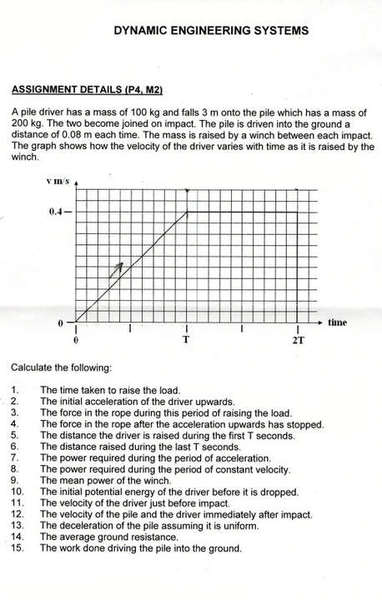
The discussion centers on calculating acceleration using the formula \( a = \frac{V - U}{T} \). The user presents their calculations, arriving at an acceleration of \( 0.04T \) based on a final velocity of \( 0.4 \, \text{m/s} \) and an initial velocity of \( 0 \, \text{m/s} \). The calculations involve substituting values into the equation and simplifying, but the user seeks confirmation of their results. The community's feedback is essential for validating the accuracy of these calculations.
PREREQUISITES
- Understanding of basic physics concepts, specifically kinematics.
- Familiarity with the formula for acceleration: \( a = \frac{V - U}{T} \).
- Ability to manipulate algebraic equations for solving variables.
- Knowledge of units of measurement in physics (e.g., meters per second).
NEXT STEPS
- Review the principles of kinematics in introductory physics textbooks.
- Practice solving acceleration problems using different values for velocity and time.
- Explore online physics simulators to visualize acceleration and motion.
- Learn about the implications of acceleration in real-world scenarios, such as vehicle dynamics.
USEFUL FOR
Students studying physics, educators teaching kinematics, and anyone needing assistance with acceleration calculations.