Tolklein
- 45
- 19
So I was given an oscilloscope, which I thought would be quite useful for my electronics dabbling.
It does appear, however to be ancient and have a few bits missing, as one would expect when something is free.
I managed to be lucky enough to guess the power requirements to be 6VDC, based on the long since dead 4X1.5VDC battery pack
The unit appears to be around 20 years old, (the serial number starts with 98" so I'm thinking that's the year) and any searches for the model name only bring up scanned in manuals in a language I think is Czech.
http://www.osciloskop.wz.cz/manual-osciloskop.pdf
Hence the question as to whether there is a generic guide to these devices, assuming they all follow some form of design convention.
I've used the probes from my own muiltimeter and managed to figure out the basic voltage, ohm and current measuring functions, however the rest of the functions elude me.
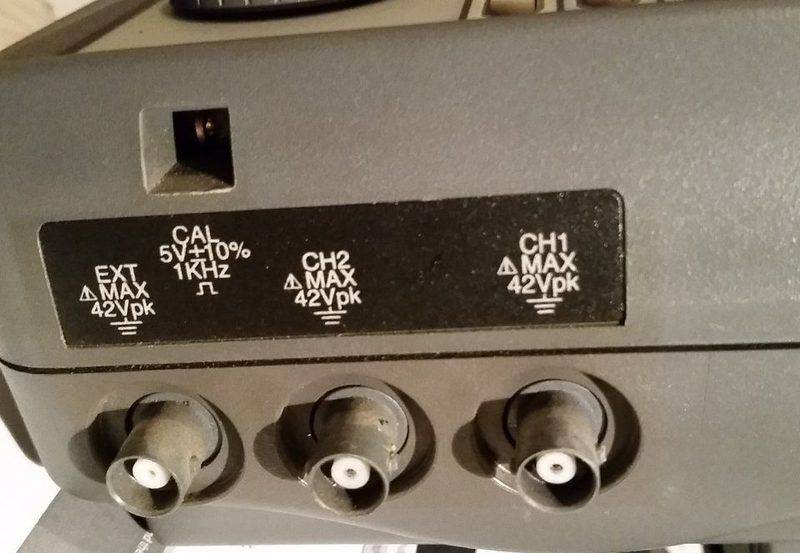
As mentioned it didn't come with any of the bits inlcuding the logic probes, so my next question, is a logic probe, is a logic probe, is a logic probe or are there specifics I'd need to look out for, the probe inputs look like standard BNC connectors.
Any tips on where I can get some reading material or advice on the type of probe I should be looking for would be very much appreciated

It does appear, however to be ancient and have a few bits missing, as one would expect when something is free.
I managed to be lucky enough to guess the power requirements to be 6VDC, based on the long since dead 4X1.5VDC battery pack
The unit appears to be around 20 years old, (the serial number starts with 98" so I'm thinking that's the year) and any searches for the model name only bring up scanned in manuals in a language I think is Czech.
http://www.osciloskop.wz.cz/manual-osciloskop.pdf
Hence the question as to whether there is a generic guide to these devices, assuming they all follow some form of design convention.
I've used the probes from my own muiltimeter and managed to figure out the basic voltage, ohm and current measuring functions, however the rest of the functions elude me.
As mentioned it didn't come with any of the bits inlcuding the logic probes, so my next question, is a logic probe, is a logic probe, is a logic probe or are there specifics I'd need to look out for, the probe inputs look like standard BNC connectors.
Any tips on where I can get some reading material or advice on the type of probe I should be looking for would be very much appreciated

