Is there simpler way to approach this particle collision problem?

  • Thread starter Thread starter joturttle
  • Start date Start date
Join the discussion
Registration is free. Ask a follow-up in this thread, or start your own.
2 replies · 1K views
joturttle
Messages
1
Reaction score
2
Homework Statement
I do not know what this means
Relevant Equations
1/2AT^2
VT
D?
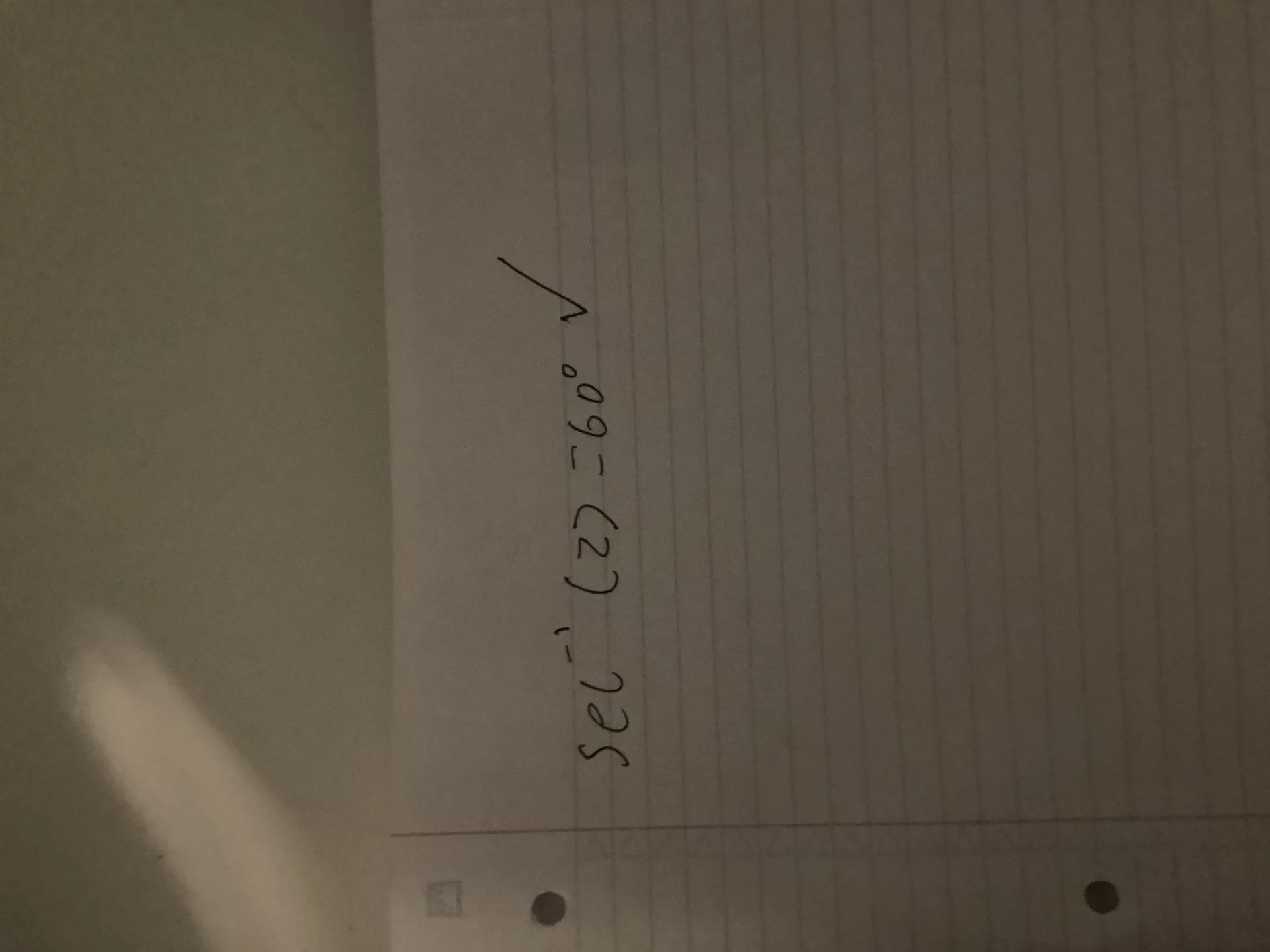
I was able to solve the problem, but my solution feels lengthy so i was curious if there was a mathematicallly simplier way to approach this problem.
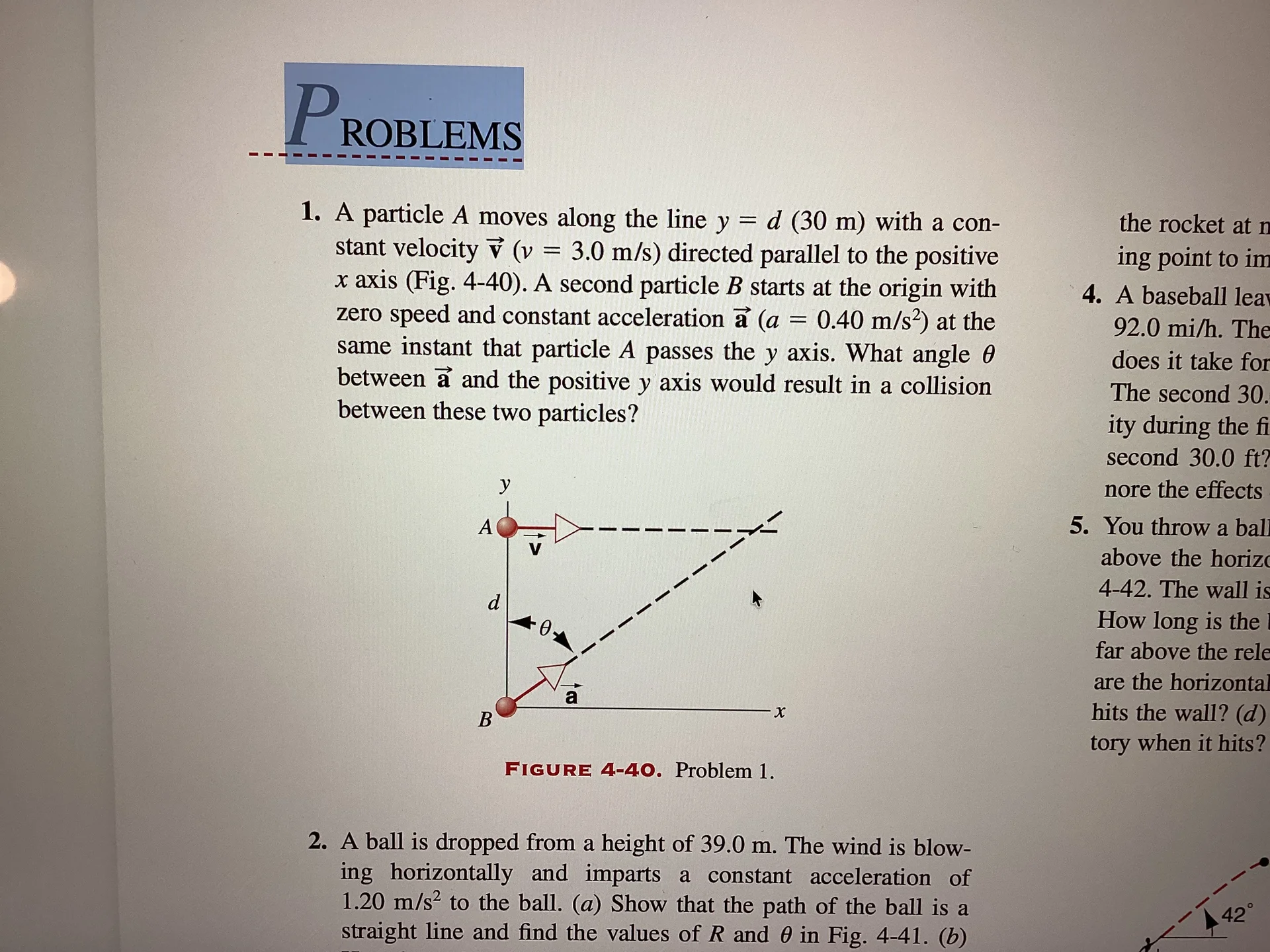
IMG_1823.webp

IMG_1821.webp

IMG_1822.webp
 
  • Like
Likes   Reactions: Paul Colby and Dale
Physics news on Phys.org
joturttle said:
I was able to solve the problem, but my solution feels lengthy so i was curious if there was a mathematicallly simplier way to approach this problem.
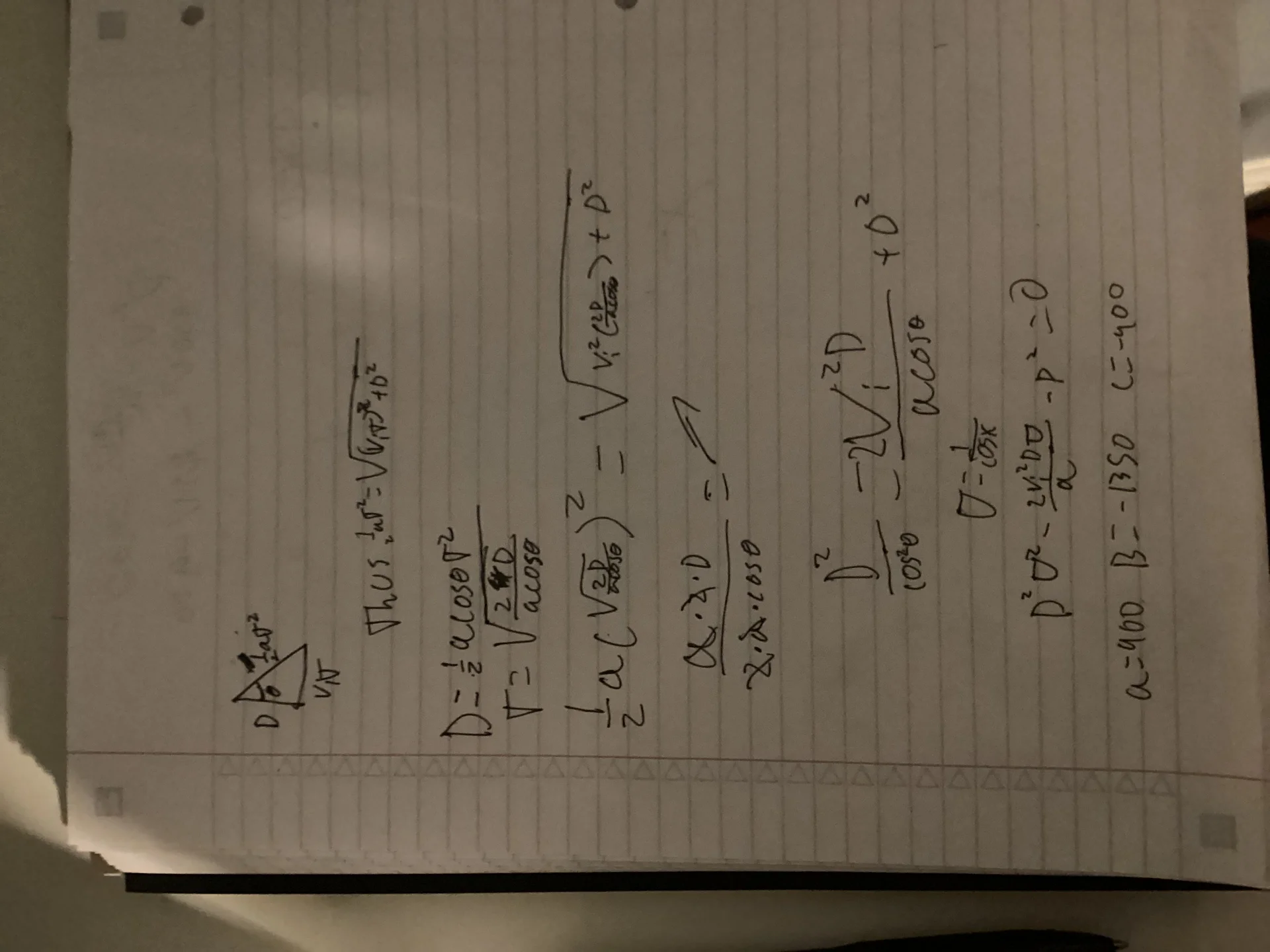
Not sure if it's shorter or simpler, but it avoids trigonometric functions until the very end:

- Use Pythagoras to get the time to impact ##t##
- Use ##t## to get the horizontal distance ##s_x##
- Use ##atan## to get ##\theta##
 
A.T. said:
Not sure if it's shorter or simpler, but it avoids trigonometric functions until the very end:

- Use Pythagoras to get the time to impact ##t##
- Use ##t## to get the horizontal distance ##s_x##
- Use ##atan## to get ##\theta##
This would be my first guess too. Note that Pythagoras yields a quadratic in ##t^2##, so I think finding the hypotenuse and using ##\cos^{-1}## is slightly shorter.