- 7,807
- 4,120
I'd like to share this tip, regarding focusing.
Two of my three lenses are manual focus, so I've had to learn how to focus properly and quickly. When I first got my camera about 4 years ago, my lack of skill in focusing was obvious- at the time, I didn't appreciate how difficult it is to accurately place a plane of focus when using a fast lens, and I've made a few suggestions previously (smoke, fire) to get some practice focusing on objects that move quickly.
Now that the weather has finally warmed up, I've been practicing on birds, squirrels, etc. using my telephoto, and I wanted to share some results (these are all 1:1 crops).
The 'rule' is to place the plane of focus on an eyeball, like this:
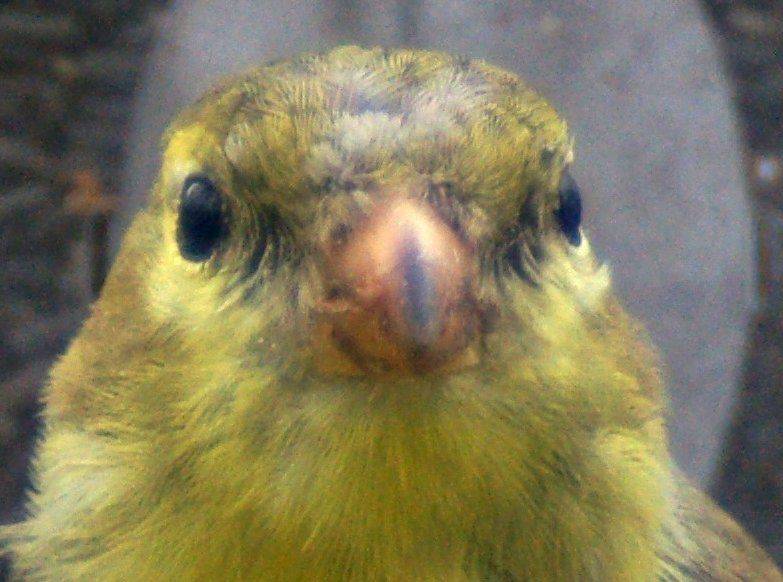
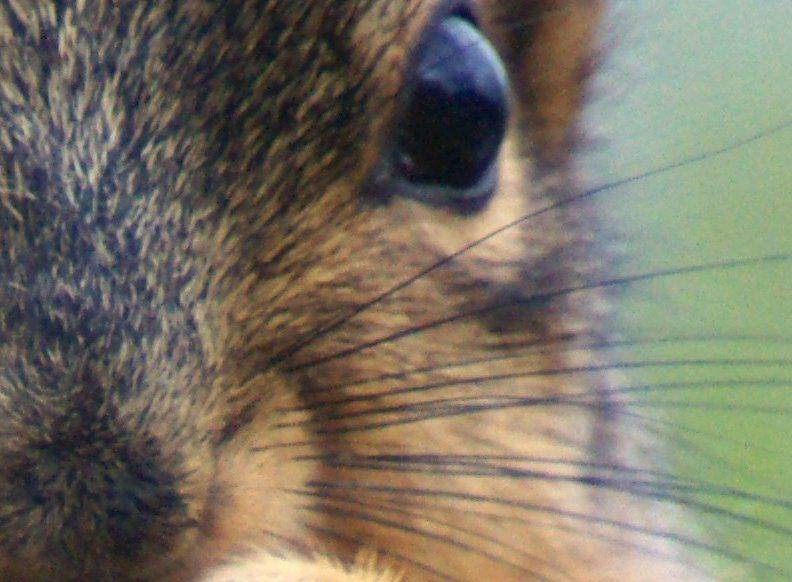
Notice that the beak is already out of focus- the depth of field is less than a centimeter. Alternatively, if I 'break the rule' and focus on a nose, the eyes are blurred. This can be pleasing as well:
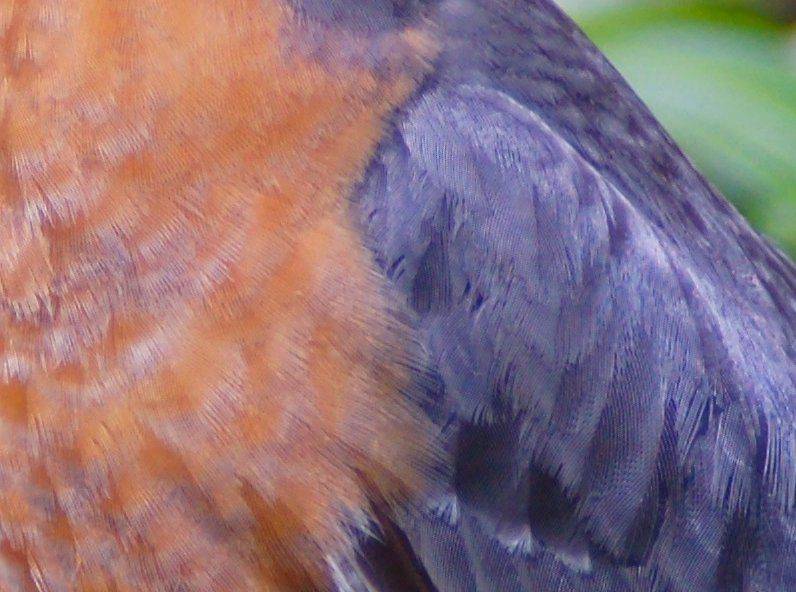
I suggest taking some time and working on your technique. Even though it's tricky and sometimes frustrating, when I 'hit' focus properly, the results are quite satisfying:
Sure, autofocus makes this much easier. But having the skill to manually focus will give you more flexibility and control when you are composing your shot. Plus, you can use cheaper lenses...
Two of my three lenses are manual focus, so I've had to learn how to focus properly and quickly. When I first got my camera about 4 years ago, my lack of skill in focusing was obvious- at the time, I didn't appreciate how difficult it is to accurately place a plane of focus when using a fast lens, and I've made a few suggestions previously (smoke, fire) to get some practice focusing on objects that move quickly.
Now that the weather has finally warmed up, I've been practicing on birds, squirrels, etc. using my telephoto, and I wanted to share some results (these are all 1:1 crops).
The 'rule' is to place the plane of focus on an eyeball, like this:
Notice that the beak is already out of focus- the depth of field is less than a centimeter. Alternatively, if I 'break the rule' and focus on a nose, the eyes are blurred. This can be pleasing as well:
I suggest taking some time and working on your technique. Even though it's tricky and sometimes frustrating, when I 'hit' focus properly, the results are quite satisfying:
Sure, autofocus makes this much easier. But having the skill to manually focus will give you more flexibility and control when you are composing your shot. Plus, you can use cheaper lenses...