Material Selection, material indexes

Click For Summary
SUMMARY

The discussion focuses on the selection of materials for an application requiring support for a tensile load of 50 kg while minimizing weight. The participant utilizes material indexes, specifically the ratio of density to failure strength, to identify optimal materials. A key concern raised is the necessity of verifying that the chosen material meets the tensile load constraint after determining the optimal material index. The conversation emphasizes the importance of considering fatigue and environmental specifications alongside material selection.

PREREQUISITES
  • Understanding of material indexes in engineering design
  • Knowledge of tensile load requirements and constraints
  • Familiarity with failure strength and density calculations
  • Awareness of fatigue and environmental specifications in material selection
NEXT STEPS
  • Research the application of material indexes in engineering design
  • Learn about tensile load testing methods and standards
  • Explore the relationship between density, failure strength, and material performance
  • Investigate the impact of fatigue and environmental factors on material selection
USEFUL FOR

Engineers, material scientists, and design team members involved in material selection for structural applications, particularly those focused on optimizing weight and performance under specific load conditions.

Thom_Silva
Messages
47
Reaction score
1
Hi,

I'm working in a design team for the first time and I'm in charge of choosing a material for an application. I have the constraints, support a tensile load of 50 kg , and the objective which is minimize the weight.
I'm using the concept of material indexes to find the best material for the application:
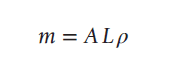
upload_2017-7-4_12-35-55.png

The equation that I want to minimize, regarding that the following constraint is maintained:
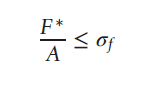
upload_2017-7-4_12-36-21.png


If we substitute A in the first equation we get:
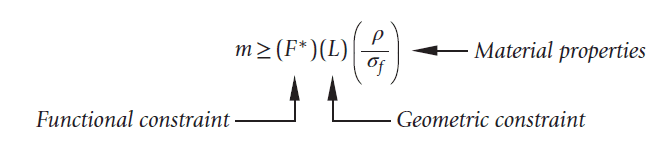
upload_2017-7-4_12-36-38.png


The problem i have now understanding is that the method tells me that i should only carry in minimizing (density/ failure strength), if i find the material that in fact minimizes this, how do i now the first constraint:
upload_2017-7-4_12-36-21.png


is maintained, in literature I'm recurring to they never check this, should i check this for the material i end up choosing , or is this step unnecessary ?

Thank you very much !
 
Engineering news on Phys.org
The substitution you made eliminates the cross section area A. That clearly doesn't mean the part can have an arbitrary cross section area (eg A=0).

It's like solving two simultaneous equations involving x and y. You usually make a substitution that eliminates one variable and allows the other to be calculated. You then have to go back and find the other one.
 
  • Like
Likes   Reactions: Thom_Silva
The fatigue and environmental specifications are usually most important. First identify suitable materials that are available, then design solutions that can be attached to the structure without attachment, fastener, fatigue or corrosion problems.
 

Similar threads

  • · Replies 9 ·
Replies
9
Views
2K
Replies
3
Views
2K
  • · Replies 15 ·
Replies
15
Views
3K
  • · Replies 14 ·
Replies
14
Views
2K
  • · Replies 1 ·
Replies
1
Views
3K
  • · Replies 2 ·
Replies
2
Views
2K
Replies
1
Views
2K
  • · Replies 6 ·
Replies
6
Views
3K
Replies
1
Views
2K
  • · Replies 4 ·
Replies
4
Views
2K