Discussion Overview
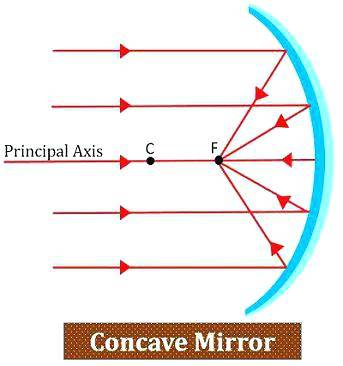
The discussion revolves around the potential for focusing sound waves to achieve high power densities, similar to how concave mirrors focus light. Participants explore theoretical and practical implications of sound wave focusing, including its application in sculpting materials like granite and historical claims of sound manipulation for moving large stones.
Discussion Character
- Exploratory
- Debate/contested
- Technical explanation
- Conceptual clarification
Main Points Raised
- Some participants suggest that sound waves can be focused to a point, but question the feasibility of achieving infinite power density due to the wave nature of sound.
- One participant notes that the maximum amplitude of sound is limited by atmospheric pressure, citing a specific example of sound intensity and its implications for power density.
- Another participant mentions existing commercial technologies for stone engraving, questioning the scale of interest for sound-based sculpting.
- Concerns are raised about the historical use of sound for moving large stones, with questions about the limitations of focusing sound waves to small areas.
- Participants discuss the concept of acoustic levitation and its current limitations for larger objects, suggesting that existing technology may not be directly applicable.
- There is a mention of diffraction issues when focusing sound waves, with one participant referencing a study that achieved focusing beyond typical limits using unconventional materials.
- Some participants propose the idea of accumulating energy over time in a standing wave, while others challenge the effectiveness of certain shapes, like a trumpet, for concentrating sound energy.
- There are discussions about the potential for using different shapes or configurations to optimize sound wave focusing and energy accumulation.
Areas of Agreement / Disagreement
Participants express a range of views on the feasibility and effectiveness of sound wave focusing, with no clear consensus on the potential for practical applications or the historical claims regarding sound manipulation. Multiple competing ideas and hypotheses are presented throughout the discussion.
Contextual Notes
Participants highlight various limitations, such as the diffraction of sound waves, the maximum amplitude dictated by atmospheric pressure, and the challenges of applying current technology to larger objects. There is also uncertainty regarding the historical context of sound wave manipulation.
Who May Find This Useful
This discussion may be of interest to those exploring the physics of sound, applications in engineering and material manipulation, and historical claims regarding sound technology.