Partial Derivatives: What are They and Why Are They Used?

Click For Summary
SUMMARY

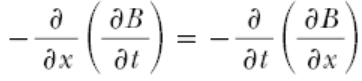
This discussion centers on the continuity of first and second partial derivatives of a function B, specifically in the context of magnetic fields. It is established that if B is defined as a function of variables x and t, and if its first and second partial derivatives are continuous, then certain mathematical operations can be performed. The conversation emphasizes that most naturally occurring phenomena, including magnetic fields, are infinitely differentiable, which supports the continuity of these derivatives.

PREREQUISITES
  • Understanding of partial derivatives in multivariable calculus
  • Familiarity with the concept of continuity in mathematical functions
  • Basic knowledge of magnetic fields in physics
  • Experience with evaluating mathematical functions and their derivatives
NEXT STEPS
  • Research the properties of continuous functions in calculus
  • Study the application of partial derivatives in physics, particularly in electromagnetism
  • Learn about the implications of differentiability in real-world phenomena
  • Explore advanced topics in multivariable calculus, such as Taylor series expansions
USEFUL FOR

Students and professionals in mathematics, physics, and engineering who are looking to deepen their understanding of partial derivatives and their applications in real-world scenarios, especially in the context of magnetic fields.

sparkle123
Messages
172
Reaction score
0
Why can you do this?
6f2ca8b6.png

thanks!
 
Physics news on Phys.org
It can be done if B, as a function of x & t, and its first and second partial derivatives are all continuous.
 
Thanks!
How would you know if a function's first and 2nd partial derivatives are continuous?
 
sparkle123 said:
Thanks!
How would you know if a function's first and 2nd partial derivatives are continuous?

If you have a formula for B, you can try and evaluate them.

If B is the magnetic field, you can assume so, because our empirical laws of physics say so.
(Most naturally occurring phenomena are infinitely differentiable.)
 
Yes, B is the magnetic field! Thanks! :)
 

Similar threads

  • · Replies 10 ·
Replies
10
Views
2K
Replies
3
Views
2K
  • · Replies 7 ·
Replies
7
Views
2K
  • · Replies 6 ·
Replies
6
Views
2K
  • · Replies 3 ·
Replies
3
Views
2K
  • · Replies 2 ·
Replies
2
Views
1K
Replies
9
Views
2K
  • · Replies 4 ·
Replies
4
Views
1K
  • · Replies 42 ·
2
Replies
42
Views
4K
  • · Replies 3 ·
Replies
3
Views
3K