PF Photography: Tips, Tricks, & Photo Sharing
- Thread starter _Mayday_
- Start date
-
- Tags
- Photography Thread
Join the discussion
Ask a follow-up here, or get your own question answered by working scientists, mathematicians and engineers — people, not an autocomplete.
Real named experts · corrections over time · the nuance an AI answer skips
1,418 replies · 238K views
Physics news on Phys.org
Topher925
- 1,563
- 7
I finally was able to escape the lab last night for the first time since April (where we had some great skies that I missed  ) and grabbed a few shots of M101. Unfortunately it was hot and muggy so the seeing conditions were terrible, I couldn't even see Megrez.
Anyway, I tried my EQ-1 mount again with my telescope to see how it compares to my 0-GPS1 (I'm selling all my long FL glass). The answer is "not well". I took about 40 frames and in the end could only use 6 of them. So here is 6 minutes of the Pinwheel galaxy.
6x60sec, ST-80 (400mm), ISO 3200/1600
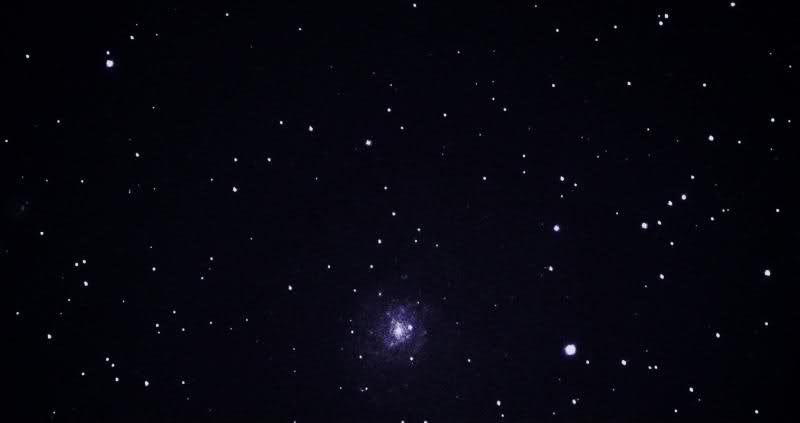
Anyone want to buy an EQ-1 equatorial mount?
) and grabbed a few shots of M101. Unfortunately it was hot and muggy so the seeing conditions were terrible, I couldn't even see Megrez. Anyway, I tried my EQ-1 mount again with my telescope to see how it compares to my 0-GPS1 (I'm selling all my long FL glass). The answer is "not well". I took about 40 frames and in the end could only use 6 of them. So here is 6 minutes of the Pinwheel galaxy.
6x60sec, ST-80 (400mm), ISO 3200/1600
Anyone want to buy an EQ-1 equatorial mount?
- 19,385
- 15,622
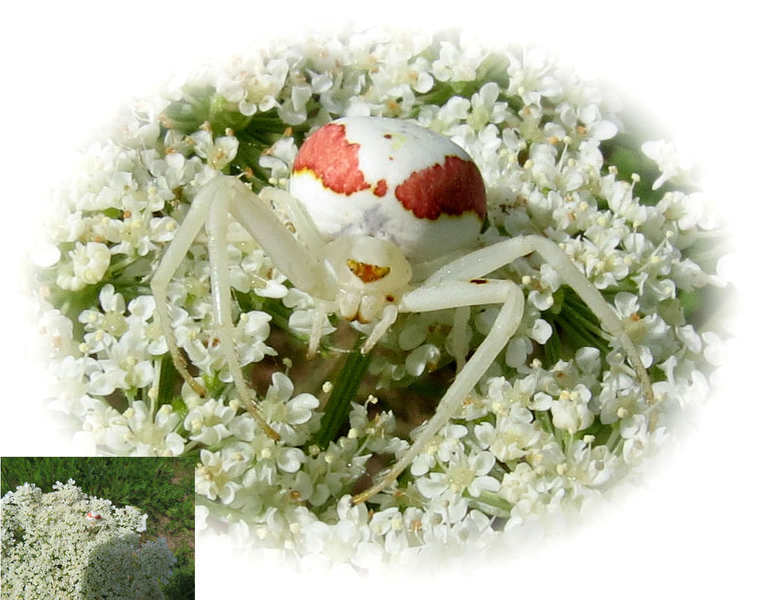
I was out shooting flowers to try out the color settings on a new camera when I ran across this little (VERY little) fellow sitting on a 2" wide flower (see lower left insert) and thought I'd check out the super-macro capability. It works pretty well. This little guy would easily fit on my one of my fingernails and the image you see here is scaled down from 1/2 the original size (the insert is a separate pic)
Attachments

Last edited:
- 7,806
- 4,119
I worked with a few photos I took last summer, using software to turn my ultrawide into something like what this lens (http://www.the-digital-picture.com/Reviews/Canon-TS-E-17mm-f-4-L-Tilt-Shift-Lens-Review.aspx) can do:
http://img850.imageshack.us/img850/9228/perspective2.png
http://img98.imageshack.us/img98/4168/perspective1.png
http://img109.imageshack.us/img109/706/perspective3.png
The image was 'warped' to perform the equivalent to a back tilt/swing on a view camera. In software, I stretched the rectangular image into a trapezoid and then cropped the excess. These images look *terrible* at normal size.
The upper image was a 10 minute exposure, with heavy cloud cover concealing the moonlight- it's amazing the foreground grass stayed completely still during that time and so are sharp, while the ocean is completely blurred out from the motion. The clouds retained a lot of structure, which is also unexpected.
The lower two images are my attempts at copying proper architectural photography. The image warping brought all the lines that lie within the image plane (the horizontal and vertical lines) into right angles, but the depth perspective is highly exaggerated due to the short focal length of the lens- magnification varies with distance much more strongly than 'normal' vision, and so the near-far relationship is exaggerated: the telephone pole shadows converge extra-strongly, for example. In the bottom photo, the receding columns show this effect as well.
The building in the middle photo was torn down this past week- I feel lucky to have gotten this shot. In addition to warping the image, I (tried to) erase the telephone pole on the left.
http://img850.imageshack.us/img850/9228/perspective2.png
http://img98.imageshack.us/img98/4168/perspective1.png
http://img109.imageshack.us/img109/706/perspective3.png
The image was 'warped' to perform the equivalent to a back tilt/swing on a view camera. In software, I stretched the rectangular image into a trapezoid and then cropped the excess. These images look *terrible* at normal size.
The upper image was a 10 minute exposure, with heavy cloud cover concealing the moonlight- it's amazing the foreground grass stayed completely still during that time and so are sharp, while the ocean is completely blurred out from the motion. The clouds retained a lot of structure, which is also unexpected.
The lower two images are my attempts at copying proper architectural photography. The image warping brought all the lines that lie within the image plane (the horizontal and vertical lines) into right angles, but the depth perspective is highly exaggerated due to the short focal length of the lens- magnification varies with distance much more strongly than 'normal' vision, and so the near-far relationship is exaggerated: the telephone pole shadows converge extra-strongly, for example. In the bottom photo, the receding columns show this effect as well.
The building in the middle photo was torn down this past week- I feel lucky to have gotten this shot. In addition to warping the image, I (tried to) erase the telephone pole on the left.
Last edited by a moderator:
Triple A
This was taken with a Phase One digital back attached to a 4x5 view camera:
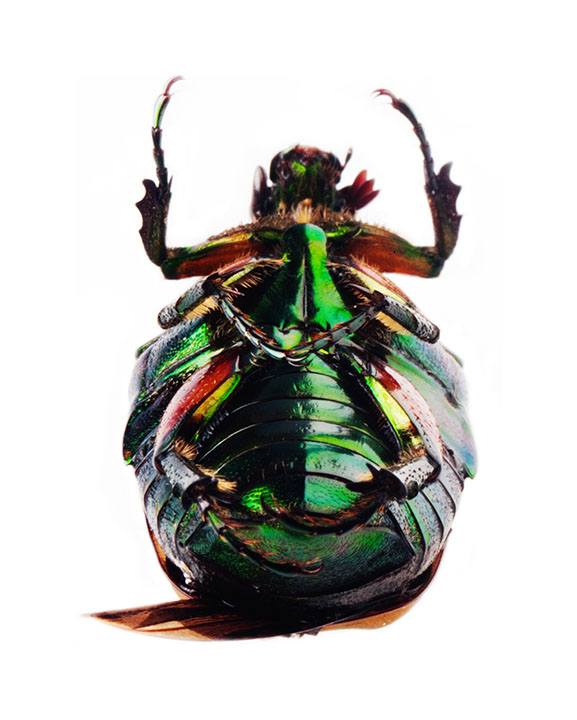
This is composed for 6 sheets of 4x5 film. I scanned the negatives and blended them in photoshop to create a focus stack:
This is composed for 6 sheets of 4x5 film. I scanned the negatives and blended them in photoshop to create a focus stack:
- 7,806
- 4,119
Fantastic! jealous = me. What lens(es) did you use?
Triple A
Thank you, Andy. For the top one I used a 135mm lens and a 90mm for the bottom one.
fuzzyfelt
Gold Member
- 734
- 4
Really nice!
- 7,806
- 4,119
Finally got my camera back- a 3 month repair job...
During the summer, we spent some time decapsulating computer chips from dead cell phones and old computers (for fun). Here's a few- the large ones (about 1cm on a side), starting from the lower right, are a 512 Mb DRAM, a Pentium 4, and I don't know what the other ones are. The small ones are chips and diodes, showing the huge differences in sizes. The thicknesses also vary considerably- the Pentium and large rectangular one above it are quite thick, while the DRAM is about as thin as a coverslip.
http://img841.imageshack.us/img841/7529/dsc09246rt.jpg
These two images are close-ups of a diode and the DRAM, using epi-DIC imaging:
http://img824.imageshack.us/img824/6353/dsc09255small.jpg
http://img401.imageshack.us/img401/7229/dsc09258small.jpg
This one came from a cell phone and seems to have a lot of ring inductors, possibly as part of resonant circuit(s):
http://img703.imageshack.us/img703/8830/dsc09229p.jpg
The color in the first and last images are from diffraction, as opposed to DIC.
During the summer, we spent some time decapsulating computer chips from dead cell phones and old computers (for fun). Here's a few- the large ones (about 1cm on a side), starting from the lower right, are a 512 Mb DRAM, a Pentium 4, and I don't know what the other ones are. The small ones are chips and diodes, showing the huge differences in sizes. The thicknesses also vary considerably- the Pentium and large rectangular one above it are quite thick, while the DRAM is about as thin as a coverslip.
http://img841.imageshack.us/img841/7529/dsc09246rt.jpg
These two images are close-ups of a diode and the DRAM, using epi-DIC imaging:
http://img824.imageshack.us/img824/6353/dsc09255small.jpg
http://img401.imageshack.us/img401/7229/dsc09258small.jpg
This one came from a cell phone and seems to have a lot of ring inductors, possibly as part of resonant circuit(s):
http://img703.imageshack.us/img703/8830/dsc09229p.jpg
The color in the first and last images are from diffraction, as opposed to DIC.
Last edited by a moderator:
- 7,806
- 4,119
A few more images of chips:
http://img36.imageshack.us/img36/3859/montagezo.jpg
http://img14.imageshack.us/img14/3298/dsc09528p.jpg
http://img717.imageshack.us/img717/1749/dsc09521a.jpg
http://img43.imageshack.us/img43/5736/dsc09293wn.jpg
These have all been significantly downsized- the full sized versions of these and some additional images will get posted on our blog shortly.
All the images (except one of the chips in the top photo) were taken with epi-brightfield (tungsten halogen source), using a variety of magnifications- the first image is a collection of FETs (Field Effect Transistors) at 16x or 40x, the second and third images were acquired at 8x, and the last at about 10x.
The colors are most likely due to a combination of thin-film interference and surface plasmon resonance from the various metal layers- off-axis, these chips appear mirrorlike.
http://img36.imageshack.us/img36/3859/montagezo.jpg
http://img14.imageshack.us/img14/3298/dsc09528p.jpg
http://img717.imageshack.us/img717/1749/dsc09521a.jpg
http://img43.imageshack.us/img43/5736/dsc09293wn.jpg
These have all been significantly downsized- the full sized versions of these and some additional images will get posted on our blog shortly.
All the images (except one of the chips in the top photo) were taken with epi-brightfield (tungsten halogen source), using a variety of magnifications- the first image is a collection of FETs (Field Effect Transistors) at 16x or 40x, the second and third images were acquired at 8x, and the last at about 10x.
The colors are most likely due to a combination of thin-film interference and surface plasmon resonance from the various metal layers- off-axis, these chips appear mirrorlike.
Last edited by a moderator:
- 2,050
- 614
Wow, Andy, those are fantastic! I think some would make beautiful quilt patterns :!)!
- 7,806
- 4,119
Thanks!
Topher925
- 1,563
- 7
Its kind of mind blowing that man kind is capable of making such things.
Gold Member
- 4,458
- 3,265
...that actually work.Topher925 said:Its kind of mind blowing that man kind is capable of making such things.
- 7,806
- 4,119
I'm still learning how to use microscopes! Typically, when mounting a camera to a microscope, the sensor is presented with a small image size: microscopes were developed with image sizes matched to the retina, and optical designs all evolved with the constraint of a 20mm diameter image size. That's why many microscopy images appear circular- the sensor is larger than the image size. And to add insult to injury, the image quality falls off as the edge of the image is approached, meaning only the very center of the sensor has an image worth keeping.
The ultraphot, along with the aristophot (Leica) and multiphot (Nikon), all basically have a bellows attachment which is used to provide a much larger image size- the ultraphot has an 8" image circle. I'm not able to accurately convey what that looks like- if you have seen a large-format contact print, you will know what I mean. This is the best I can do- this is a snapshot of the display using my lowest magnification lens at the shortest bellows length (corresponding to 0.8x magnification):
http://imageshack.us/a/img6/6451/dsc097821.jpg
A penny just barely fits in the image- I don't understand how that's 0.8x, but whatever... Now, this is the amount of that image I can acquire with a 35mm format sensor (at the same scale):
http://imageshack.us/a/img407/1083/dsc097831.jpg
Again, with my camera I can produce 16" x 20" prints at 300 dpi, or 6 foot wide prints at 80 dpi (computer monitor resolutions)- if I could scan or digitally capture the entire image, I could produce publication-quality prints that are *17 feet* wide, or 60-foot wide prints suitable for the side of a truck, or >600-foot wide prints for roadside signage :)
What I have learned to do is take the ground glass off and stick my camera (w/o lens) into the hole, so I can get images like this (these are full-frame images, downsized):
http://imageshack.us/a/img401/9800/dsc09728dh.jpg
http://imageshack.us/a/img515/5620/dsc09741h.jpg
and a 1:1 crop of an image- this would be the 600-foot long poster :)
http://imageshack.us/a/img193/9356/dsc097871.jpg
What's really excellent is that the objective lenses all happily provide the larger image size- the full 8" images are truly incredible to see.
The ultraphot, along with the aristophot (Leica) and multiphot (Nikon), all basically have a bellows attachment which is used to provide a much larger image size- the ultraphot has an 8" image circle. I'm not able to accurately convey what that looks like- if you have seen a large-format contact print, you will know what I mean. This is the best I can do- this is a snapshot of the display using my lowest magnification lens at the shortest bellows length (corresponding to 0.8x magnification):
http://imageshack.us/a/img6/6451/dsc097821.jpg
A penny just barely fits in the image- I don't understand how that's 0.8x, but whatever... Now, this is the amount of that image I can acquire with a 35mm format sensor (at the same scale):
http://imageshack.us/a/img407/1083/dsc097831.jpg
Again, with my camera I can produce 16" x 20" prints at 300 dpi, or 6 foot wide prints at 80 dpi (computer monitor resolutions)- if I could scan or digitally capture the entire image, I could produce publication-quality prints that are *17 feet* wide, or 60-foot wide prints suitable for the side of a truck, or >600-foot wide prints for roadside signage :)
What I have learned to do is take the ground glass off and stick my camera (w/o lens) into the hole, so I can get images like this (these are full-frame images, downsized):
http://imageshack.us/a/img401/9800/dsc09728dh.jpg
http://imageshack.us/a/img515/5620/dsc09741h.jpg
and a 1:1 crop of an image- this would be the 600-foot long poster :)
http://imageshack.us/a/img193/9356/dsc097871.jpg
What's really excellent is that the objective lenses all happily provide the larger image size- the full 8" images are truly incredible to see.
Last edited by a moderator:
- 7,806
- 4,119
Our best image yet:
http://imageshack.us/a/img585/7328/100147.jpg
This is 1700x magnification, using our 100/1.47 lens. Here's the whole image (downsized)-
http://imageshack.us/a/img41/9130/1001471p.jpg
The NA is high enough to isolate the plane of focus to a single circuit layer.
http://imageshack.us/a/img585/7328/100147.jpg
This is 1700x magnification, using our 100/1.47 lens. Here's the whole image (downsized)-
http://imageshack.us/a/img41/9130/1001471p.jpg
The NA is high enough to isolate the plane of focus to a single circuit layer.
Last edited by a moderator:
- 7,806
- 4,119
Drakkith said:Andy are you putting the camera at prime focus in a microscope? I'm not sure if the terminology from astrophotography matches up with normal photography, so I hope that makes sense.
Yes, if I understand what you mean- the microscope is the camera lens.
- 7,806
- 4,119
That's the projector viewscreen for the Ultraphot; there's a different screen for use with a 4"x5" filmpack. I put up the viewscreen image to show how I gain an additional 10x magnification from the 'crop factor' of my sensor.
Andre
- 4,296
- 73
Todays sunset here in South France
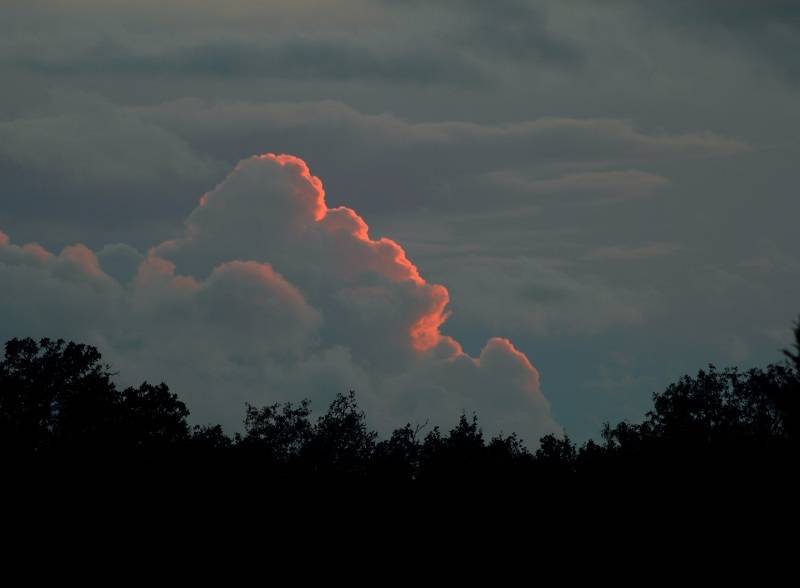
Andre
- 4,296
- 73
Emir, the happy lab of my sister and his ball. I posted him also in August I think.
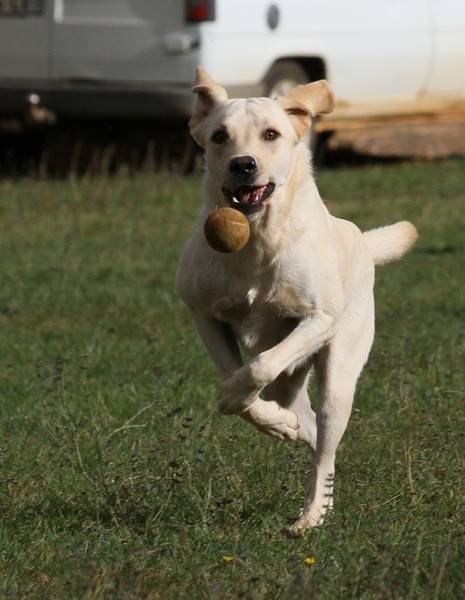
Last edited:
- 7,806
- 4,119
Andre said:Todays sunset here in South France
<snip>
Nice- excellent lighting!
- 7,806
- 4,119
A few more images of chips- these are some of the markings present. Most chips have a small area that contains the company logo, the device ID, and various process marks:
http://imageshack.us/a/img208/7666/dsc00621e.jpg
http://imageshack.us/a/img513/4131/dsc00644fo.jpg
http://imageshack.us/a/img405/4092/dsc00633rk.jpg
and also some markings around the edges, where the chips are diced:
http://imageshack.us/a/img69/9374/dsc00617xh.jpg
But there are also cryptic things like
http://imageshack.us/a/img210/2467/dsc006141l.jpg
http://imageshack.us/a/img836/1778/dsc006251.jpg
and artistic doodles:
http://imageshack.us/a/img39/6913/dsc00592k.jpg
I haven't gotten a definitive translation of this- nobody knows exactly what it says (the best guess is 'Wash')
http://imageshack.us/a/img850/4660/dsc00639bs.jpg
This one is the best (so far)
http://imageshack.us/a/img15/1639/dsc00597xj.jpg
http://imageshack.us/a/img208/7666/dsc00621e.jpg
http://imageshack.us/a/img513/4131/dsc00644fo.jpg
http://imageshack.us/a/img405/4092/dsc00633rk.jpg
and also some markings around the edges, where the chips are diced:
http://imageshack.us/a/img69/9374/dsc00617xh.jpg
But there are also cryptic things like
http://imageshack.us/a/img210/2467/dsc006141l.jpg
http://imageshack.us/a/img836/1778/dsc006251.jpg
and artistic doodles:
http://imageshack.us/a/img39/6913/dsc00592k.jpg
I haven't gotten a definitive translation of this- nobody knows exactly what it says (the best guess is 'Wash')
http://imageshack.us/a/img850/4660/dsc00639bs.jpg
This one is the best (so far)
http://imageshack.us/a/img15/1639/dsc00597xj.jpg
Last edited by a moderator:
sourlemon
- 52
- 1
LOLZ the last one is the best! Thanks for sharing Andy.
Gold Member
- 4,458
- 3,265
I think this one is the most interesting. Markings on the edges.
http://imageshack.us/a/img69/9374/dsc00617xh.jpg
http://imageshack.us/a/img69/9374/dsc00617xh.jpg
Last edited by a moderator:
- 7,806
- 4,119
Thanks, guys! Elvis was hiding behind an inductor:
http://imageshack.us/a/img827/7594/dsc00656lh.jpg
CSR also hates Barney:
http://imageshack.us/a/img856/3094/dsc00653vy.jpg
http://imageshack.us/a/img827/7594/dsc00656lh.jpg
CSR also hates Barney:
http://imageshack.us/a/img856/3094/dsc00653vy.jpg
Last edited by a moderator:
Topher925
- 1,563
- 7
Who says engineers don't have a sense of humor.
drizzle
Gold Member
- 202
- 58
http://img703.imageshack.us/img703/4219/img20121226wa0018.jpg

My sister sent me this, and she got me.
My sister sent me this, and she got me.
Last edited by a moderator:
Similar threads
- fluidistic
- · Replies 22 ·
- General Discussion
- Replies
- 22