Purpose of coefficients in a equation or expression?

Click For Summary
SUMMARY

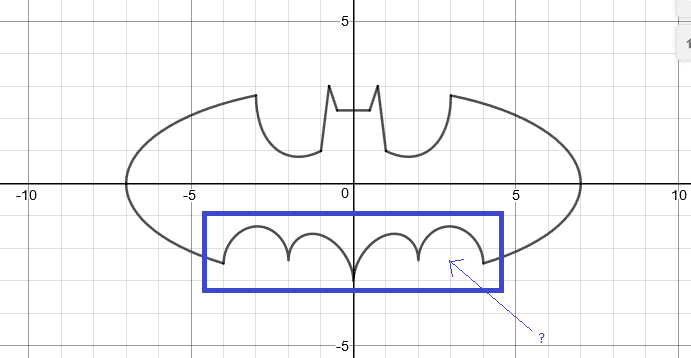
The discussion focuses on the role of coefficients in mathematical equations, specifically in the context of a curve represented in Desmos. The coefficient of x² is essential for scaling the curve accurately, particularly to ensure continuity at specific points, such as x = ±4. To determine the precise coefficient, one must solve equations that align with the desired properties of the curve, such as matching the elliptic parts outside the defined range. The exact value for the coefficient can be derived using the formula -3√(1-(4/7)²).

PREREQUISITES
  • Understanding of quadratic equations and their graphical representations
  • Familiarity with the Desmos graphing calculator
  • Knowledge of continuity in mathematical functions
  • Basic algebraic skills for solving equations
NEXT STEPS
  • Learn how to use the Desmos graphing calculator for visualizing equations
  • Study the properties of quadratic functions and their coefficients
  • Explore the concept of continuity in mathematical functions
  • Investigate methods for solving equations to find specific coefficients
USEFUL FOR

Students, educators, and anyone interested in understanding the mathematical principles behind coefficients in equations, particularly those working with quadratic functions and graphing tools like Desmos.

pairofstrings
Messages
411
Reaction score
7
Hello.
I have an equation which I understand partially but after understanding the purpose of coefficients in the below equation I think my understanding will enhance.

equationthree_zpspxzjkzrv.png


* I found it on: https://www.desmos.com/calculator/dnzfajfpym

What decides that I need coefficients for x2 in the given equation of this post?

I think that coefficients of x2 in this post's equation exist to scale up or scale down the size of the thing drawn in blue box: Correct?
coefficients_zpsfewsmrvs.png


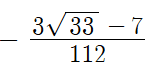
But how do I come up a number that is so precise like:
Screenshot-2018-6-27%20Desmos%20Scientific%20Calculator2_zpsji2vfmgf.png

which is the coefficient of x2 to complete the sketching of the curve (Batman)?

Do I need to solve a few equations to come up with the coefficient of x2 in the following equation?

equation3_zpsysmqvhob.png


Thanks!
 

Attachments

  • equationthree_zpspxzjkzrv.png
    equationthree_zpspxzjkzrv.png
    2.5 KB · Views: 595
  • coefficients_zpsfewsmrvs.png
    coefficients_zpsfewsmrvs.png
    6 KB · Views: 530
  • Screenshot-2018-6-27%20Desmos%20Scientific%20Calculator2_zpsji2vfmgf.png
    Screenshot-2018-6-27%20Desmos%20Scientific%20Calculator2_zpsji2vfmgf.png
    1 KB · Views: 385
  • equation3_zpsysmqvhob.png
    equation3_zpsysmqvhob.png
    3.3 KB · Views: 446
  • Like
Likes   Reactions: jedishrfu
Mathematics news on Phys.org
pairofstrings said:
Do I need to solve a few equations to come up with the coefficient of x2 in the following equation?
Just one. It should match the elliptic parts outside: At ##x = \pm 4## the value of the function has to be about -2.45 to make the curve continuous. You can get the exact value from curve 2: It has to be ##-3\sqrt{1-(4/7)^2}##
 

Similar threads

  • · Replies 11 ·
Replies
11
Views
3K
  • · Replies 11 ·
Replies
11
Views
2K
  • · Replies 6 ·
Replies
6
Views
2K
  • · Replies 6 ·
Replies
6
Views
2K
  • · Replies 3 ·
Replies
3
Views
4K
Replies
3
Views
2K
  • · Replies 13 ·
Replies
13
Views
3K
  • · Replies 1 ·
Replies
1
Views
1K
Replies
2
Views
2K
Replies
5
Views
2K