Removing Bayer Filter from Camera CCDs

  • Thread starter Thread starter sauroman1
  • Start date Start date
  • Tags Tags
    Filter
Click For Summary

Discussion Overview

The discussion centers around the challenges of removing the Bayer filter from CCD sensors for the purpose of creating a monochrome camera suitable for UV photography. Participants share their experiences, techniques, and difficulties encountered during the removal process, including chemical and mechanical methods.

Discussion Character

  • Exploratory
  • Technical explanation
  • Debate/contested

Main Points Raised

  • One participant reports damaging CCDs while attempting to remove the Bayer filter, questioning whether the dyes used are inorganic due to the ineffectiveness of acetone.
  • Another participant suggests that a chemical or vapor strip process may be necessary, recommending specific solvents like methylene chloride and advising caution when using them.
  • A different participant mentions the possibility of finding a monochrome CCD module from a used camcorder, indicating a preference for a less risky approach.
  • One participant notes that while they could remove the filter from an older camcorder, they encountered difficulties with a JVC camcorder, speculating that a glass plate might be present over the color filter array (CFA).

Areas of Agreement / Disagreement

Participants express differing opinions on the effectiveness of various methods for removing the Bayer filter, with no consensus on the best approach. Some advocate for chemical methods, while others suggest mechanical techniques or alternative sources for monochrome sensors.

Contextual Notes

Participants mention limitations related to the tools and chemicals available for the removal process, as well as the potential risks involved in using certain solvents without proper safety measures.

Who May Find This Useful

Individuals interested in modifying CCD sensors for specialized photography, particularly in the fields of UV photography or astronomy, may find this discussion relevant.

sauroman1
Messages
30
Reaction score
0
Hello, I want to make B&W camera, for UV photography. I already destroyed two ccd's by trying to remove it. First stopped working after tiny golden wires were damaged. About second ccd I don't know. When I putted it into smartphone, in camera mode it showed black image. It seems that I didn't cut wires, but just short circuited with another or maybe I damaged pixels with screwdriver. I'll check latter
Problem is that it is impossible to remove bayers filter chemically(I used acetone), only by using something sharp. When I rubbed ccd with cotton and acetone, first I got matted surface and later red, I couldn't go further I know that acetone is powerful organic solvent, so is it possible that dyes are inorganic?
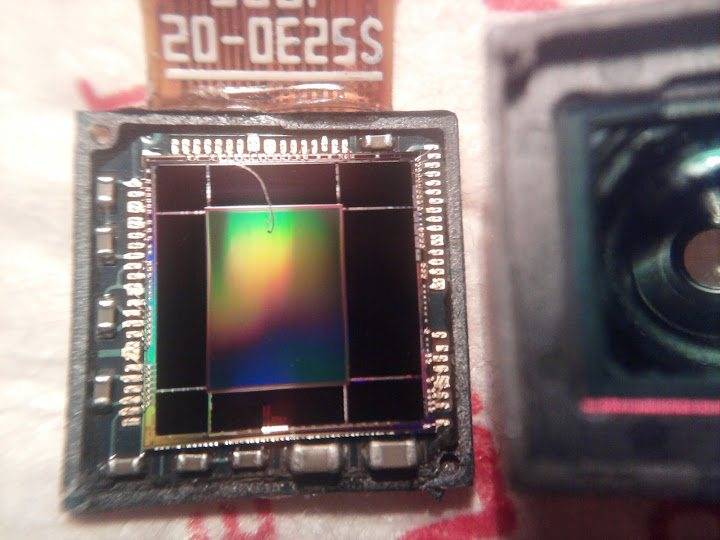
Nuotrauka0043.jpg

Fresh ccd, that thing on surface is not wire.
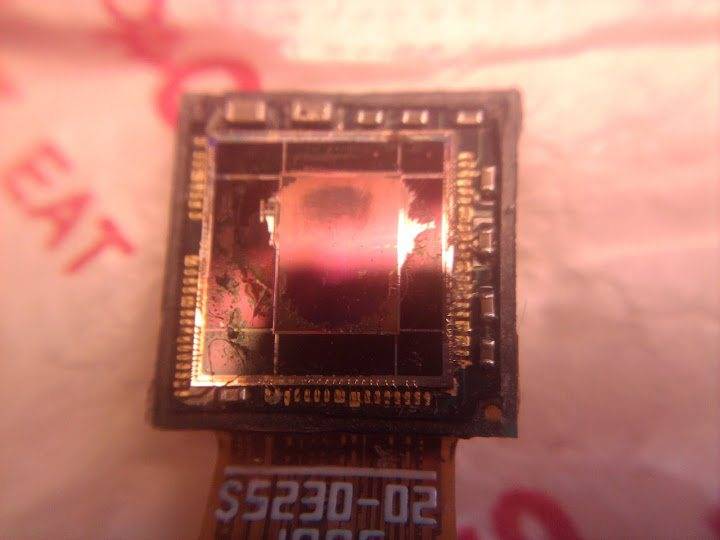
Nuotrauka0051.jpg

Sensor after scrapping
 
Engineering news on Phys.org
No suggestions?
 
sauroman1
This looks like a very interesting project and I have no suggestions for you other than perhaps post this in the astronomy board. Monochromatic CCDs appear to be common in that field.
 
I'm afraid you won't have any choice but to use a chemical or vapor strip process. The tools involved in grinding over the surface of a die are extremely fine, and you won't be able to replicate this with a knife.

If your in college, I suggest going by the chemistry department and attempting to get help from a grad student or prof.

They have the proper chemicals, tools, and means of disposal to make short work of your project.

The trick is to find the proper solvent / reagent. I've had ok luck with with methyle-ethyle-ketone (MEK) and great luck with methylene chloride when disolving stubborn polymers. Just be sure to use it in the lab with the proper support. It's bad stuff to use without a hood. Also, watch out that you don't eat your packaging.

Best Regards,

Mike in Plano
 
I bought used JVC camcorder and will try to find out if CCD module can be manufactured that already would be monochrome, without risk and loosing microlens.
 
Also impossible to remove on JVC camcorder rubbing with acetone and scrapping with blade, but on older camcorder I easily removed it. Maybe that sensor has glass plate on top of CFA?
 

Similar threads

  • · Replies 4 ·
Replies
4
Views
2K
  • · Replies 2 ·
Replies
2
Views
7K