SUMMARY
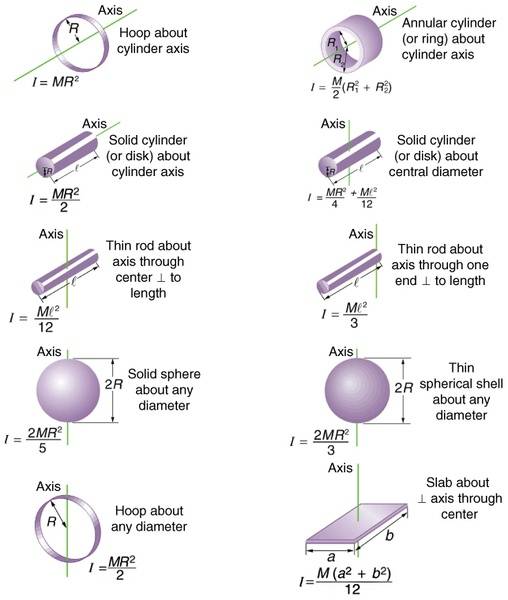
The discussion focuses on the memorization and derivation of rotational inertias for various shapes in preparation for an upcoming exam. The integral definition of inertia is emphasized, with a reference to HyperPhysics for detailed explanations. Participants agree that while understanding the derivation is beneficial, it is unlikely that students will be required to derive these equations during exams, as specific equations are typically provided. The consensus is that creating flashcards may not be necessary if the exam allows for reference materials.
PREREQUISITES
- Understanding of rotational dynamics and inertia concepts
- Familiarity with integral calculus and its application in physics
- Knowledge of common geometric shapes and their properties
- Access to resources like HyperPhysics for reference
NEXT STEPS
- Study the derivation of rotational inertia for common shapes such as cylinders and spheres
- Practice solving problems involving the calculation of rotational inertia
- Review integral calculus techniques relevant to physics applications
- Explore additional physics resources for exam preparation strategies
USEFUL FOR
Students preparing for physics exams, particularly those focusing on rotational dynamics, as well as educators seeking to reinforce concepts of inertia in their curriculum.