Rubber Pad Design: Selection & Considerations

  • Thread starter Thread starter Mormont
  • Start date Start date
  • Tags Tags
    Design Rubber
Click For Summary
SUMMARY

The discussion focuses on the design considerations for rubber pads used in high-speed reciprocating applications involving a piston and housing. The user seeks advice on suitable rubber materials, specifically food-grade options, and major design considerations for effective noise reduction and safety. Key insights include the importance of absorbing kinetic energy and managing heat dissipation in the design. Resources provided include links to Lord Corporation and Sorbothane for material properties and vibration control solutions.

PREREQUISITES
  • Understanding of rubber material properties
  • Knowledge of kinetic energy and momentum in mechanical systems
  • Familiarity with vibration control techniques
  • Awareness of food-grade material standards
NEXT STEPS
  • Research suitable rubber materials for high-speed applications
  • Explore food-grade rubber options for safety compliance
  • Learn about energy absorption and heat dissipation in rubber design
  • Investigate single-pad designs versus dual-pad configurations
USEFUL FOR

Mechanical engineers, product designers, and safety compliance professionals involved in the design of high-speed reciprocating systems requiring effective noise reduction and material safety standards.

Mormont
Messages
9
Reaction score
0
Hello All,

Very new to design , especially in material selection and rubber stuff.

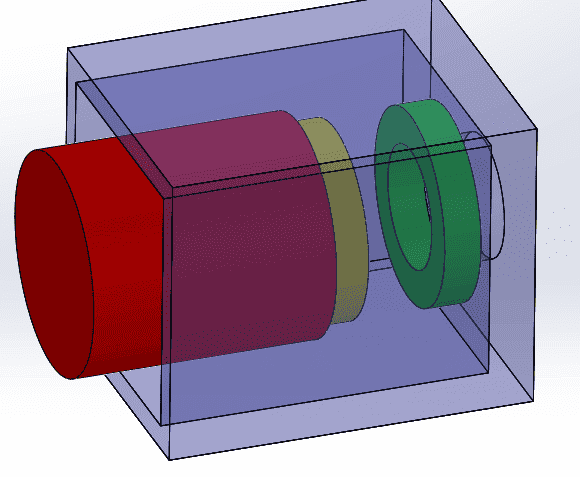
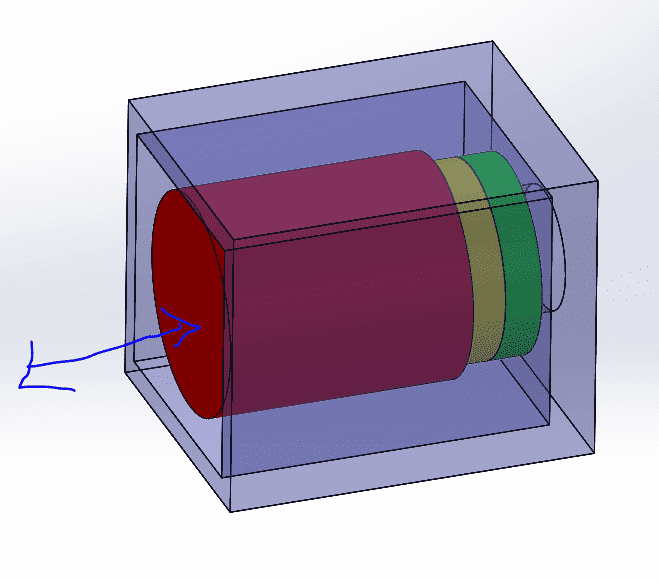
I have requirement where piston/shaft reciprocates to housing at high speeds. In order to reduce noise and for safety reasons, I must add rubber pads on both. Application as below:
upload_2017-12-5_19-0-21.png


upload_2017-12-5_19-0-48.png


Red part is the shaft/piston (around 15mm Dia.) with a yellow rubber pad
Blue part is the housing with green rubber pad.
Arrow indicated in 2nd pic for direction of reciprocation.

Speed is around 25-30 Hz for reciprocating movement.

Queries;
1. What rubber material I could use for such application?
2. Is there any food grade rubber for this application?
3. What could be major design consideration for this?

Any direction or resources would help.

Thanks!
 

Attachments

  • upload_2017-12-5_19-0-21.png
    upload_2017-12-5_19-0-21.png
    22.4 KB · Views: 1,003
  • upload_2017-12-5_19-0-48.png
    upload_2017-12-5_19-0-48.png
    30.9 KB · Views: 639
Engineering news on Phys.org
How hard is the moving part hitting - speed, mass, kinetic energy, and momentum. How much energy is the bumper absorbing per cycle? Once you have that information, here is a couple of good resources:

https://www.lord.com/products-and-solutions/vibration-and-motion-control/industrial
https://www.sorbothane.com/material-properties.aspx

Your bumper must be designed to absorb the kinetic energy, momentum, and dissipate the heat. In an application such as yours, the heat generated may well be the most challenging specification to meet.
 
Why do you need to put pads on both parts? Would it not be simpler, and perhaps more effective to design a single, deeper pad?
 
@https://www.physicsforums.com/members/jrmichler.632719/: Thank you very much for this, I can take look and get back. Hopefully I can get something which is food grade.
@Dr.D: Agree with you, however, I work in an industry where safety is paramount. And unfortunately, my requirement necessitates the use of 2 pads for the same reason.
 

Similar threads

  • · Replies 5 ·
Replies
5
Views
2K
  • · Replies 11 ·
Replies
11
Views
4K
  • · Replies 9 ·
Replies
9
Views
3K
  • · Replies 8 ·
Replies
8
Views
3K
  • · Replies 4 ·
Replies
4
Views
2K
  • · Replies 10 ·
Replies
10
Views
4K
Replies
14
Views
5K
Replies
3
Views
13K
  • · Replies 82 ·
3
Replies
82
Views
28K
  • · Replies 16 ·
Replies
16
Views
5K