Small Liquid CO2 Manufacturing Machine?

Click For Summary

Discussion Overview

The discussion revolves around the challenges and possibilities of generating small-scale liquid CO2 (LCO2) for use in reliability test ovens. Participants explore various methods for producing or sourcing LCO2, including the liquefaction of existing CO2 and the potential for using dry ice or gaseous CO2 storage systems.

Discussion Character

  • Exploratory
  • Technical explanation
  • Debate/contested
  • Experimental/applied

Main Points Raised

  • One participant inquires about options for small-scale LCO2 generation, expressing frustration with handling large dewars.
  • Another participant seeks clarification on whether the goal is to liquefy existing CO2 or to create it from scratch.
  • Some participants suggest starting with bottled CO2 for efficiency, while others consider using dry ice as a potential source.
  • A participant mentions the concept of using a "carbonator" to extract CO2 from the air, drawing from bartending experience.
  • Concerns are raised about the need for a pressurization system to maintain CO2 in liquid form.
  • One participant suggests that purchasing bulk LCO2 from industrial gas companies could be a practical solution, detailing the logistics of having a storage tank on-site.
  • Another idea proposed is to assemble a system using small cryogenic coolers, which could be an interesting design project.
  • Safety considerations are mentioned regarding the handling of LCO2 as a hazardous material.
  • A participant outlines a potential setup involving a gaseous CO2 storage tank and cryogenic coolers to facilitate easier delivery and usage of LCO2.

Areas of Agreement / Disagreement

Participants do not reach a consensus on the best approach to generating or sourcing LCO2. Multiple competing views are presented, including the use of bottled CO2, dry ice, and bulk delivery from industrial suppliers.

Contextual Notes

Participants express uncertainty regarding the efficiency and feasibility of different methods for generating LCO2. There are also unresolved questions about the specifics of pressurization and the logistics of handling LCO2 safely.

berkeman
Admin
Messages
69,409
Reaction score
24,805
At my work, we go through a lot of liquid CO2 (LCO2), and dealing with the 500 pound LCO2 dewars is a real pain. I'd like to look at options for us making our own LCO2 instead, but have been having trouble finding information about small-scale LCO2 generation on the web.

We use the LCO2 for rapid cooling in our reliability test ovens like the one below. The flow rates are not all that high (a 500 pound dewar can last ~ 24 hours with constant use), so I'm hopeful that some small/medium-sized machine can make the LCO2 that is needed for an oven or group of ovens.

Does anybody have any suggestions or links to vendors of small LCO2 making machines? Thanks.

http://www.emcgrath.com/catalog/images/OV/OVE422-1.jpg
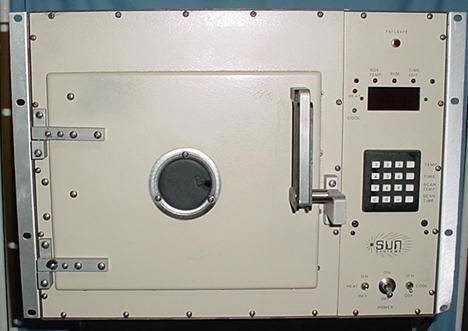
OVE422-1.jpg
 
Physics news on Phys.org
As a point of clarification, do you mean to liquify pre-existing CO2, or create it from scratch with chemical reactions?
 
Danger said:
As a point of clarification, do you mean to liquify pre-existing CO2, or create it from scratch with chemical reactions?

That's a great question, and it shows how much I guess I need to learn about this.

I'd naively thought of just getting the CO2 from the air in the lab, but I guess it would make sense that it would be a lot more efficient to start with CO2 gasses in bottles. Still, part of the hassle of the dewars is having to deal with refills and such.

What options do I have?
 
Do keep in mind that I don't know what the hell I'm talking about... but I love to speculate. :biggrin:
One option is that you could approach it from the opposite end and have dry ice shipped in. I see no advantage in doing that, though. In fact, it's probably far less efficient than gas.
Another is based upon my bartending experience. One of the places where I worked used a "carbonator" rather than bottled CO2 to make our pop. I don't know how it worked, specifically, but it was like a little compressor that sucked CO2 out of the air, compressed it, and force-mixed it with the flavour syrup. You can probably get some good information from a restaurant supply company. Specify a "carbonator pump" when inquiring, since the bottle systems are also called carbonators.
The next problem, of course, is your pressurization system, since you need something like 5 atmospheres to hold the stuff as a liquid.
 
The only thing I can think of is to start with a solid CO2 (dry ice) and use pressure to liquify it. Not that I know if it can be easily done, just the dry ice is the only other way of buying CO2 I know. (Edit: I am an idiot, it can be bought pressurized in bottles - but then you would need to cool it down, starting with the dry ice you at least have it already cold). Making it in amounts you need doesn't sound feasible - probably more hassle than moving these devars. And the amount in air is way too low for your needs - less than 1 g per cubic meter.
 
Hi berkeman, There's no need to make your own or have it delivered in cylinders. You can purchase it in bulk from most of the major industrial gas companies and from a host of smaller specialty industrial gas manufacturers. They pull up with a truck and offload it as a very cold liquid, similar to the delivery of gasoline, home heating oil, propane, etc...

Basically, you'll have a tank on your company's property that the industrial gas company delivers to. I'm not as familiar with CO2 but the tanks I've seen are generally insulated and have a refrigeration system on them to re-condense the gas as ambient heat boils off the liquid. You then have piping running through your facility to wherever you need it. Since it's similar to a cryogen, if you need the product as a liquid, the piping will probably be insulated and you'll need to cool down the line by flowing vapor through it till you can get the liquid coming out. Another option is to fill your own liquid cylinders at the tank and transport them to where they're needed.

I'd suggest contacting your supplier for CO2 as a starting point. The major industrial gas manufacturers include Praxair, Linde, Air Liquide, http://www.airproducts.co.uk/gases/carbon_dioxide.htm, BOC and http://www.airgas.com/content/details.aspx?id=7000000000317. I looked up a few of them as an example. Only some of them are likely to be available in the area you're in, and they'll typically know who's in your area. CO2, like other products, will be the least expensive from the supplier who has the least distance to travel for delivery, so when contacting these companies, you might try asking them what company is in your area because they don't all compete in all areas.
 
You could put your own system together with standard parts. They make very small cryogenic coolers for IR cameras that get below 80 K. Some weigh less than a pound.

Lockheed in Orlando makes several very nice ones for the military, but they use technical talent from nearby UCF. You might contact them for advice.

This could be an interesting design project.
 
Last edited:
Make sure you prepare an MSDS (mostly cut and paste) and affix te required warning labels on the containers (OSHA considers LCO2 to be hazardous material).
 
Thanks for the replies, folks. Much appreciated.

Given my company's infrastructure and building layout, it's starting to sound like a possibility would be to have a medium-size gaseous CO2 storage tank outside that the Praxair refil truck could get to easily (instead of having to hand-truck the 500 pound dewars up to our 2nd floor lab). Then use gas piping to get the gaseous CO2 up to the lab, and use cryogenic coolers/compressors to make LCO2 for storage in small holding tanks at each oven.

That would make the delivery process a lot easier, and would avoid one issue we have now with the 500 pound dewars venting from overpressure. The venting seems to be happening more lately (don't know why -- lower quality dewars maybe). Our use of LCO2 rises and falls, depending on what projects are being worked on, and where they are in their product development cycles.

I'll do some reading about the cryogenic coolers/compressors. Let me know if you have any more thougts or ideas. Thanks.
 

Similar threads

  • · Replies 7 ·
Replies
7
Views
3K
  • · Replies 14 ·
Replies
14
Views
1K
  • · Replies 1 ·
Replies
1
Views
4K
  • · Replies 8 ·
Replies
8
Views
5K
  • · Replies 30 ·
2
Replies
30
Views
6K
Replies
3
Views
4K
Replies
14
Views
5K
  • · Replies 1 ·
Replies
1
Views
3K
  • · Replies 4 ·
Replies
4
Views
7K
  • · Replies 3 ·
Replies
3
Views
4K