nabilah
- 1
- 0
1. Homework Statement
I did an experiment to separate different sizes of starch particles (range of size 1 µm to 10 µm). I mixed the starch powder with water in a long cylinder. I have to create model by using long cylinder to separate those starch particles according to their size (<1µm, <5µm.,<10 µm) with fluid outlet for each sizes.
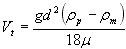
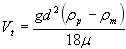
I use the Stoke's law to estimate the time of starch particle (for example for size 5 µm) left on top of the solution. but I have a problem on how to calculate/estimate the distance of 90% of 10µm starch particles in fluid (water) reach to the bottom of cylinder? and estimation of time for it to fall at the bottom. I figured out that I can use a Stoke's law but this equation could not use to estimate for how distance for 90% of 10 micrometer of starch particles reached the bottom of the cylinder.
 2. Relevant
equations
By using the stoke's law I can estimate the time for <5 µm of starch particle left on the top.
Can I use the other relevant equation other than Stle's law to measure the distance of 90% 10µm starch travel until reach the bottom of cylinder?
I tried to use the equation
d=Vi(t)+(0.5*a*t2)
but I think this equation is not relevant to my case.
[/B]
I did an experiment to separate different sizes of starch particles (range of size 1 µm to 10 µm). I mixed the starch powder with water in a long cylinder. I have to create model by using long cylinder to separate those starch particles according to their size (<1µm, <5µm.,<10 µm) with fluid outlet for each sizes.
I use the Stoke's law to estimate the time of starch particle (for example for size 5 µm) left on top of the solution. but I have a problem on how to calculate/estimate the distance of 90% of 10µm starch particles in fluid (water) reach to the bottom of cylinder? and estimation of time for it to fall at the bottom. I figured out that I can use a Stoke's law but this equation could not use to estimate for how distance for 90% of 10 micrometer of starch particles reached the bottom of the cylinder.
equations
By using the stoke's law I can estimate the time for <5 µm of starch particle left on the top.
The Attempt at a Solution
Can I use the other relevant equation other than Stle's law to measure the distance of 90% 10µm starch travel until reach the bottom of cylinder?
I tried to use the equation
d=Vi(t)+(0.5*a*t2)
but I think this equation is not relevant to my case.
[/B]
Last edited: