Discussion Overview
The discussion revolves around solving for the sine of an angle without the use of a calculator, specifically addressing the calculation of sinθ given as 5/3, which leads to confusion regarding its validity and the corresponding angle. Participants explore methods of approximation and the implications of sine values exceeding 1.
Discussion Character
- Homework-related
- Technical explanation
- Debate/contested
Main Points Raised
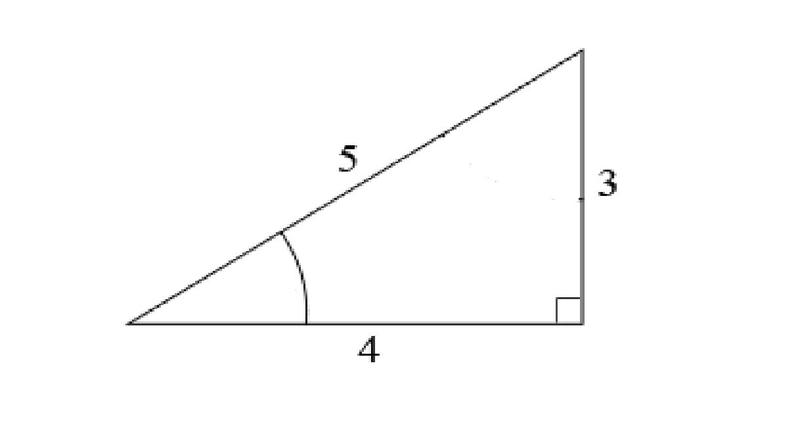
- One participant states sinθ = 5/3 and calculates it as 1.6, expressing a desire to convert this to an angle of 35.87°.
- Another participant points out the need for a calculator or sine table to find the angle corresponding to sinθ = 3/5 = 0.6.
- A participant raises the issue of preparing for an exam where calculators are not allowed, questioning the feasibility of finding the angle without one.
- One participant critiques the misuse of the sine formula, noting that sine values must be between -1 and +1, indicating that a value larger than 1 is incorrect.
- Some participants suggest the relevance of memorizing angles associated with Pythagorean triples, such as those in a 3-4-5 triangle, as a potential method for recalling sine values.
- Another participant mentions that common angles to memorize include 0°, 30°, 45°, 60°, and 90°, along with their counterparts in other quadrants, but notes that these are not typically derived from Pythagorean triples.
Areas of Agreement / Disagreement
Participants express disagreement regarding the validity of the sine value calculated as 5/3, with some emphasizing the impossibility of finding such a sine value without a calculator or table. There is no consensus on how to approach the problem effectively without these tools.
Contextual Notes
Participants highlight limitations in the original calculation, including the incorrect application of the sine formula and the implications of exceeding the sine value range. The discussion does not resolve these issues.
Who May Find This Useful
This discussion may be useful for students preparing for exams that prohibit calculators, as well as those interested in understanding the limitations of trigonometric calculations and the importance of memorizing key angles.