Some questions about Fourier series

Click For Summary

Discussion Overview

This discussion revolves around questions related to Fourier series, particularly focusing on the presentation of Fourier coefficients for functions with different symmetries (even and odd) and the treatment of periodic versus non-periodic functions. Participants explore definitions, properties, and conventions in the context of Fourier analysis.

Discussion Character

  • Exploratory
  • Technical explanation
  • Debate/contested

Main Points Raised

  • One participant questions how to define the period T for functions that may not have a clear periodic nature.
  • Another participant points out a potential inconsistency in representing an odd function with a Fourier series that includes cosine terms, suggesting that sine terms would be more appropriate for odd functions.
  • A participant expresses confusion about the use of Fourier series for non-periodic functions and the preference for cosine functions in certain references.
  • There is a distinction noted between the Fourier transformation of periodic signals and general functions, indicating different treatment in the analysis.

Areas of Agreement / Disagreement

Participants exhibit some agreement on the nature of odd and even functions in relation to Fourier series, particularly regarding the use of sine and cosine terms. However, there remains disagreement or uncertainty about the application of Fourier series to non-periodic functions and the definition of period T.

Contextual Notes

Participants do not fully resolve the implications of using Fourier series for non-periodic functions, nor do they clarify the assumptions behind the definitions of even and odd functions in this context.

baby_1
Messages
159
Reaction score
16
Hi,
First of all, I want to say that I know how can define and calculate Fourier coefficients but I have some question about the final presentation of Fourier and half-period or unknown period functions.
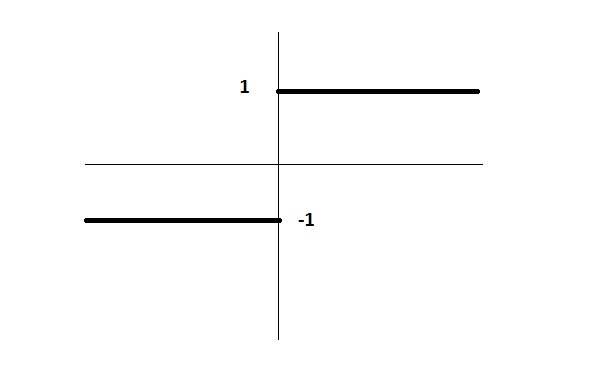
1)In this function how can we define T?
222.jpg

2)for above diagram, in a book, they define f(t) as
f(t)=cos(at)-(1/3)cos(3at)+...
but my question is, Isn't the function f(t) even? but the original shape is odd?
how would it be possible that we present a Sin function into Cos functions?
because for odd function we have a Fourier series like
[tex]f(t)=\sum_{n=1}^{\infty}B_{n}Sin(\omega_{0}((2n+1)t)=B_{0}Sin(\omega_{0}t)+B_{0}Sin(3\omega_{0}t)+...[/tex]

3)why in most references the writer prefer to write even function for half-range expansion instead of odd half-range expansion of a real systems?

Thanks
 
Engineering news on Phys.org
There is a difference between the Fourier transformation of periodic signals (where your formula and questions comes from) and general functions (what is done here).
 
  • Like
Likes   Reactions: baby_1
For question 2, I believe you are correct. The expansion should use sine.
 
  • Like
Likes   Reactions: baby_1
Thanks for your replay.
Yes, I was wondered why the writer used Fourier series for a non-periodic function and why she/he uses the cos function instead of Sin.
you can see the pdf of the page in attachment.

https://ufile.io/95xlo
 

Similar threads

  • · Replies 3 ·
Replies
3
Views
2K
Replies
3
Views
2K
  • · Replies 1 ·
Replies
1
Views
2K
  • · Replies 14 ·
Replies
14
Views
2K
  • · Replies 4 ·
Replies
4
Views
4K
  • · Replies 3 ·
Replies
3
Views
2K
  • · Replies 6 ·
Replies
6
Views
2K
  • · Replies 2 ·
Replies
2
Views
2K
  • · Replies 1 ·
Replies
1
Views
3K
  • · Replies 33 ·
2
Replies
33
Views
4K