Where Are Starship's RCS Thrusters Located?

  • Thread starter Thread starter darkdave3000
  • Start date Start date
  • Tags Tags
    System Thruster
Click For Summary
SUMMARY

Starship is equipped with 8 sets of RCS thrusters, with 4 located at the top and 4 at the bottom near the base. Current configurations show that the top thrusters are positioned above the top fins, while future designs may incorporate hot gas thrusters using the same fuel as the main engines for easier refueling on Mars. The RCS thrusters can operate independently, allowing for rotation around the center of gravity (COG), but this may slightly alter the ship's orbit. The thrusters are likely variable force, enabling precise control during maneuvers.

PREREQUISITES
  • Understanding of RCS (Reaction Control System) mechanics
  • Familiarity with spacecraft design principles
  • Knowledge of propulsion systems, specifically cold and hot gas thrusters
  • Basic concepts of center of gravity (COG) in aerospace engineering
NEXT STEPS
  • Research the design and functionality of RCS systems in spacecraft
  • Explore the differences between cold gas and hot gas thrusters
  • Learn about the implications of center of gravity on spacecraft maneuverability
  • Investigate autonomous flight systems in modern spacecraft like Starship and Dragon
USEFUL FOR

Aerospace engineers, spacecraft designers, and enthusiasts interested in the operational mechanics of RCS thrusters and spacecraft maneuverability.

darkdave3000
Messages
242
Reaction score
5
TL;DR
I noticed the internet has contradictory data on the position of the top RCS. One source place them just above the top fins and another just below it.

Source https://www.physicsforums.com/forums/astronomy-and-astrophysics.71/post-thread
Can everyone help me solve this mystery?


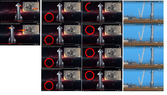
Starship has 8 sets of RCS thrusters, 4 at the top and 4 at the bottom near the base. The 4 at the top some youtube videos show them above the top fins:


Nitrogen RCS test:


But some other videos show them below the fins:


Are they both right because the Nitrogen ones are ment to be above the fins while the hot methane and oxygen gas piston version below the fins?


Or is the second one wrong and both types are supposed to be above the top fins?

Also can I assume that the COG is between wherever the top and bottom RCS are? Wont they shift?
Lastly does the top and bottom RCS need to work together or can the top fire without the bottom and vice versa to rotate the ship around the COG?


Check attached photo.


Merry Christmas!

David
 

Attachments

  • starshipRCSpositions.png
    starshipRCSpositions.png
    102.6 KB · Views: 275
Physics news on Phys.org
They use cold gas thrusters now but plan to switch to hot gas thrusters in the future - using the same fuel as the engines to make refueling simpler (especially on Mars). It's possible the location has changed in the past and/or will change again in the future.
For SN9 and SN11 and SN15 they were above the fins. Rotating the ship works with a single set of thrusters but then you change your orbit slightly in addition.
 
DaveC426913 said:
I think it is a PF forum glitch that does that. I've seen it several times, but have not been able to figure out what causes it...

1638289712868.png
 
Just a copy&paste error if you take the URL from the wrong tab when starting a thread (i.e. from the tab where you start the thread).
 
  • Like
Likes   Reactions: DaveC426913
mfb said:
Just a copy&paste error if you take the URL from the wrong tab when starting a thread (i.e. from the tab where you start the thread).
Yeah. The OP would do better with this:
1638304209695.png
 
mfb said:
They use cold gas thrusters now but plan to switch to hot gas thrusters in the future - using the same fuel as the engines to make refueling simpler (especially on Mars). It's possible the location has changed in the past and/or will change again in the future.
For SN9 and SN11 and SN15 they were above the fins. Rotating the ship works with a single set of thrusters but then you change your orbit slightly in addition.
How many seconds do the RCS thrusters stay on for both Apollo and Starship? Are they preprogrammed to do a certain number of seconds bursts per button click? Or just how long the button remain depressed?

Also do they use joysticks or buttons for RCS? I am thinking buttons make more sense for preprogrammed duration of bursts. Joystics might imply variable thrust/force output which I am guessing neither Apollo nor Starship uses?David
 
No one presses buttons on Starship for now, it flies autonomously.

Dragon flies autonomously by default but it can be controlled manually. This simulator has been widely praised for being very realistic (excluding the Easter-egg behind your starting position). The astronauts have a touch screen.

For Apollo I have found this documentation, which suggests that the astronauts had joysticks but the actual on/off commands to the thrusters still came from the computer interpreting the joystick motion.
 
mfb said:
No one presses buttons on Starship for now, it flies autonomously.

Dragon flies autonomously by default but it can be controlled manually. This simulator has been widely praised for being very realistic (excluding the Easter-egg behind your starting position). The astronauts have a touch screen.

For Apollo I have found this documentation, which suggests that the astronauts had joysticks but the actual on/off commands to the thrusters still came from the computer interpreting the joystick motion.
Question remains: do either system use continuous or discrete thrusts and are they fixed or variable force?
 
Last edited:
  • #10
darkdave3000 said:
Question remains: do either system use continuous or discrete thrusts and are they fixed or variable force?
The thrusters are very likely variable force. A strong selling point of the pressure-fed thruster is deep throttle. If you are an engineer tasked with controlling either ascent or descent of this vehicle, you are only complicating the task by using a fixed-thrust RCS. In staged cycle engines throttle requires regulation of a preburner, but in this case, all that needs to be done is vary the mass flow of propellant. The RCS is incredibly simple, in theory, and easy to control.

Whether or not the thrusts are continuous or discrete I cannot comment on- I'll leave that up to those with more knowledge in dynamics than me. I'd make a venture of a guess and say that they are continuous to allow the vehicle to unendingly correct (in a worst-case scenario maneuver, see Astra's crazy launchpad correction) if necessary. Discrete thrusts to attempt to correct trajectory seems less versatile than continuous thrust for trajectory correction. Imagine being forced to hit a pool ball with precisely the minimum required force to reach a pocket, as opposed to providing the player the freedom to accelerate the ball until I am perfectly confident the ball will reach the pocket. Perhaps an over-simplification, but an illustration of my thought process. Again, please consider the opinion of someone with more dynamics experience than me.
 

Similar threads

  • · Replies 8 ·
Replies
8
Views
2K
  • · Replies 2 ·
Replies
2
Views
10K
  • · Replies 5 ·
Replies
5
Views
2K
  • · Replies 3 ·
Replies
3
Views
2K
  • · Replies 14 ·
Replies
14
Views
4K
  • · Replies 9 ·
Replies
9
Views
10K
  • · Replies 7 ·
Replies
7
Views
3K
  • · Replies 62 ·
3
Replies
62
Views
11K
  • · Replies 1 ·
Replies
1
Views
4K
  • · Replies 1 ·
Replies
1
Views
2K