Siberion
- 31
- 1
The Troposkien (skipping rope curve) - Variational principle approach
Consider a chain of length l and homogeneous mass density ρ rotating with constant angular velocity ω with respect to an axis which bounds the two ends. There is no gravity acting on the system, and and d < l, where d is the separation between both ends of the chain.
a) Find a principle of least action that describes the system.
b) Find the equations of motion that describe the system,
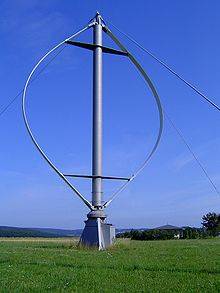
So basically this is the image of the resulting curve for better understanding of the problem:
I wanted to approach the problem with the same principle that applies to the catenary, (i.e chain hanging under its own weight) but replacing the gravity acceleration g in terms of the angular velocity ω.
For the catenary, we want to minimize the potential energy:
[tex]V = ∫gρy√(1+x'^2) dy[/tex]
In our case, the centrifugal acceleration will take the role of gravity, in which [tex]g = -yω^2[/tex]
Replacing into the previous equation, and considering the condition that the length of the chain remains constant, i.e l = ∫ds (I will add the lagrange multiplier for such constrain), the action can be written as:
[tex]I = -ρω^2∫y^2√(1+x'^2)dy + λ(∫√(1+x'^2)dy - l)[/tex]
I basically would like to know if this approach is justified, and in case it's not, any help or ideas would be very appreciated.
Thanks for your time
Homework Statement
Consider a chain of length l and homogeneous mass density ρ rotating with constant angular velocity ω with respect to an axis which bounds the two ends. There is no gravity acting on the system, and and d < l, where d is the separation between both ends of the chain.
a) Find a principle of least action that describes the system.
b) Find the equations of motion that describe the system,
So basically this is the image of the resulting curve for better understanding of the problem:
Homework Equations
I wanted to approach the problem with the same principle that applies to the catenary, (i.e chain hanging under its own weight) but replacing the gravity acceleration g in terms of the angular velocity ω.
For the catenary, we want to minimize the potential energy:
[tex]V = ∫gρy√(1+x'^2) dy[/tex]
In our case, the centrifugal acceleration will take the role of gravity, in which [tex]g = -yω^2[/tex]
Replacing into the previous equation, and considering the condition that the length of the chain remains constant, i.e l = ∫ds (I will add the lagrange multiplier for such constrain), the action can be written as:
[tex]I = -ρω^2∫y^2√(1+x'^2)dy + λ(∫√(1+x'^2)dy - l)[/tex]
The Attempt at a Solution
I basically would like to know if this approach is justified, and in case it's not, any help or ideas would be very appreciated.
Thanks for your time
Last edited: