Thesis in search of university, regarding Carnot and Kelvin

Click For Summary

Discussion Overview

The discussion revolves around the historical portrayal of Sadi Carnot and Lord Kelvin's contributions to thermodynamics, specifically in relation to the author's thesis. The author seeks a university for postgraduate work or a publisher for their findings, which they believe challenge contemporary interpretations of these figures' works.

Discussion Character

  • Debate/contested
  • Historical
  • Meta-discussion

Main Points Raised

  • The author claims that their thesis examines the historical accuracy of Carnot and Kelvin's work, suggesting that modern interpretations may misrepresent their contributions.
  • Some participants express confusion regarding the author's intentions, questioning whether they are seeking a publisher or a university for their thesis.
  • The author cites specific passages from Kelvin's work, arguing that his conclusions differ significantly from what is currently taught in introductory thermodynamics.
  • One participant challenges the author's understanding of how academic theses are typically developed, suggesting that a thesis is usually part of a structured program rather than an independent publication effort.

Areas of Agreement / Disagreement

Participants do not reach a consensus on the author's approach to finding a university or publisher. There is disagreement regarding the nature of academic thesis development and the portrayal of Carnot and Kelvin's work.

Contextual Notes

The discussion highlights potential misunderstandings about academic processes and the historical context of thermodynamic theories. The author's claims about the accuracy of Carnot and Kelvin's work are presented without resolution or agreement from other participants.

MrBi11
Messages
11
Reaction score
0
Greetings,
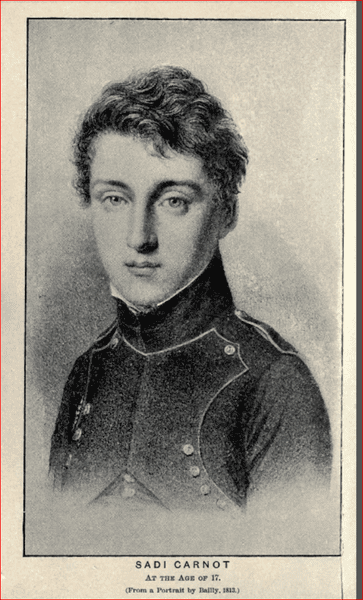
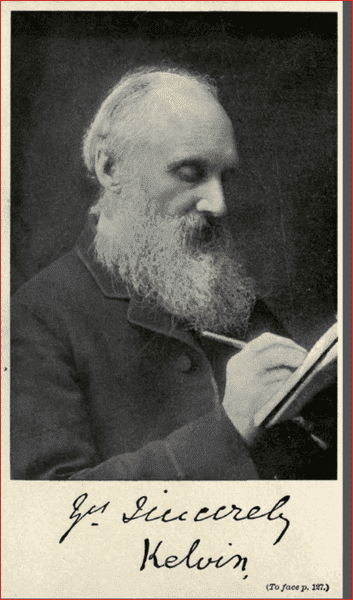
A Thesis regarding the historical accuracy of portrayal Sadi Carnot and Lord Kelvin's work seeks a University.
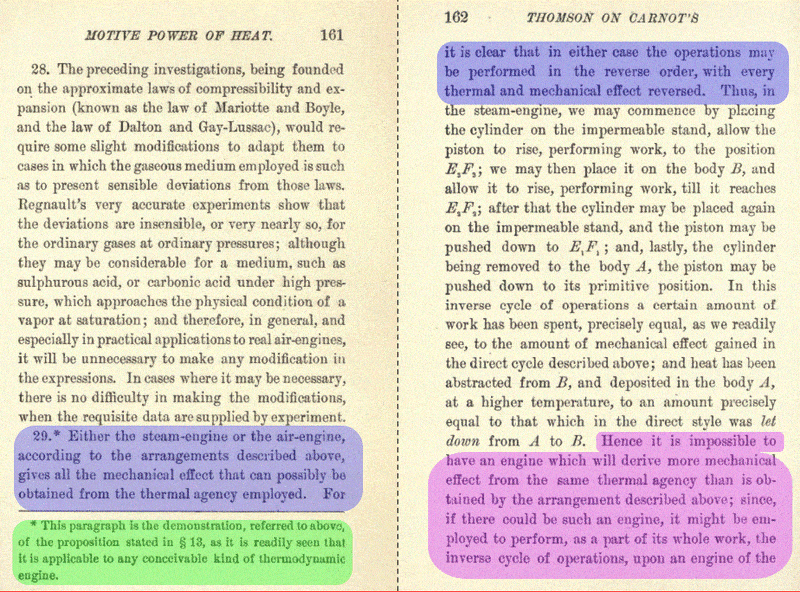
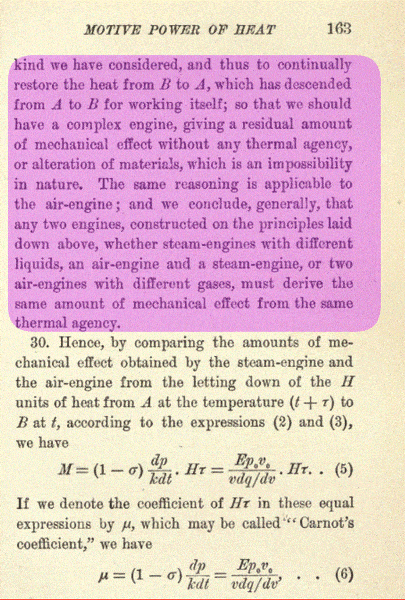
It is based largely on the images below (note highlighted areas), taken from their original work.

As you know, Sadi Carnot and Lord Kelvin are the fathers of the science of thermodynamics.
The moderator has cautioned me not to express my opinion on this forum, as he considered it not mainstream.
I presume the fathers of modern science are suitably mainstream.

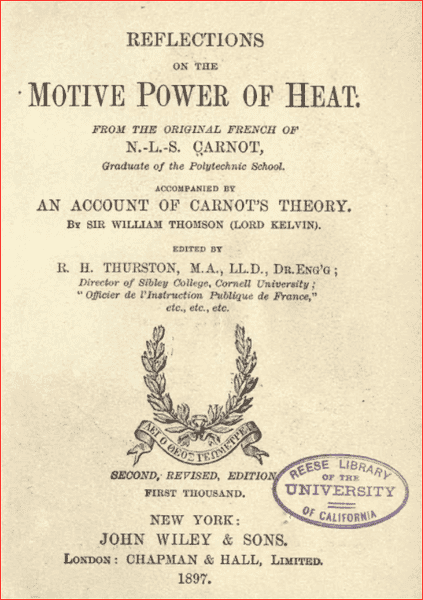
References: Carnot, Sadi "REFLECTIONS ON THE MOTIVE POWER OF HEAT AND ON MACHINES FITTED TO DEVELOP THAT POWER", and Thompson, Sir William (Lord Kelvin) "AN ACCOUNT OF CARNOT'S THEORY", New York: Wiley and Sons and London: Chapman & Hall, Limited, 1897.

Thanks to www.archive.org for the scan of original print copy of "REFLECTIONS ON THE MOTIVE POWER OF HEAT".
rc.png

carnotpic.png
kr.gif
p.gif
k.png
 
Physics news on Phys.org
It's not clear what is going on here.

Are you saying you have written a thesis and are looking for a publisher, or what?
 
SteamKing said:
It's not clear what is going on here.

Are you saying you have written a thesis and are looking for a publisher, or what?
yes, thanks for asking.

Apparently I cannot discuss the thesis contents on this forum, but I would point out that Lord Kelvin said as highlighted above:

Kelvin wrote "29* Either the steam-engine or the air-engine, according to the arrangements described above, gives all the mechanical effect that can possibly be obtained from the thermal agency employed. For it is clear that in either case the operations may be performed in the reverse order, with every thermal and mechanical effect reversed" (page 161 and 162).
Kelvin adds footnote "* This paragraph is the demonstration, referred to above, of the proposition stated in 13, as it is readily seen that it is applicable to any conceivable kind of thermodynamic engine." (page 161)
Kelvin's theorem is "Hence it is impossible to have an engine which will derive more mechanical effect from the same thermal agency than is obtained by the arrangement described above; since, if there could be such an engine, it might be employed to perform, as a part of its whole work, the inverse cycle of operations, upon an engine of the kind we have considered, and thus to continually restore the heat from B to A, which has descended from A to B for working itself; so that we should have a complex engine, giving a residual amount of mechanical effect without any thermal agency, or alteration of materials, which is an impossibility in nature. The same reasoning is applicable to the air-engine ; and we conclude, generally, that any two engines, constructed on the principles laid down above, whether steam-engines with different liquids, an air-engine and a steam-engine, or two air-engines with different gases, must derive the same amount of mechanical effect from the same thermal agency. (page 163)

Lord Kelvin's published work is significantly different from what is taught today in introductory thermodynamics of heat engines.

I am interested in finding a University which would consider my thesis for post graduate work, and/or
a science publication that is able to consider publishing findings which show evidence such as Lord Kelvin's actual work, un-modified by time.

Having read their work several times, I believe that in spite of having an incorrect model of heat which prevailed in the 1800's,
Carnot and Kelvin got everything of substance exactly right.

If you are interested in details, I can be reached at [e-mail address deleted by mod].
 
Last edited by a moderator:
MrBi11 said:
I am interested in finding a University which would consider my thesis for post graduate work
I don't know how things work in history departments, but this isn't the way that scientific academia works. In science a student would find a lab which is already pursuing research on a topic of interest, join that lab, and work with the head of the lab and the department to research and produce the thesis.

I.e. a thesis is part of an organized masters or doctoral program, not simply a book randomly selected and subsequently published by a university.
 

Similar threads

  • · Replies 6 ·
Replies
6
Views
3K
  • · Replies 10 ·
Replies
10
Views
5K
  • · Replies 1 ·
Replies
1
Views
3K
  • · Replies 5 ·
Replies
5
Views
3K
  • · Replies 1 ·
Replies
1
Views
3K
  • · Replies 1 ·
Replies
1
Views
4K