Trust me I'm a Photographer -- I have a question

  • Context: Undergrad 
  • Thread starter Thread starter Craig K
  • Start date Start date
Click For Summary
SUMMARY

This discussion focuses on innovative techniques for liquid art photography, particularly in the high-speed genre. Photographers are encouraged to experiment with various substances to enhance the viscosity of water, including guar gum, xanthan gum, and propylene glycol. Suggestions also include using non-Newtonian fluids like cornstarch mixed with water, and incorporating elements such as ink, glitter, and ferrofluid to create unique visual effects. The conversation highlights the importance of experimentation in achieving captivating imagery.

PREREQUISITES
  • Understanding of high-speed photography techniques
  • Familiarity with liquid viscosity modifiers like guar gum and xanthan gum
  • Knowledge of non-Newtonian fluids and their properties
  • Basic skills in using photography equipment, including water drop kits
NEXT STEPS
  • Research the effects of methycellulose powder in liquid art photography
  • Explore the use of ferrofluid and magnets for splash effects
  • Experiment with different light sources to create interference colors in fluid sheets
  • Investigate the properties of cornstarch and water mixtures for unique high-speed photography
USEFUL FOR

Photographers interested in liquid art, especially those exploring high-speed techniques and looking to enhance their creative processes with innovative materials and methods.

Craig K
Messages
11
Reaction score
2
Ok not even sure if i am posting in the right are or not but here goes.. (Maybe a mod can move to right spot). As the title states I do Photography and I like to try all genres taking bits of knowledge along the way and incorporating it into other areas. Last year I started to do liquid art Photography which is a sub genre I guess you would call it of High-Speed. I have played with a few different things mixed with water, guar gum , xanthum gum and cornstarch as this helps to increase the viscosity of the water making it possible to capture many different shapes in the collisions etc. My question is can anyone help me with trying out some things I would never have thought of mixing with water or even something to use neat that may help me on my quest to make a better image? I have added an image to demonstrate what i am actually capturing and yes it is one of my images. :)
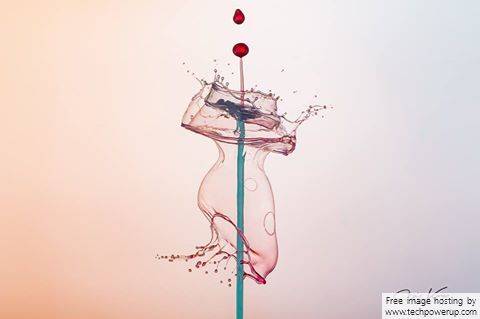
my-drops.jpg
 
Physics news on Phys.org
Welcome to PF Craig!

How about shooting a projectile through frozen water? We have a lot of it at the moment. Exploding super cooled water (water that is below 0°C but still liquid - see this explanation) may also give some interesting images.

AM
 
Last edited:
i could most certainly give that a go! thanks
 
Craig K said:
My question is can anyone help me with trying out some things I would never have thought of mixing with water or even something to use neat that may help me on my quest to make a better image?

Have you tried things that "don't mix" with water? - things like vegetable oil that would create an emulsion.
 
  • Like
Likes   Reactions: Craig K
Maybe try some liquids that aren't water at all. Mineral oils, glycerol, propylene glycol.
Also, sugar+water is a simple syrup.
 
  • Like
Likes   Reactions: Craig K
Thanks for the replies i have thought about trying propylene glycol as i use it to make ejuice will be interesting. I have wondered about iodine too
 
What about mixing in ink of some color just prior to creating the image where you could get some streaking of color as the ink diffuses into the complex shape? It would be reminiscent of an ink drop in a glass of water only now the water is in motion then again the motion may be too fast.
 
  • Like
Likes   Reactions: Craig K
Thanks everyone for your replies, google have led me to discover locust bean gum and apparently when mixed with xanthum gum it makes things more viscous. My water drop kit currently has 3 valves up top and room for 3 more I have one other that i sometimes use from below pressurised with a weed sprayer. The image I posted was using the weed sprayer the outlet of the nozzle is 2mm to give and idea of the size.
 
jedishrfu said:
What about mixing in ink of some color just prior to creating the image where you could get some streaking of color as the ink diffuses into the complex shape? It would be reminiscent of an ink drop in a glass of water only now the water is in motion then again the motion may be too fast.
I have not yet been game to try ink as i do it inside but the colours are amazing when ink has been used.
 
  • #10
Craig K said:
My question is can anyone help me with trying out some things I would never have thought of mixing with water or even something to use neat that may help me on my quest to make a better image?

A few ideas:
Adding methycellulose powder will create a gel- creating a weak gel (a little powder instead of a lot) will cause the water to act like 'slime': http://www.superpants.net/gunge.html
Depending on your light source, you may be able to coax interference colors (soap film colors) out of the fluid sheets. You'll need to use a small source, not a large diffused flash. Adding glitter powder to the fluid may also create interesting effects.
Ferrofluid may produce interesting splash effects, if you don't mind the oily mess and you can incorporate magnets in your setup.
 
  • Like
Likes   Reactions: diogenesNY, Craig K and jedishrfu
  • #11
Andy Resnick said:
A few ideas:
Adding methycellulose powder will create a gel- creating a weak gel (a little powder instead of a lot) will cause the water to act like 'slime': http://www.superpants.net/gunge.html
Depending on your light source, you may be able to coax interference colors (soap film colors) out of the fluid sheets. You'll need to use a small source, not a large diffused flash. Adding glitter powder to the fluid may also create interesting effects.
Ferrofluid may produce interesting splash effects, if you don't mind the oily mess and you can incorporate magnets in your setup.

Thank you! Andy :)
 
  • #12
The way that non-Newtonian substances react under sudden stress could give some interesting pictures. A mixture of Cornflour (Corn Starch?) with water has strange properties. It turns solid briefly, whilst you stress it. It will resist a spoon when you try to stir it fast and pouring it from a spoon can produce a 'solid' rod which can 'crack' and then run like a liquid when you move the spoon up or down. Play with it and I'm sure you could find some interesting sequences of high speed pictures: liquid / solid /back to liquid again.
 
  • Like
Likes   Reactions: Craig K
  • #13
sophiecentaur said:
The way that non-Newtonian substances react under sudden stress could give some interesting pictures. A mixture of Cornflour (Corn Starch?) with water has strange properties. It turns solid briefly, whilst you stress it. It will resist a spoon when you try to stir it fast and pouring it from a spoon can produce a 'solid' rod which can 'crack' and then run like a liquid when you move the spoon up or down. Play with it and I'm sure you could find some interesting sequences of high speed pictures: liquid / solid /back to liquid again.
thanks :)
 

Similar threads

  • · Replies 10 ·
Replies
10
Views
2K
  • · Replies 9 ·
Replies
9
Views
2K
  • · Replies 4 ·
Replies
4
Views
3K
  • · Replies 2 ·
Replies
2
Views
3K
  • · Replies 3 ·
Replies
3
Views
2K
  • · Replies 47 ·
2
Replies
47
Views
4K
  • · Replies 13 ·
Replies
13
Views
5K
  • · Replies 2 ·
Replies
2
Views
2K
  • · Replies 1 ·
Replies
1
Views
3K
  • · Replies 38 ·
2
Replies
38
Views
3K