Undergrad Verification regarding Neumann conditions at time derivative

Click For Summary
SUMMARY

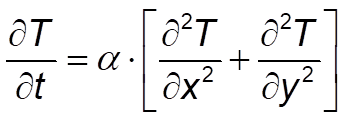
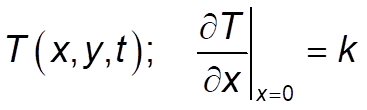
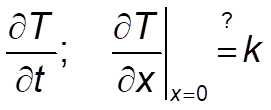
The discussion centers on the application of Neumann boundary conditions in the context of the 2D heat equation. Specifically, the question posed is whether a Neumann condition applied at x = 0 remains valid when considering the time derivative. The consensus is that Neumann conditions, which specify the derivative of a function at the boundary, do indeed hold at the time derivative, affirming the continuity of the boundary condition across time.

PREREQUISITES
  • Understanding of the 2D heat equation
  • Familiarity with Neumann boundary conditions
  • Basic knowledge of partial differential equations (PDEs)
  • Concept of time derivatives in mathematical modeling
NEXT STEPS
  • Study the implications of Neumann boundary conditions in various PDEs
  • Explore the derivation and solutions of the 2D heat equation
  • Learn about Dirichlet vs. Neumann boundary conditions
  • Investigate numerical methods for solving PDEs with boundary conditions
USEFUL FOR

Mathematicians, physicists, and engineers working with heat transfer models, as well as students studying partial differential equations and boundary value problems.

maistral
Messages
235
Reaction score
17
Hi, just a question regarding neumann conditions, I seem to have forgotten these things already. I think this question is answerable by a yes or a no.

So given the 2D heat equation,
243463


If I assign a neumann condition at say, x = 0;
243464


Does it still follow that at the derivative of t, the condition still holds? I mean:
243465
Thank you!
 
Physics news on Phys.org
Bump :(
 

Similar threads

  • · Replies 4 ·
Replies
4
Views
2K
  • · Replies 1 ·
Replies
1
Views
2K
  • · Replies 2 ·
Replies
2
Views
3K
  • · Replies 2 ·
Replies
2
Views
2K
  • · Replies 1 ·
Replies
1
Views
3K
  • · Replies 4 ·
Replies
4
Views
4K
  • · Replies 4 ·
Replies
4
Views
2K
  • · Replies 1 ·
Replies
1
Views
2K
  • · Replies 2 ·
Replies
2
Views
2K