What causes the formation of beads in rocket exhaust plumes?

  • Context: Undergrad 
  • Thread starter Thread starter Artlav
  • Start date Start date
  • Tags Tags
    Exhaust Rocket
Click For Summary
SUMMARY

The formation of beads in rocket exhaust plumes, often referred to as 'shock diamonds', is primarily influenced by the nozzle shape and the thrust produced during launch. As observed in recent rocket launches, these beads appear at consistent intervals, which correlate with increased thrust. The phenomenon is a result of pressure fluctuations and temperature variations within the exhaust flow, rather than a continuous expansion of the plume. This behavior is also evident in afterburners of jet engines, confirming the underlying physics of shock waves in high-speed exhaust flows.

PREREQUISITES
  • Understanding of fluid dynamics and thermodynamics
  • Familiarity with rocket propulsion systems
  • Knowledge of shock wave theory
  • Basic principles of combustion and exhaust flow
NEXT STEPS
  • Research the physics of shock waves in fluid dynamics
  • Explore the design and function of rocket nozzles
  • Study the effects of thrust on exhaust plume behavior
  • Investigate the role of temperature and pressure in combustion processes
USEFUL FOR

Aerospace engineers, propulsion specialists, and physics students interested in the dynamics of rocket launches and exhaust phenomena.

Artlav
Messages
161
Reaction score
1
Not sure if it's chemistry or physics, but the latter seems more like it.

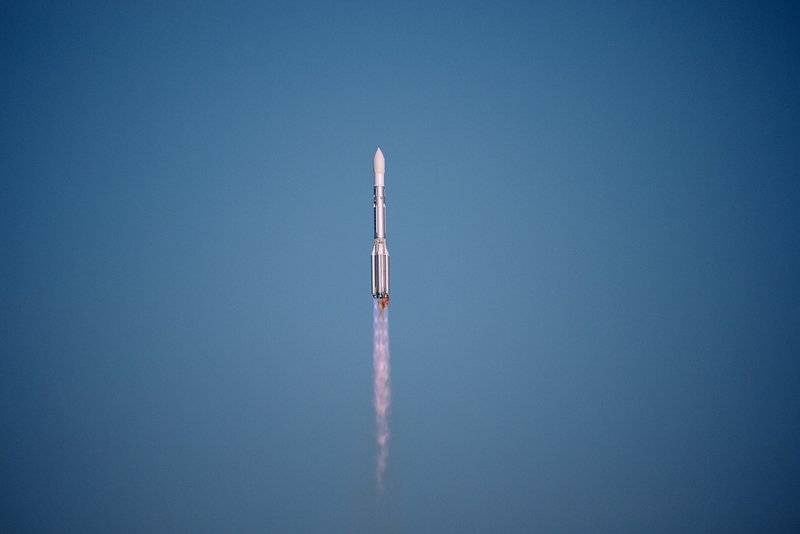
Let's take a look at pretty much any large rocket with smoke-less exhaust during it's launch, for example the recent one:
427802.jpg


As you can see, there are a kind of beads in the exhaust plume at seemingly constant intervals. The higher the thrust, the longer the intervals.

What causes these beads? I think they are related to the nozzle's shape, but if so, why are there several of them? What prevents it from expanding at where the first bead is, and keep going? Or, does it look this way for some other reason, like temperature/luminosity/etc?
 
Physics news on Phys.org

Similar threads

Replies
1
Views
4K
Replies
3
Views
1K
Replies
2
Views
2K
  • · Replies 2 ·
Replies
2
Views
5K
  • · Replies 2 ·
Replies
2
Views
3K
  • · Replies 3 ·
Replies
3
Views
2K
Replies
8
Views
4K
  • · Replies 4 ·
Replies
4
Views
6K
  • · Replies 7 ·
Replies
7
Views
4K
  • · Replies 46 ·
2
Replies
46
Views
16K