Boyi
- 1
- 0
Summary: What could affect Magnus force's magnitude and direction except for speed and spin?
Most golf flight simulators model the coefficient for drag (Cd) and lift (Cl) as a function of the relative spin ratio (rsr), where rsr = spin * radius / speed. In Figure 1, parameters of two similar shots are displayed side by side. It can be observed that Cd and Cl are not unique with respect to a same rsr value.
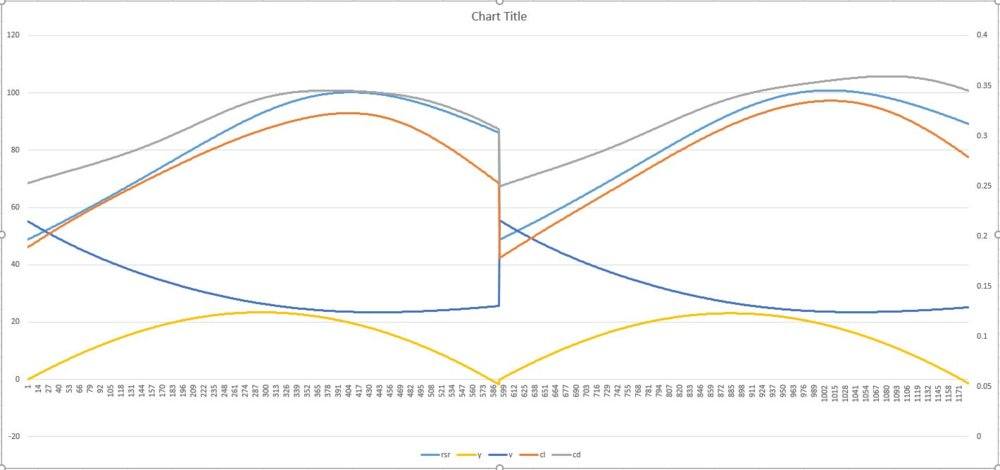
Figure 1.
This is especially obvious in Figure 2, where the parameters of the two shots are mixed, and sorted according to the rsr. We can see that for a same value of rsr, the Cd and Cl can be very different between when the ball is ascending and descending.
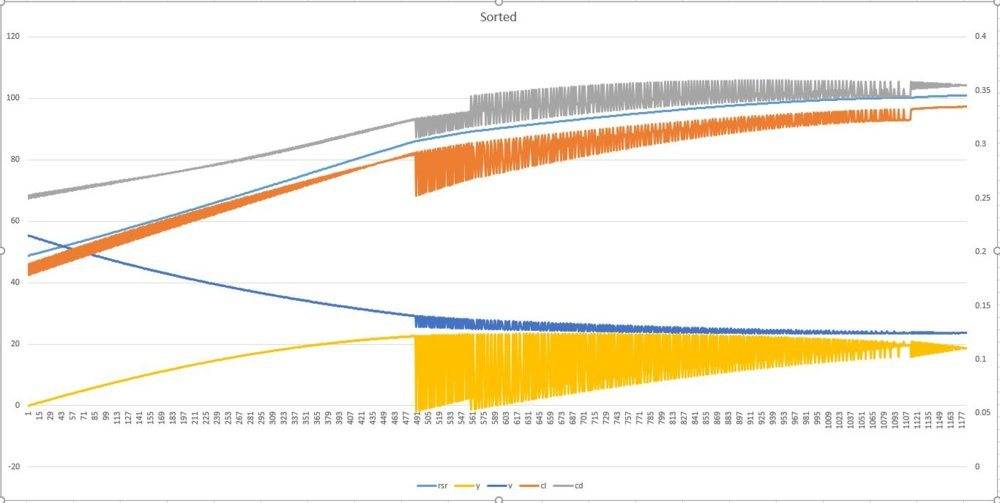
Figure 2.
I wonder other than rsr, what other factors can affect the drag and lift the ball experiences as it cuts through the air?
Most golf flight simulators model the coefficient for drag (Cd) and lift (Cl) as a function of the relative spin ratio (rsr), where rsr = spin * radius / speed. In Figure 1, parameters of two similar shots are displayed side by side. It can be observed that Cd and Cl are not unique with respect to a same rsr value.
Figure 1.
This is especially obvious in Figure 2, where the parameters of the two shots are mixed, and sorted according to the rsr. We can see that for a same value of rsr, the Cd and Cl can be very different between when the ball is ascending and descending.
Figure 2.
I wonder other than rsr, what other factors can affect the drag and lift the ball experiences as it cuts through the air?