- 9,864
- 4,896
I would appreciate some advice from "old hand" heat exchanger guys regarding "good design practice" on approach temperature for tube and shell .
Here's what's up:
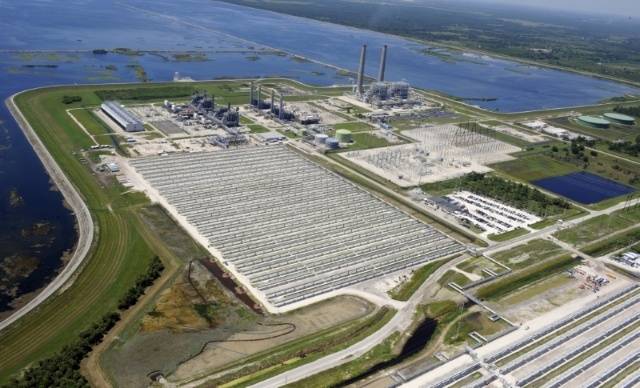
A friend works in a solar plant.
Oil is heated in parabolic reflectors and used to preheat feedwater for a traditional combined cycle boiler.
The large heat exchanger was initially tubed backward so it operated parallel flow instead of counterflow. Thermal performance aside, it experienced lots of mechanical tube failures attributed to the significant temperature difference across the tubes.
They're replacing it now and correcting the plumbing error so it'll be counterflow.
The hot side is Dowtherm A* oil at low pressure, cold side is water at ~2700 psi.
Temperatures are as follows (Fahrenheit):
At the cold end the tubes still see 595-325 = 270 degF ΔT.
My friend's concern is that the mechanical failures will continue , for no basic change to the heat exchanger is planned just correct the plumbing error. We fear there might be "groupthink" afoot.
So my question is -
What are the effects of large delta-T across tubes in one end of a shell&tube heat exchanger?
Do above numbers seem high enough to warrant special design features?
What questions do we need to ask his design group?
I've read several design type papers on 'net and am okay with NTU, LMTD, etc
but have not stumbled across a nuts&bolts construction article yet that mentions high thermal stress across tubes. Will try to get more details about the exchanger - I'm not even sure yet if it's single pass or u-tube.
And being an electronics guy not a ME I'm short of vocabulary for search terms.
This is not homework, it's a real question from workingmen in industry.
* Dowtherm A datasheet:
http://msdssearch.dow.com/PublishedLiteratureDOWCOM/dh_08a5/0901b803808a5b98.pdf?filepath=/heattrans/pdfs/noreg/176-01463.pdf&fromPage=GetDoc Thanks for any help -
old jim
Here's what's up:
A friend works in a solar plant.
Oil is heated in parabolic reflectors and used to preheat feedwater for a traditional combined cycle boiler.
The large heat exchanger was initially tubed backward so it operated parallel flow instead of counterflow. Thermal performance aside, it experienced lots of mechanical tube failures attributed to the significant temperature difference across the tubes.
They're replacing it now and correcting the plumbing error so it'll be counterflow.
The hot side is Dowtherm A* oil at low pressure, cold side is water at ~2700 psi.
Temperatures are as follows (Fahrenheit):
Oil Inlet 650 Water Outlet 645
Oil Outlet 595 Water Inlet 325
At the cold end the tubes still see 595-325 = 270 degF ΔT.
My friend's concern is that the mechanical failures will continue , for no basic change to the heat exchanger is planned just correct the plumbing error. We fear there might be "groupthink" afoot.
So my question is -
What are the effects of large delta-T across tubes in one end of a shell&tube heat exchanger?
Do above numbers seem high enough to warrant special design features?
What questions do we need to ask his design group?
I've read several design type papers on 'net and am okay with NTU, LMTD, etc
but have not stumbled across a nuts&bolts construction article yet that mentions high thermal stress across tubes. Will try to get more details about the exchanger - I'm not even sure yet if it's single pass or u-tube.
And being an electronics guy not a ME I'm short of vocabulary for search terms.
This is not homework, it's a real question from workingmen in industry.
* Dowtherm A datasheet:
http://msdssearch.dow.com/PublishedLiteratureDOWCOM/dh_08a5/0901b803808a5b98.pdf?filepath=/heattrans/pdfs/noreg/176-01463.pdf&fromPage=GetDoc Thanks for any help -
old jim
Last edited by a moderator: