M172
- 2
- 0
Hi everyone.
I was doing this more out of interest than any other reason (i.e. profit, homework, etc) however I am a mechanical engineer by day and haven't needed to do this up until recently. The answer isn't relevant to the project in question as it has already been approved and put into production. Anyway...
What I'm trying to do is put together a torque calculator, which will allow me to put in any parameter that I want, to calculate things like maximum preload and subsequently torque values for hollow bolts, or bolts of materials other than "normal" things, i.e. brass, Inconel, etc., or threaded shafts with reduced shank diameters, various coatings, or lack of, etc. I've got quite far but have come across a hurdle.
I've got a copy of Machinery's Handbook, the 29th Edition, and inside there is a section called Torque and Tension in Fasteners.
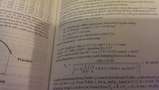
On page 1531 there is an example exercise, where they demonstrate how to calculate the torque value required to yield an M10x1.5 bolt. I have taken a picture in case anyone doesn't have a copy:
Further on, on page 1533 there is another example which happens to be in inches, but they take a different approach:
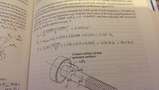
They describe this as "Torque-Tension Relationships", whereas the first example is clearly in "Relationship Between Torque and Clamping Force".
Reading this section much like a story, I have understood most of it, however what I don't understand is that the second method I've shown above seems to do the same thing as the first, yet when I try to substitute metric values into the second, I get horrendous values, i.e. 4kN-m for bolts I'd expect to tighten to about 350 N-m.
I've spent a few hours contemplating this and don't yet understand why I can't grasp it. I appreciate that there might be a difference between tension and clamping force, but surely the numbers cannot be that far apart?
For example, their value for F in example 1 is 30.463 kN. Substituting their same example values into example 2, I get 1740 kN for PB. Hence, a ridiculous torque figure.
Now, obviously, the number is so large because the equation says to multiply σallow (which is 30.463 kN) by As (58 mm2). With imperial figures, the area will always be a low number, and in their example it is 0.1419 in2. Perhaps this is the reason? I can't recall anything else which has separate equations for metric and imperial, though, other than including 25.4, or a reciprocal here and there...
Hopefully someone can help me understand?
The second method is of interest because it takes into account the coefficient of friction of the bearing face and its effective diameter, which the first one doesn't appear to do. This is of interest because I cannot always design bearing faces that are about 0.95 times the A/F dimension.
Many thanks in advance.
I was doing this more out of interest than any other reason (i.e. profit, homework, etc) however I am a mechanical engineer by day and haven't needed to do this up until recently. The answer isn't relevant to the project in question as it has already been approved and put into production. Anyway...
What I'm trying to do is put together a torque calculator, which will allow me to put in any parameter that I want, to calculate things like maximum preload and subsequently torque values for hollow bolts, or bolts of materials other than "normal" things, i.e. brass, Inconel, etc., or threaded shafts with reduced shank diameters, various coatings, or lack of, etc. I've got quite far but have come across a hurdle.
I've got a copy of Machinery's Handbook, the 29th Edition, and inside there is a section called Torque and Tension in Fasteners.
On page 1531 there is an example exercise, where they demonstrate how to calculate the torque value required to yield an M10x1.5 bolt. I have taken a picture in case anyone doesn't have a copy:
Code:
Link: http://i61.tinypic.com/n3ltn4.jpgFurther on, on page 1533 there is another example which happens to be in inches, but they take a different approach:
Code:
Link: http://i57.tinypic.com/xd6l3d.jpg]They describe this as "Torque-Tension Relationships", whereas the first example is clearly in "Relationship Between Torque and Clamping Force".
Reading this section much like a story, I have understood most of it, however what I don't understand is that the second method I've shown above seems to do the same thing as the first, yet when I try to substitute metric values into the second, I get horrendous values, i.e. 4kN-m for bolts I'd expect to tighten to about 350 N-m.
I've spent a few hours contemplating this and don't yet understand why I can't grasp it. I appreciate that there might be a difference between tension and clamping force, but surely the numbers cannot be that far apart?
For example, their value for F in example 1 is 30.463 kN. Substituting their same example values into example 2, I get 1740 kN for PB. Hence, a ridiculous torque figure.
Now, obviously, the number is so large because the equation says to multiply σallow (which is 30.463 kN) by As (58 mm2). With imperial figures, the area will always be a low number, and in their example it is 0.1419 in2. Perhaps this is the reason? I can't recall anything else which has separate equations for metric and imperial, though, other than including 25.4, or a reciprocal here and there...
Hopefully someone can help me understand?
The second method is of interest because it takes into account the coefficient of friction of the bearing face and its effective diameter, which the first one doesn't appear to do. This is of interest because I cannot always design bearing faces that are about 0.95 times the A/F dimension.
Many thanks in advance.
Last edited: